REVIEW · MADRID
Madrid to Avila & Segovia: Full-Day Highlights Tour
Book on Viator →Operated by Fun and Tickets · Bookable on Viator
City walls and Roman towers in one day. This full-day tour is interesting because you cover Ávila’s walls and Segovia’s Alcázar without the hassle of an overnight stay, with a guide who keeps the history understandable and photo stops built in. I like that it mixes guided time with enough moments to look up, look around, and take pictures from the right angles.
What you should plan for: monument entry tickets are not included, so you’ll be paying for some of the big stops on top of the tour price. It’s still good value if you want a structured day and don’t want to stress about transport and timing.
In This Review
- Key highlights worth knowing before you go
- A fast, history-heavy day trip from Madrid
- Getting there: comfort on the bus, with real meeting-point clarity
- Group size and how it affects your day
- Sierra de Guadarrama: the scenic breather before the stone
- Stop 1: Ávila’s Walls (Las Murallas de Ávila)
- Stop 2: Cathedral de Ávila (cathedral-fortress energy)
- Stop 3: Basilica de San Vicente (Romanesque focus)
- Stop 4: Saint Teresa’s birthplace area (Iglesia-convento de Santa Teresa)
- Stop 5: a break in Ávila with drink and snack
- Stop 6: Segovia’s Aqueduct (Acueduct of Segovia)
- Stop 7: Segovia Cathedral (Cattedrale di Segovia)
- Stop 8: Alcázar of Segovia (the ship-bow castle)
- Pacing and walking: why the day feels packed
- The guide + audio system can make or break the experience
- Price and value: what $61.67 buys you (and what it doesn’t)
- Who should book this tour—and who might prefer something else
- Should you book this Madrid to Ávila and Segovia highlights tour?
- FAQ
- How long is the tour from Madrid to Ávila and Segovia?
- Where does the tour start?
- Is the tour offered in English?
- What’s included in the tour price?
- Are monument tickets included?
- Is lunch included?
- How much walking should I expect?
- What should I bring for the day?
- What’s the maximum group size?
- Can I cancel for free?
Key highlights worth knowing before you go
- Two cities, one day, no hotel needed: you get the best known highlights of both stops in a single outing.
- Guided walking tours in both towns: 1 hour in Ávila and 1 hour in Segovia to help you make sense of what you’re seeing.
- Radio guide plus headphones: you’ll hear the story through a guided audio system.
- Photo-friendly icons: Ávila’s fortifications and Segovia’s aqueduct and castle are built for camera moments.
- Snacks and a drink in Ávila: you won’t go fully hungry mid-afternoon.
- Small-ish group for a day trip: up to 35 people keeps the pace moving while avoiding total chaos.
A fast, history-heavy day trip from Madrid
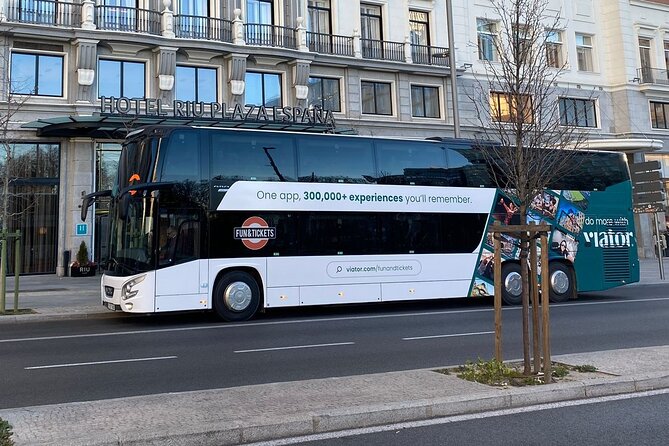
This tour is built for people who want the headlines of central Spain but don’t want to spend a night packing and unpacking. You ride out of Madrid on a modern, air-conditioned bus with Wi‑Fi, and you arrive ready to walk, listen, and photograph.
The heart of the experience is two very different kinds of medieval vibe. Ávila feels like stone and defense—ramparts, Romanesque churches, and fortress-like religious spaces. Segovia feels more cinematic—an aqueduct that looks like it was dropped into the city from another era, and the Alcázar rising over a rocky crag like a ship’s bow.
I also appreciate that guides often tailor the focus to how people actually experience these places: you get a sense of what to notice, what to photograph, and how the buildings connect to the story of the region.
You can also read our reviews of more tours and experiences in Madrid
Getting there: comfort on the bus, with real meeting-point clarity
You start at 8:45 am from the Fun and Tickets meeting point at San Bernardo (C. de San Bernardo, 7, Centro). The location is near public transportation, which helps if you don’t want to rely on a taxi.
The bus matters more than you’d think on this kind of day. It has air conditioning and Wi‑Fi, so you can cool down, check your photos, and keep your phone charged for navigation and tickets you’ll need later. And since the tour is about 9 hours, the smoother the ride, the more energy you’ll have for the walking parts.
Group size and how it affects your day
With a maximum of 35 people, it’s not a tiny private tour, but it’s also not one of those giant bus-conveyor days. You’ll still get the group experience—meeting points, regrouping, and a schedule that moves—but you’re less likely to feel completely lost in the crowd.
Sierra de Guadarrama: the scenic breather before the stone
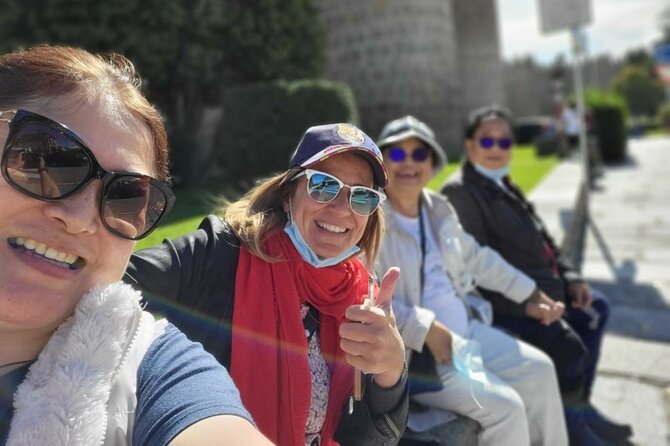
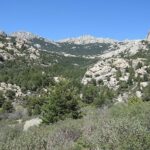
Before you dive into the towns, you pass through the Sierra de Guadarrama, the main eastern section of the Sistema Central. It’s the mountain range between Sierra de Gredos (Ávila province) and Sierra de Ayllón (Guadalajara province).
Even if you’re mostly watching out the window, this stretch is a good reset. It’s a reminder that you’re not just doing museum time—you’re getting out into the real terrain that shaped how these towns developed and defended themselves.
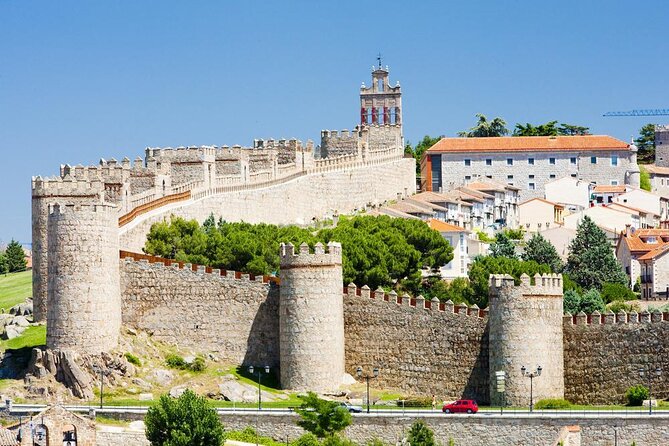
Stop 1: Ávila’s Walls (Las Murallas de Ávila)
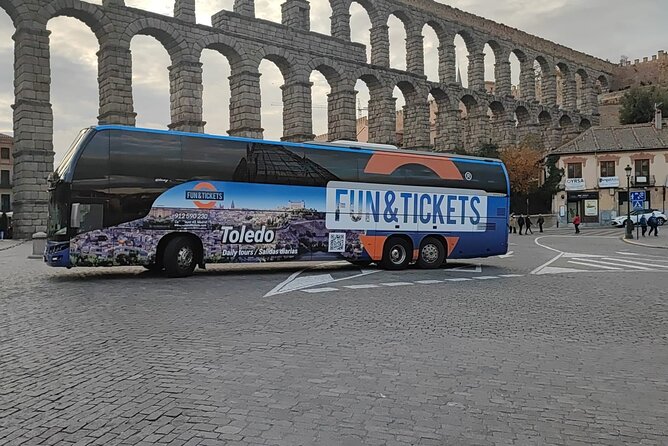
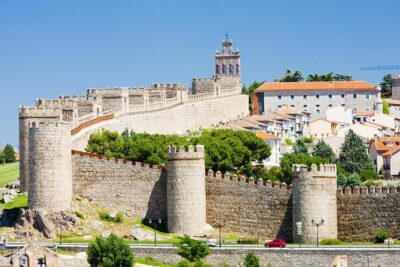
Ávila’s city walls are the kind of landmark you understand instantly: they define the entire city and turn walking outside the walls into part of the experience. These fortifications were completed between the 11th and 14th centuries, and they’re known for being Spain’s most complete set of such walls.
A big win here is that the tour design gives you a chance to stand back and see the walls as a whole, not just as scattered details. That’s when your photos start looking like postcards—long stretches of rampart, towers, and the feel of a city built to withstand trouble.
Ticket note: admission to the walls is not included, so be ready to purchase monument access if you want to go inside restricted areas.





Stop 2: Cathedral de Ávila (cathedral-fortress energy)
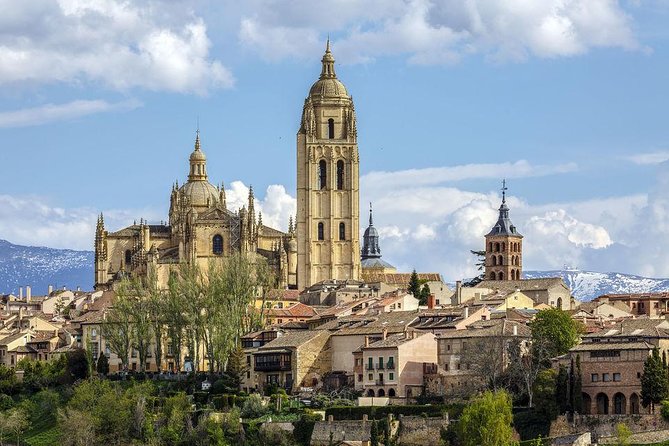
Next up is Catedral de Ávila. It blends Romanesque and Gothic styles, but the headline feature is how it functions like a fortress as well as a church. The cathedral is planned as a cathedral-fortress, and its apse connects to the city walls—one of the turrets of the wall lines up with the structure’s design.
This stop is short, so you’ll want to pick a few moments instead of trying to see everything at once. Look at how the building relates to the defensive walls. Then take in the cathedral as a standalone piece of architecture.
Ticket note: monument entry is not included here either.
Stop 3: Basilica de San Vicente (Romanesque focus)
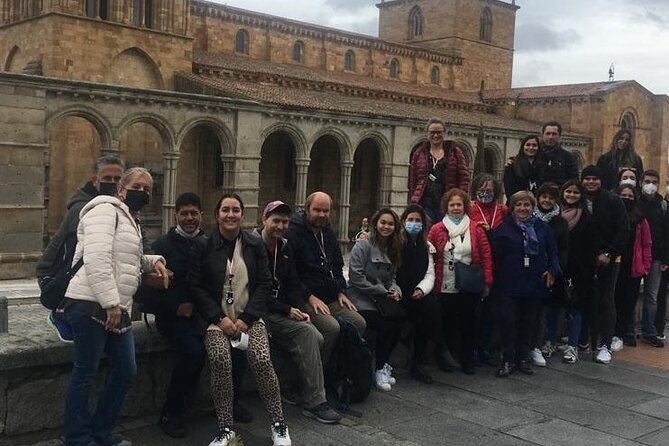
The Basilica de San Vicente is one of the best examples of Romanesque architecture in the country, and it’s a welcome change after the cathedral. Romanesque buildings tend to feel more heavy and solid—less glass-and-light, more carved stone and rhythm.
With only about a half-hour at this stop, your best strategy is to focus on shape and materials. Think: arches, proportions, and how the church space communicates a kind of permanence.
Ticket note: this one is also not included.
Stop 4: Saint Teresa’s birthplace area (Iglesia-convento de Santa Teresa)
Then you head to the Iglesia-convento de Santa Teresa, a church and convent built by the Discalced Carmelite order in the 17th century. The site is traditionally associated with the birth of Saint Teresa of Ávila.
This stop tends to feel more spiritual and personal than the defensive architecture. If you like understanding how religion and local identity shaped the city, this is the moment when Ávila becomes more than walls and stones—it becomes a lived story.
Ticket note: admission is not included.
Stop 5: a break in Ávila with drink and snack
The tour includes a drink and snack in Ávila, and there’s no full lunch included. So treat the food stop like fuel, not like a long sit-down meal.
This matters because the rest of the day is time-pressured. If you want a relaxing lunch, consider grabbing a snack elsewhere before the tour starts, or plan to eat lightly at the included break and save a full meal for later that evening.
Also, wear shoes you can trust. Even with short monument visits, Ávila’s streets and church entrances add up quickly.
Stop 6: Segovia’s Aqueduct (Acueduct of Segovia)
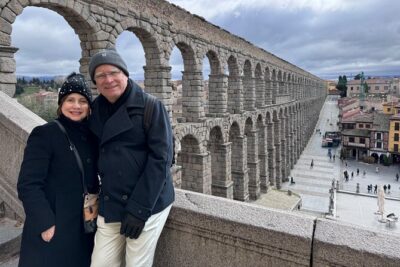
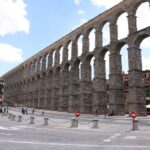
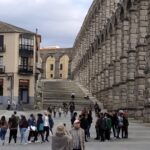
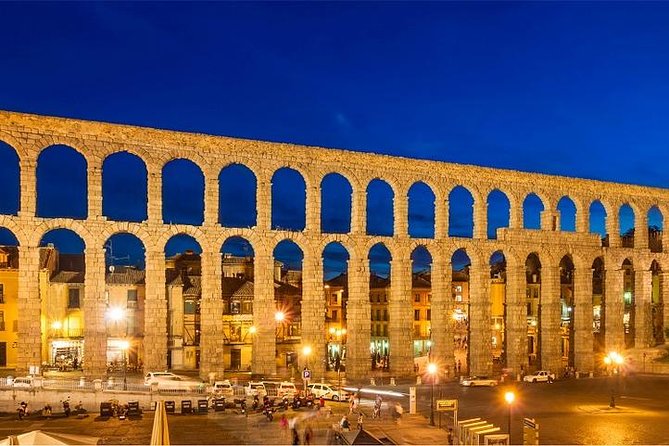
Segovia’s Roman aqueduct is the kind of icon people recognize even if they don’t know the name. It’s one of the best-preserved elevated Roman aqueducts and it’s a foremost symbol of Segovia, even showing up on the city’s coat of arms.
The best part of this stop is how “impossible” it looks once you’re standing in front of it. Tall arches, clean lines, and a structure that still holds together visually centuries later.
Ticket note: the aqueduct visit is listed as free.
Stop 7: Segovia Cathedral (Cattedrale di Segovia)
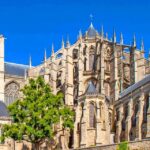
From there you move to Segovia Cathedral, a Gothic-style Roman Catholic cathedral in the main square. It’s dedicated to the Virgin Mary, and it was built in the mid-16th century.
This is a longer stop—about an hour—so you get more time to slow down a bit. If you enjoy comparing architectural styles, this is where you see the swing from Romanesque heaviness in Ávila to Gothic vertical drama in Segovia.
Ticket note: admission is not included.
Stop 8: Alcázar of Segovia (the ship-bow castle)
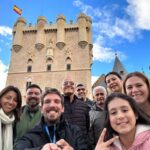
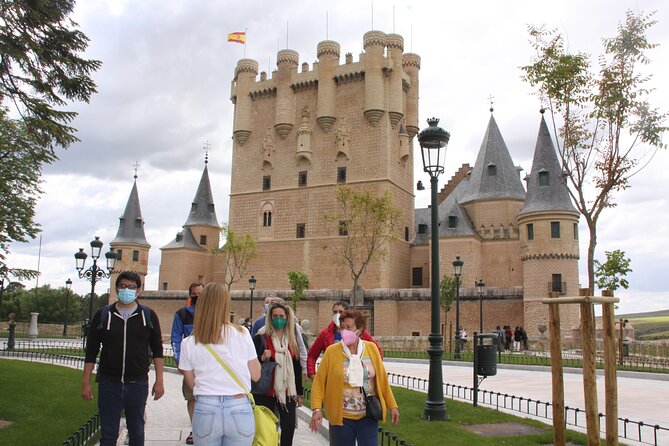
The final big centerpiece is the Alcázar of Segovia, a medieval palace-castle on a rocky crag near the meeting of two rivers. It’s one of Spain’s most distinctive castle-palaces because its silhouette looks like the bow of a ship.
It’s also a UNESCO World Heritage site, so it carries real weight as a stop, not just a pretty photo. The time here is about 45 minutes—enough to get multiple viewpoints if you move efficiently.
Ticket note: admission is not included.
Pacing and walking: why the day feels packed
This tour is short on free time and longer on structured stops. Most of your stops are around 30 minutes each, with the big architectural moments in Segovia getting more time.
That pace is exactly what makes it useful for a “first time in Madrid, first time day trip” plan. You won’t end up wasting half your day figuring out transport between places.
But it does mean you should come prepared for a high step count. Many people describe needing around 12,000 to 15,000 steps depending on how you explore on your own, and rain can make those extra steps more tiring.
My practical advice:
- Bring water and a small snack for emergencies.
- Wear sturdy, comfortable walking shoes.
- Have a simple plan for photos: pick 2 to 3 angles per stop so you don’t spiral into constant repositioning.
- If you hate long days, pace your effort. Use the guided segments, then take your time once the guide points you toward the best views.
The guide + audio system can make or break the experience
The tour uses an official bilingual guide setup (English group and Spanish group). You’ll also get a radio guide with gift headphones, which helps you hear explanations even when the group is moving between buildings.
This is where the tour can feel excellent or frustrating depending on your preferences. When audio works well, you get clear context: why a cathedral looks like a fortress, why the Roman aqueduct matters, and what to look for in each church.
I’ve seen several standout guide names associated with smoother, more engaging stories on this route, including Carlos, Beatriz, Rafa, David, Laura, and Luis Miguel. That’s a good sign. It suggests the experience can turn into more than a checklist—especially if the guide is good at keeping the story tied to the actual stones in front of you.
If you’re sensitive to audio quality, consider bringing your own earbuds/headphones so you can adapt if the provided headphones don’t fit the way you like.
Price and value: what $61.67 buys you (and what it doesn’t)
At about $61.67 per person, this is priced like a structured highlights day. What you’re paying for is the overall package: the luxury bus with A/C and Wi‑Fi, the official bilingual guide, the guided walking tours (1 hour in Ávila and 1 hour in Segovia), and the included drink and snack in Ávila.
What you’re not paying for is monument entry. Tickets to monuments are not included, except the aqueduct is listed as free. So your total cost will increase depending on how many sites you enter rather than only view outside.
Is it still good value? Usually yes if you fit the tour style:
- You want someone to handle logistics and timing.
- You like architecture and want context rather than self-guided wandering.
- You don’t want to plan two separate days.
If you’d rather do these cities slowly on your own schedule, especially Segovia (where the Aqueduct + Alcázar can easily take time), this might feel like paying for “permission to move fast.”
Who should book this tour—and who might prefer something else
This is a strong fit if you want:
- A single day covering major icons in Ávila and Segovia
- A guided overview with photo-friendly stops
- Comfortable transportation and an organized route
It’s not a great fit if:
- You have reduced mobility needs (the tour is not recommended for reduced mobility)
- You want long free time inside towns
- You dislike walking-intensive days
- You hate paying separate monument fees on top of the tour price
If you’re traveling with kids or anyone who needs frequent breaks, you might feel the schedule. Build in patience for regrouping and short stop times.
Should you book this Madrid to Ávila and Segovia highlights tour?
I’d book it if you’re visiting Madrid and you want one high-impact day trip that hits the most recognizable sights—walls in Ávila, aqueduct and Alcázar in Segovia—without turning your trip into a train-and-map scavenger hunt.
Skip or consider another option if you:
- Want lots of downtime in Ávila
- Prefer a self-guided pace where you can linger inside churches or shop without regrouping pressure
- Don’t want to add separate monument ticket costs
If you’re okay with a packed itinerary and you’d rather spend your energy on viewing and photography than planning, this tour is a practical way to get the highlights fast and well explained.
FAQ
How long is the tour from Madrid to Ávila and Segovia?
The tour runs for approximately 9 hours.
Where does the tour start?
The meeting point is Fun and Tickets at San Bernardo (C. de San Bernardo, 7, Centro, 28013 Madrid). The tour starts at 8:45 am.
Is the tour offered in English?
Yes. The tour is offered in English, with an official bilingual guide setup (English group and Spanish group).
What’s included in the tour price?
You get a luxury bus with air conditioning and Wi‑Fi, an official bilingual guide, drink and snack in Ávila, guided walking tours of 1 hour in Ávila and 1 hour in Segovia, and a radio guide experience with gift headphones.
Are monument tickets included?
No. Tickets to monuments are not included (except the Segovia aqueduct is listed as free).
Is lunch included?
No lunch is included. The itinerary includes a drink and snack in Ávila.
How much walking should I expect?
Expect lots of walking; many people plan for roughly 12,000 to 15,000 steps depending on how you explore.
What should I bring for the day?
Bring water and wear sturdy, comfortable walking shoes. Sunglasses can also help, especially on long outdoor photo stops.
What’s the maximum group size?
The tour has a maximum of 35 travelers.
Can I cancel for free?
Yes, you can cancel for a full refund up to 24 hours before the experience’s start time. If you cancel less than 24 hours before, the amount paid is not refunded.