REVIEW · MADRID
Museo Reina Sofía: Private visit with art expert
Book on GetYourGuide →Operated by Uizart · Bookable on GetYourGuide
Modern art clicks faster when someone walks you through it. This private Reina Sofía visit pairs skip-the-line entry with a guide who tailors the route to what you care about.
You’ll follow the story of European modern and contemporary art from the late 1800s to today, with big stops tied to Picasso, Dalí, and Miró. A possible drawback: with only about 2 hours, you’ll need to pick your priorities if you like to linger for long periods.
The tour is designed for a small group (up to 7), and it starts outside in the area known as the Landscape of Light. If you want structure, context, and smart pacing without getting stuck in crowds, this format fits well.
In This Review
- Why This Private Reina Sofía Tour Feels More Like a Lesson
- The Start Spot: Nouvel Building and Madrid’s Landscape of Light
- Skip-the-Line Entry: How It Changes Your First 30 Minutes
- A 2-Hour Timeline Built Around What You Actually Want
- Your Expert Guide: From Sofia to Amanda, the Style Matters
- The Big Artists: Picasso, Dalí, Miró, and How to Watch Them
- Spotting Guernica Without Getting Stuck in Famous-Work Overload
- How the Museum Timeline (1881 to Today) Stays Manageable
- The Art You Want to See: Use the Personalization Smartly
- Practical Tips Inside Your 2 Hours
- After the Tour: Keep Exploring With Recommendations
- Price and Value: What $136 Buys You
- Who Should Book This Private Reina Sofía Experience
- Should You Book This Tour?
- FAQ
- How long is the Reina Sofía private visit?
- Is this a small group or a large tour?
- Where do we meet before entering the museum?
- What’s included in the price?
- What languages are available?
- Can I stay inside the museum after the guided tour?
- Is the museum wheelchair accessible?
Why This Private Reina Sofía Tour Feels More Like a Lesson
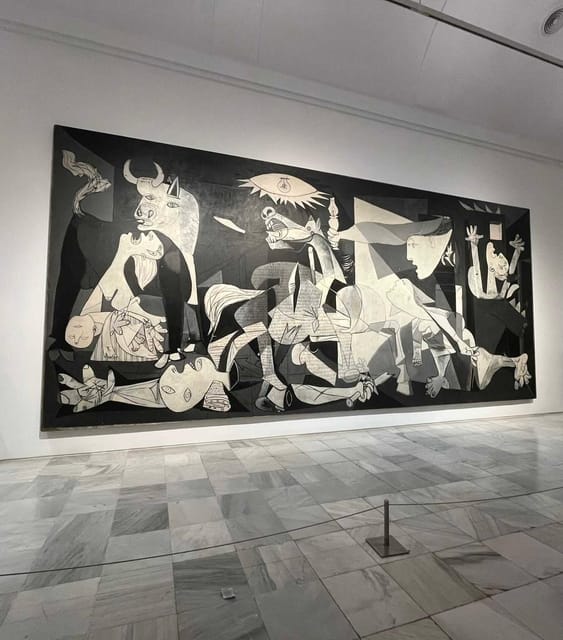
The Reina Sofía can feel like a lot at first. It’s not one simple style or one museum vibe. It’s the long arc of modern and contemporary art—ideas, reactions, politics, and personal visions—moving through time.
That’s where a private expert helps. You don’t just look at famous works; you learn how to see them. I like the fact that the guide is specialized in art history and that your route can be adjusted to your interests. If you’re more drawn to symbolism, modern identity, or the shock-and-surprise side of art, you can steer the experience.
Group size matters too. Staying under 7 people keeps the tour conversational instead of lecture-style. You can ask questions, and the guide can point out details without rushing to the next room.
Possible drawback to keep in mind: it’s still a museum, and you’ll cover highlights rather than doing a full slow read of every room. If your ideal day is wandering freely for hours, this tour may feel like a helpful starter rather than the whole experience.
The Start Spot: Nouvel Building and Madrid’s Landscape of Light
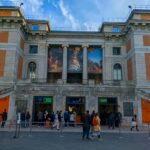
You meet at a time of your choice next to the statue in front of the Nouvel building. That area is called the Landscape of Light, and it’s a UNESCO World Heritage Site created under Charles III. It’s one of those Madrid spaces that helps you get oriented fast: you’re not just heading into a museum, you’re stepping into a meaningful urban setting.
In practical terms, this meeting point is useful. You arrive at the museum with a clear plan, and you don’t waste the first part of your trip trying to figure out where to line up. Depending on which starting option you book, the meeting point may also vary (one option is near the museum library), so double-check your exact pickup instructions before you go.
You can also read our reviews of more private tours in Madrid



Skip-the-Line Entry: How It Changes Your First 30 Minutes
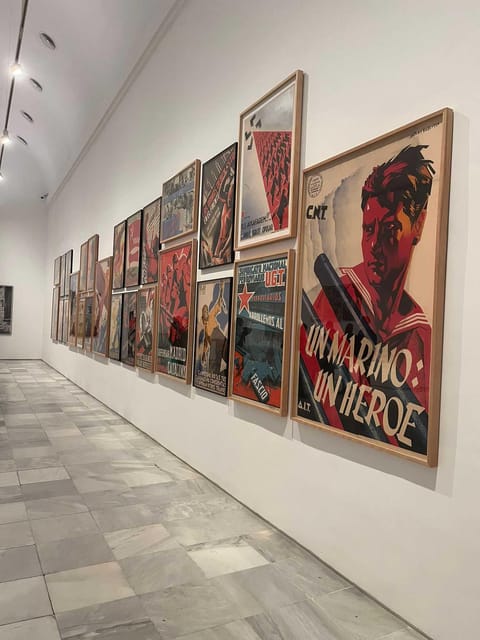
Getting inside matters more than people think. The Reina Sofía is a popular museum, and lines can turn a good plan into a rushed one.
With this experience, you bypass entrance lines and go in with your guide. That means your time starts with art, not logistics. It’s especially valuable if you’re visiting with limited time in Madrid, or if your main goal is to see specific works (the tour specifically calls out Picasso, Dalí, and Miró as focus points).
Also, you’re not standing around trying to read wall labels while you drift between rooms. Your guide sets the sequence for you. That sequence is often the difference between seeing paintings and understanding why they were revolutionary.
A 2-Hour Timeline Built Around What You Actually Want
The guided visit is about 1.5 hours, within a total experience window of 2 hours. That timing is intentional: it’s enough time to give you a clear framework and a few high-impact stops, but it doesn’t trap you in a long tour if you want to keep exploring afterward.
The guide tailors the itinerary to your interests. Before you walk into the galleries, you can steer the conversation toward what fascinates you most. That could mean focusing more on one artist, paying attention to political themes, or zeroing in on technique and symbolism.
You’ll cover the evolution of European art from 1881 to the present day. That broad span is ambitious in a short tour, but the value is in the connections. Instead of treating each famous work like an isolated celebrity, you learn how modern art grew out of earlier debates—and how later artists responded to what came before.
And because it’s private, you can interact as much as you like. If you’re the type who asks why a particular image was built that way, or what a recurring idea means, this format rewards that curiosity.
Your Expert Guide: From Sofia to Amanda, the Style Matters
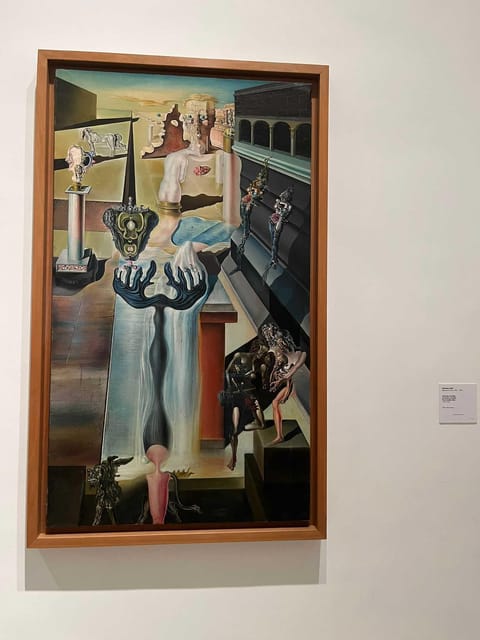
The quality of this tour is closely tied to the guide. The reviews point to friendly, informed explanations and guides who make a real difference in understanding.
Two guide names show up in the feedback: Sofia and Amanda. Both are praised for clear explanations and a strong impact on the experience. That matters because museum tours can go two ways: they either read labels aloud, or they translate the art into something you can actually hold in your head.
What you want from a guide in a museum like this is practical clarity:
- why the work looks the way it does
- what changed in art-thinking around the artist’s time
- how different artists influence each other
- what details to notice so the experience feels active, not passive
That’s the vibe you’re paying for here: specialized art guidance, delivered in Spanish or English.
The Big Artists: Picasso, Dalí, Miró, and How to Watch Them
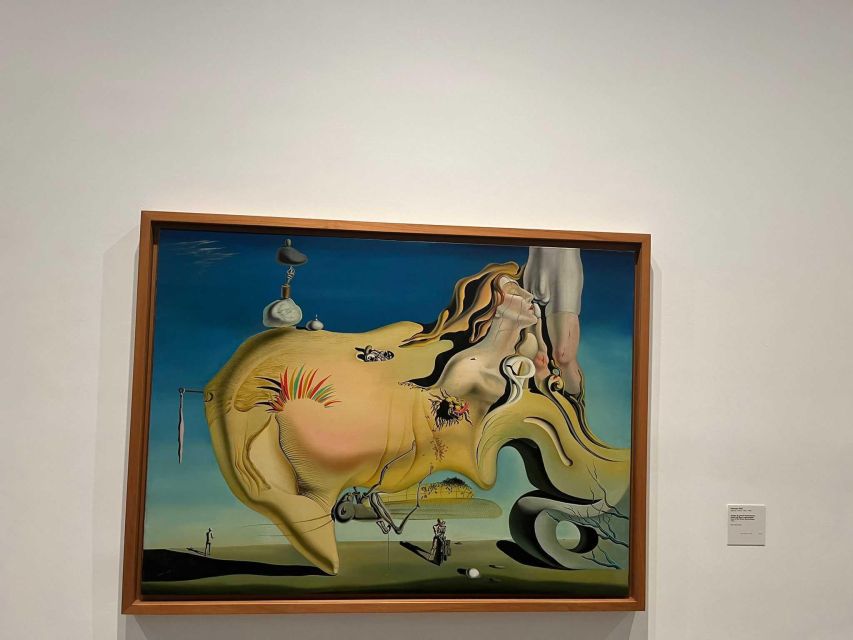
The tour highlights Picasso, Dalí, and Miró, both individually and together. That trio is a useful anchor because they represent different flavors of modern art: fractured reality, dream logic, and bold visual language.
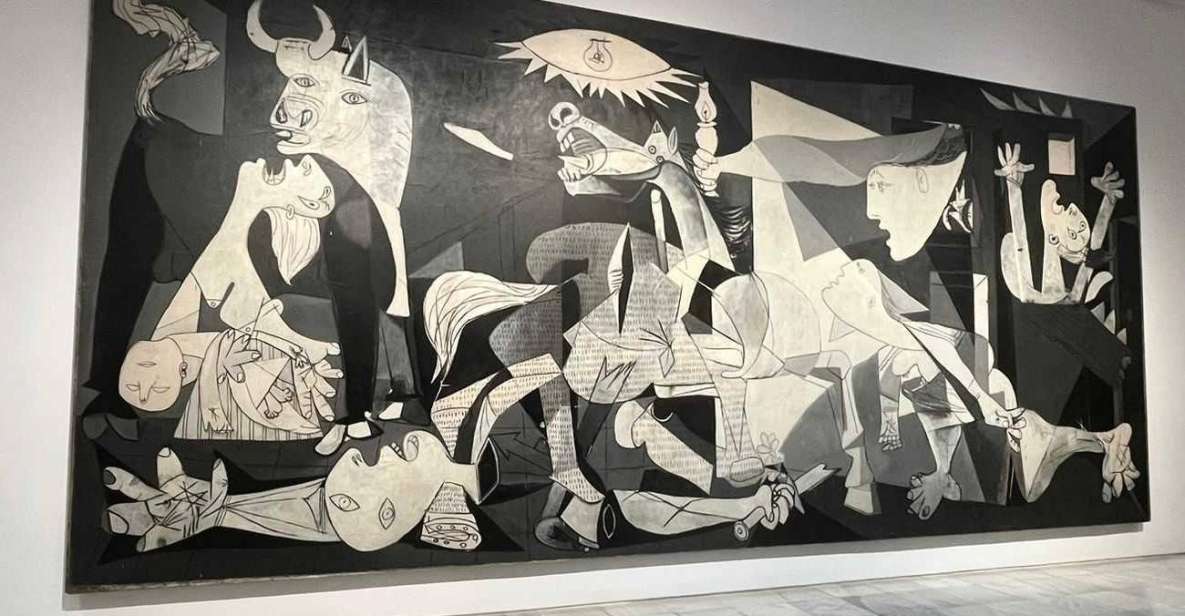
Picasso is tied to one major reason many people come to the Reina Sofía: Guernica. The tour guide helps you understand why this work is so famous and how it fits into the larger story of modern European art. Expect not just facts, but help recognizing what the painting is doing—composition, emotion, and the way the image communicates urgency.
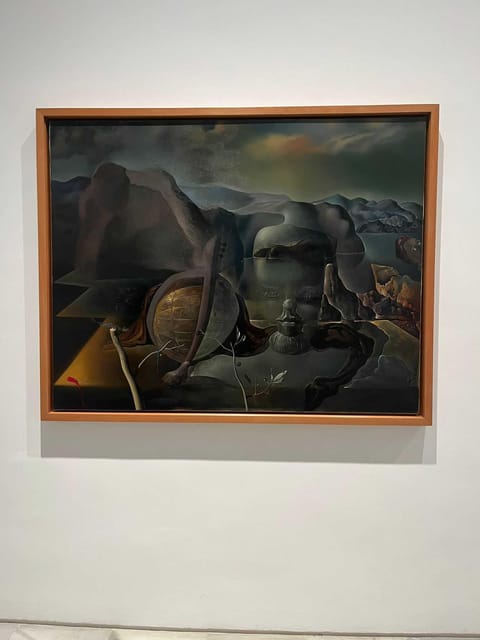
Dalí and Miró add contrast. With Dalí, the focus is often on how surreal ideas turn into images that still feel structured and intentional. With Miró, you’re more likely to notice playful form and the way modern art can be both personal and unmistakably global.
What I like about an approach that links these artists rather than treating them as separate stops is that you start seeing patterns. Modern art isn’t one movement. It’s a series of challenges: to tradition, to realism, to comfort, and to the role of the artist.





Spotting Guernica Without Getting Stuck in Famous-Work Overload
Guernica is famous enough that it can become intimidating. You may feel like you’re supposed to understand it instantly. A guide helps you avoid that trap.
Instead of rushing past the details, you’re guided to notice the logic behind the chaos: what the painting emphasizes, how your eye moves through the scene, and how the work communicates through form rather than literal storytelling alone.
This matters for two reasons. First, it turns a landmark artwork into something you can actually interpret. Second, it makes the rest of the museum easier to enjoy, because you learn what to look for when you’re standing in front of modern art that doesn’t follow older rules.
How the Museum Timeline (1881 to Today) Stays Manageable
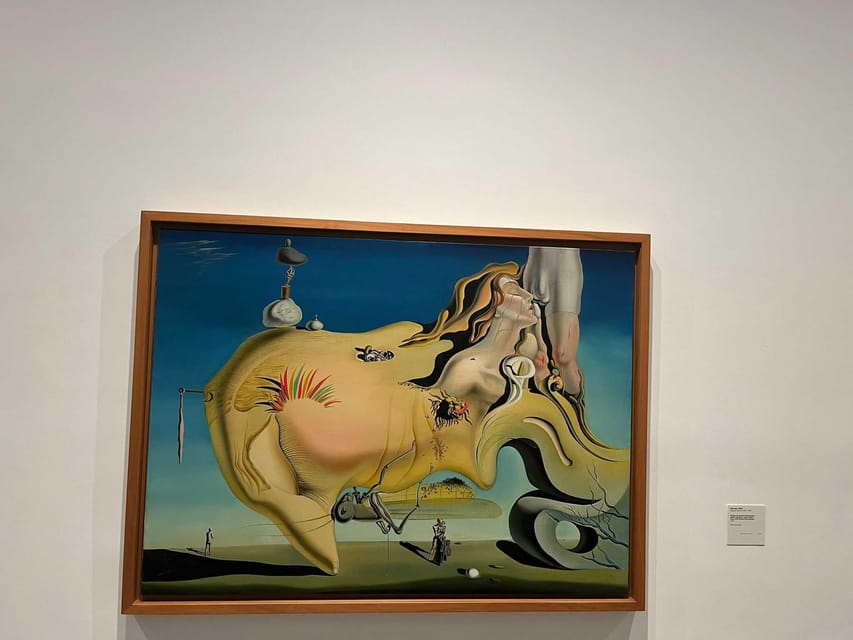
Trying to cover 1881 to the present day in one visit sounds like too much. But the tour’s value is that it doesn’t ask you to memorize everything. It gives you a backbone.
Here’s what that backbone does for you:
- It helps you understand why later artists react to earlier ideas.
- It gives you context so you’re not just collecting impressions.
- It trains your eye to notice style shifts as part of cultural change.
So when you see modern works that feel shocking, abstract, or symbolic, you’re not lost. You can connect the work to the broader arc of European art—and you start recognizing that modern art is often about questions, not just answers.
In other words: the timeline isn’t there to pressure you. It’s there to make the museum feel navigable.
The Art You Want to See: Use the Personalization Smartly
Since the route is personalized, your questions shape what you get. To make the most of it, come with at least two preferences.
For example:
- Are you more interested in Picasso’s impact, or in how Dalí’s dream-logic works as art?
- Do you want more time on meaning and symbolism, or more on technique and style?
- Would you rather prioritize famous works or a slightly less obvious sequence that teaches you how to see?
Also, decide what pace you want. The tour is designed so you can view works at your own pace while staying within the planned time. If you want a little extra time in one room, ask early. Waiting until the last minutes rarely works well inside a structured 2-hour experience.
Practical Tips Inside Your 2 Hours
A private tour is not a magic trick—you still need to help it work.
- Plan to start with a clear question in mind. Something like: what makes modern art different from earlier art styles you’ve seen?
- Wear comfortable shoes. Even with good pacing, museum walking adds up.
- Take notes lightly if you like remembering ideas later. One or two keywords per stop is enough.
One more practical note: the tour is offered in Spanish and English, so if you have a preference, set it from the start. Clarity of language matters when you’re learning why artworks are doing what they’re doing.
After the Tour: Keep Exploring With Recommendations
When your guided portion ends, you have the option to stay at the museum on your own. The tour includes this only if the group is 7 people or less, and then you’ll get recommendations on what else to see.
That part is useful because the Reina Sofía is big enough that “just wander” can become random. A good set of suggestions turns your extra time into something purposeful.
A smart strategy is to return to the themes you cared about most during the tour. If you were focused on Picasso, look for other works that show how modern Spanish and European ideas spread across styles. If Dalí and Miró pulled you in, keep hunting for how surreal or playful forms still carry meaning.
Price and Value: What $136 Buys You
At $136 per person, this isn’t the cheapest way into the museum. But it does buy three big things that standard tickets don’t:
1) A specialized art guide
You’re paying for expertise that helps you interpret, not just observe.
2) Skip-the-line entry
This protects your limited time in Madrid. When your schedule is tight, that time savings has real value.
3) Personalization in a small private group
A group of no more than 7 changes the whole feel. You can ask questions, and the guide can adjust your route.
So the real question isn’t whether $136 is “cheap.” It’s whether you want a structured, high-return introduction to modern art. If you enjoy museums but want help turning confusion into understanding, this price can make sense.
If you’re the kind of visitor who loves slow, unguided wandering and you already feel confident reading modern art on your own, you might not need the guidance. But if you want momentum and clarity, the cost is more like paying for a translator between you and the artwork.
Who Should Book This Private Reina Sofía Experience
I think this tour is a strong fit if:
- You want modern and contemporary art context without spending your whole day searching for it
- You care about Picasso, Dalí, Miró and want more than a checklist
- You prefer a private, question-friendly format (small group up to 7)
- You want a museum plan that makes sense within about 2 hours
It may be less ideal if:
- You want maximum time in the galleries with no structure
- You dislike being guided through a timeline and prefer totally independent exploration
Should You Book This Tour?
Yes, if you want a smart, efficient way to experience the Reina Sofía with clarity. This is the kind of tour that helps modern art stop feeling random, and it does it in a manageable time frame. Skip-the-line entry and a small group setup make it feel like your day starts on art, not waiting.
If you’re on the fence, make your decision based on one point: do you want help interpreting what you see? If the answer is yes, this tour is likely worth it.
FAQ
How long is the Reina Sofía private visit?
The total experience is about 2 hours, with a guided portion of around 1.5 hours.
Is this a small group or a large tour?
It’s a private group, with no more than 7 people.
Where do we meet before entering the museum?
The meeting point can vary depending on the option booked, but you’ll either meet by a statue in front of the Nouvel building or at the museum library area. Check the exact instructions for your booking.
What’s included in the price?
The price includes a specialized art guide and entrance fees, taxes, and management fees.
What languages are available?
The live tour guide is available in Spanish and English.
Can I stay inside the museum after the guided tour?
Yes. After the guided visit, you can stay at the museum to explore on your own, and you’ll receive recommendations if your group is 7 people or less.
Is the museum wheelchair accessible?
Yes. The museum is wheelchair accessible, and it is also stroller accessible.