Madrid hides in plain sight.
This small-group Secrets of Madrid walking tour is a story-led route through some of the city’s most interesting corners, from Plaza de la Villa to the Royal Palace hilltop view. It runs about 2 hours 30 minutes, in English, with a mobile ticket.
I really like the balance of sights: you get the big imperial names and the small, weird, very Madrid details (like the Inquisition’s green cross and convent life behind a plain door). I also like the small-group size (max 10)—on my kind of tour, that means you can actually ask questions and the guide’s storytelling style (often Juan) lands better, plus there’s an end recap that helps everything click.
One thing to consider: it’s a lot of walking and stairs, and most stops are quick exterior looks. Also, the Royal Palace admission ticket is not included, so if you want to go inside, plan on paying extra.
In This Review
- Key Highlights You’ll Notice Fast
- Starting at Plaza de Puerta Cerrada: Old Madrid’s Doorway Moment
- Plaza de la Villa: Where Mudéjar, Plateresque, and Habsburg Power Share Stone
- Calle de Codo (Elbow Street): The Sharp Bend That Still Feels Medieval
- Monasterio del Corpus Christi: The Cloistered Window and Galletas de las Carboneras
- Basilica de San Miguel: A Baroque Surprise in Narrow Old Streets
- El Huerto de las Monjas: A Convent Garden Pause You Can Feel
- Calle de Rollo and Casa a la Malicia: Philip II’s Census, Madrid’s Quiet Rebellion
- Plaza de la Cruz Verde: The Inquisition’s Public Horror, Now Replaced by Silence
- Principe de Anglona Garden to Iglesia de San Pedro El Viejo: Poets, Brick, and Mudéjar Geometry
- Plaza de la Paja and Calle de Madrid: From Vargas Power to the Mystery of Two Young Men
- Jardines de las Vistillas to Calle Mayor: Sky After Tight Lanes, Then Monarchy by Brick
- Museo de la Catedral de la Almudena and the Royal Palace Hill View
- Monumento a Filippo IV and Plaza de Isabel II: Baroque Power to Modern Streets
- What Makes This Tour Worth Paying For
- Pace, Comfort, and Who This Walk Suits Best
- Should You Book the Secrets of Madrid Small Group Tour?
- FAQ
- How long is the Secrets of Madrid small group tour?
- What language is the tour offered in?
- How many people are in the group?
- Where does the tour start and end?
- What time does the tour begin?
- Is a mobile ticket provided?
- Are admissions included for all stops?
- Are there meals included?
- Is the tour mostly walking?
- What’s the weather requirement?
Key Highlights You’ll Notice Fast
- Small group pace: max 10 people, so the walk feels human, not a march.
- Convent access and daily rituals: you’ll hear about cloistered nuns and galletas de las Carboneras via a revolving window.
- Madrid’s architectural mix: Mudéjar brick, Habsburg sobriety, Plateresque detail, and Baroque theatrical flourishes in one route.
- Inquisition symbolism made understandable: you see why Plaza de la Cruz Verde mattered and what the green cross represents.
- A view that changes the mood: Jardines de Las Vistillas gives you sky and light after tight medieval lanes.
Starting at Plaza de Puerta Cerrada: Old Madrid’s Doorway Moment
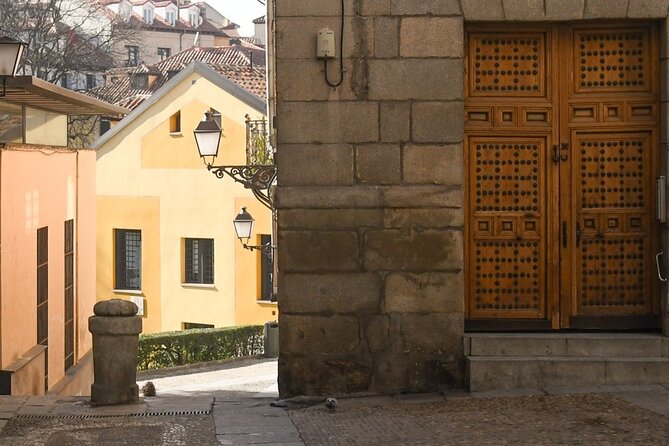
The tour begins near Plaza de Puerta Cerrada, and right away you’re in the thick of old Centro. This is a smart way to start because you’re not just collecting monuments—you’re learning how Madrid’s power centers and everyday streets braid together.
You’ll be moving at a steady walking pace, and the route is designed for seeing a lot in a short time. Still, don’t treat it like a casual stroll: bring comfortable shoes and keep an eye on steps and narrow corners.
You can also read our reviews of more tours and experiences in Madrid.


Plaza de la Villa: Where Mudéjar, Plateresque, and Habsburg Power Share Stone
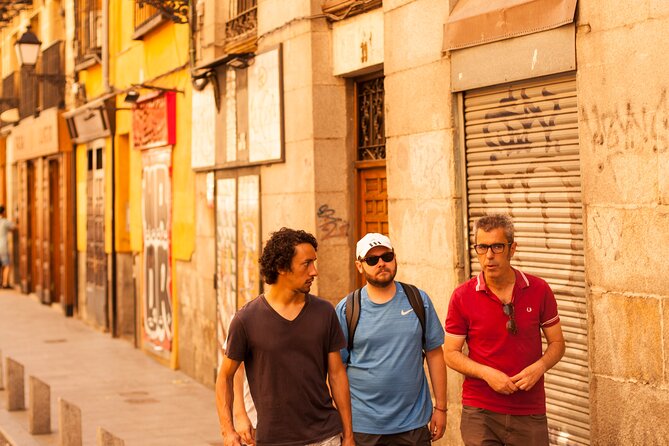
Your first major stop is Plaza de la Villa, one of the city’s oldest squares. The fun here is that the façades read like a timeline—Mudéjar, Plateresque, and Habsburg architecture all sitting next to each other, so you can literally see Madrid changing over centuries.
Take a moment on the details: the coat of arms of King Charles II, the last Habsburg monarch, is carved into the stone. This is the kind of thing you’d skip on your own, and it’s exactly why a guided walk helps.
Calle de Codo (Elbow Street): The Sharp Bend That Still Feels Medieval
A few steps away is Calle de Codo, a tight, sharply bending street. The name makes sense the second you’re standing there—the elbow-like curve funnels shadows and sounds, and the irregular stones make the medieval feel stick.
This stop is brief, but it’s useful. You’re training your eye for how street shape controls atmosphere and movement in old Madrid.
Monasterio del Corpus Christi: The Cloistered Window and Galletas de las Carboneras
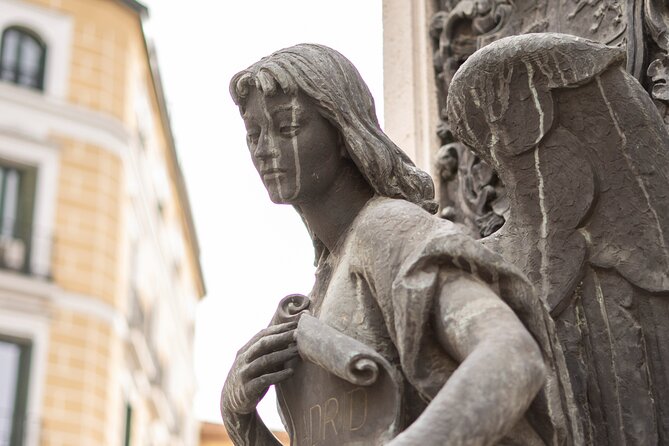
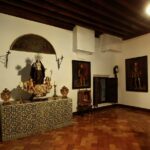
Next comes Monasterio del Corpus Christi, a convent tucked behind an unmarked door. The standout story is about life inside that has barely changed over hundreds of years, including the cloistered nuns who bake traditional biscuits called galletas de las Carboneras.
The biscuits are sold through a small revolving window. Even if you’re not buying anything, seeing how that ritual works gives you a very practical connection between past and present Madrid.
Basilica de San Miguel: A Baroque Surprise in Narrow Old Streets
Then the mood shifts. Basilica de San Miguel rises unexpectedly among tight lanes, and it’s a lesson in Baroque theatricality—curves, drama, and proportions that feel almost staged.
Because it was built under the Bourbons, the church also reflects a “new vision” of beauty and power. If you’ve only seen Madrid as austere and serious, this stop is how the city shows its lighter, more European side.


El Huerto de las Monjas: A Convent Garden Pause You Can Feel
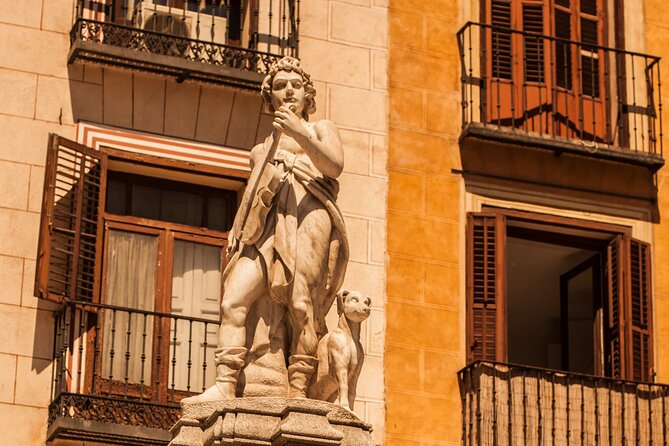
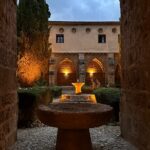
After the churches and stone, you get quiet. El Huerto de las Monjas is a secluded convent garden behind high walls—an intimate pocket of calm that’s easy to miss if you’re wandering alone.
There’s also a practical scheduling detail to know: from Monday to Friday, visitors can step inside; on weekends, the gate stays closed. If you’re visiting Saturday or Sunday, keep your expectations realistic and use this as a “see from outside / appreciate the setting” kind of stop.
Calle de Rollo and Casa a la Malicia: Philip II’s Census, Madrid’s Quiet Rebellion
At Calle de Rollo Fountain, the story turns clever. You’ll hear about King Philip II ordering a census to tax every new house built in Madrid, and the locals responding with “malicious houses”—homes that looked unfinished from the outside.
This is one of those Madrid ideas that makes you smile because it’s street-level ingenuity. It’s also a good reminder that history isn’t just kings and battles; it’s people finding loopholes when rules squeeze them.
Plaza de la Cruz Verde: The Inquisition’s Public Horror, Now Replaced by Silence
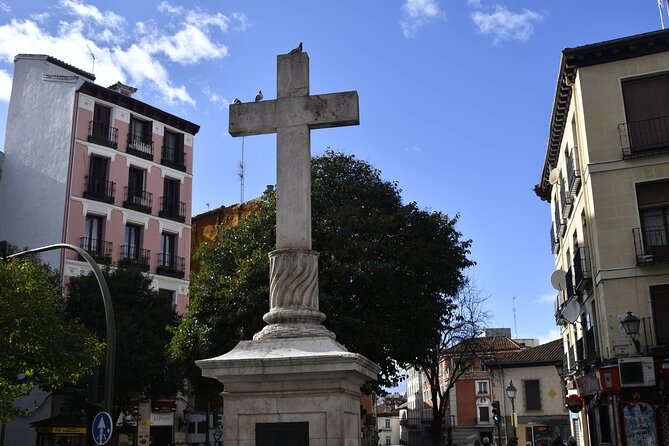
One of the most emotionally heavy stops is Plaza de la Cruz Verde. In medieval Madrid, this square was linked to public executions connected to the Inquisition, before that activity later shifted to Plaza Mayor.
What you’re looking for is the emblem idea: the green cross that gives the square its name was associated with the Inquisition’s processions. Today the square feels peaceful, and that contrast is exactly what the stop is designed to teach you—how symbols outlive events, and how cities learn to move on.
This is also a good moment to reset. Nearby cafés are positioned for a quick coffee, and it’s a natural place to handle a restroom break before you keep walking.
Principe de Anglona Garden to Iglesia de San Pedro El Viejo: Poets, Brick, and Mudéjar Geometry
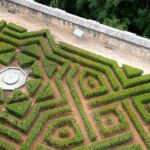
You’ll pass into Jardin del Principe de Anglona, tucked behind brick walls. The story here connects the garden’s symmetry and jasmine scent to the Romantic era—when Madrid started looking at its own ruins with nostalgia.
Then you head to Iglesia de San Pedro El Viejo, dating from the 14th century and described as the second-oldest building in Madrid. The key feature is its Mudéjar style: a Christian purpose with Islamic influence, shown through brick tower design, delicate arches, and simple geometry.
If you like architecture, this combo works well. One stop gives you mood and literature; the next gives you form and style.
Plaza de la Paja and Calle de Madrid: From Vargas Power to the Mystery of Two Young Men
At Plaza de la Paja, you’ll see the Vargas Palace area. The Vargas family played an important role well beyond Madrid, tied to the conquest and administration of the Americas. There’s also a tradition that San Isidro worked here as a humble servant, which creates an interesting contrast between spiritual simplicity and feudal power.
A short walk brings you to Calle de Madrid and the calle de los mancebos—a narrow street linked with a tragic legend from 1217 involving two youths accused of killing a prince. The details may never be fully resolved, and the point is that Madrid keeps both legend and stone together in the same small streets.
Jardines de las Vistillas to Calle Mayor: Sky After Tight Lanes, Then Monarchy by Brick
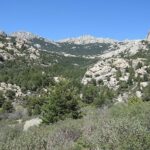
After so much stone and corridor-like streets, Jardines de Las Vistillas gives you air. From this terrace you can see toward the Manzanares River and distant mountains, which matters because it changes how you interpret the whole city.
If you’re taking photos, this is often your best chance because the light and skyline are kinder up here. It also gives you a breather before the final stretch.
Then it’s back into architecture at Calle Mayor. You’ll look at the Palacio de Consejos, built in the early 1600s, reflecting Counter-Reformation austerity. This is Habsburg Madrid through the lens of discipline—brick walls and slate spires, meant to signal moral authority as much as political power.
Museo de la Catedral de la Almudena and the Royal Palace Hill View
At Museo de la Catedral de la Almudena, the exterior look matters even before you think about museum time. The cathedral may look ancient, but it was completed in the late 20th century, and its neo-Habsburg façade was designed to echo 17th-century sobriety.
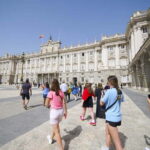
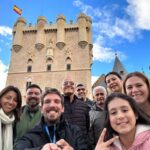
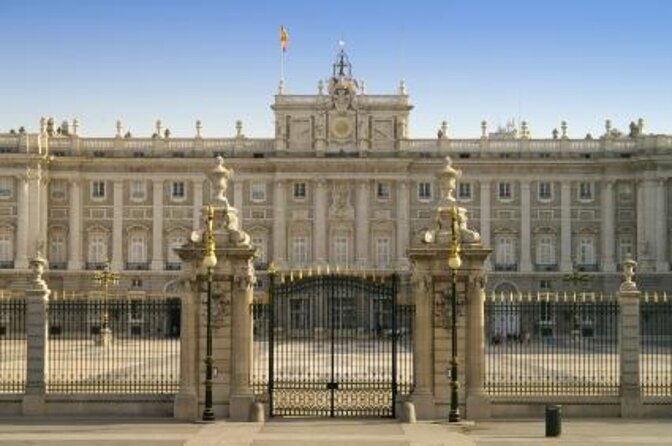
Then you finish with one of the biggest visual payoffs: the Royal Palace of Madrid view from the small hill. You’ll see the white-stone palace framed over the valley of the Manzanares. It was built in the 18th century by the Bourbons to replace the old Alcázar of the Habsburgs that burned down in 1734.
Important practical note: the tour does not include the Royal Palace admission ticket. So you can enjoy the look and the storytelling on the outside, but if you want inside rooms, you’ll need to plan for that additional expense.
Monumento a Filippo IV and Plaza de Isabel II: Baroque Power to Modern Streets
Right after the palace area comes Monumento a Filippo IV in Plaza de Oriente. This statue is famous for being an early equestrian technical marvel: Philip IV is balanced on his rear legs, with calculations connected to Galileo.
The emotion of the moment is Baroque power—controlled, graceful, and built to impress. Then you wrap at Plaza de Isabel II, where the walking route finishes and you’re back near the modern rhythms of Madrid, with the old city’s logic still in your head.
What Makes This Tour Worth Paying For
At $32.53 per person for about 2.5 hours, this is the kind of price that feels fair if you enjoy guided context. You’re paying for someone to point out details you’d miss, then connect them into a story you can remember.
The value also comes from the structure:
- You don’t just see famous names—you get to understand why they mattered.
- Many stops are ticket-free to view, which keeps the tour from turning into a queue-and-pay exercise.
- The group cap of 10 helps the guide keep the pace human and answers grounded.
One more angle: the average booking window is around 43 days in advance, which suggests it’s popular. If your dates are fixed, I’d treat it as something you should lock in early.
Pace, Comfort, and Who This Walk Suits Best
This tour fits best if you like a clear narrative and short stops that sharpen your eye. It’s also a good match for first-timers who want an orientation of old Madrid without trying to cover it all alone.
It may be less satisfying if you want long museum time or step-in access at lots of interior spaces. Most moments are short, and your “reward” is interpretation more than slow wandering.
If you do it in warm weather, wear breathable layers and bring water. The experience is set up with shade-aware pacing in mind, and there are practical chances to grab a drink and use facilities during the walk.
Should You Book the Secrets of Madrid Small Group Tour?
Book it if you want a guided walk that turns Madrid from a list of sights into a coherent story. You’ll get the joy of tiny streets, convent-life details, architectural contrasts, and a palace view that looks great even if you don’t plan to go inside.
Skip it (or add a careful plan) if you dislike walking, stairs, or fast stops. And if you know you want Royal Palace interior access, budget for that since the Royal Palace ticket is not included.
If you want my simple rule: this is a strong choice for a first Madrid afternoon when you want your bearings and a few real surprises.
FAQ
How long is the Secrets of Madrid small group tour?
It lasts about 2 hours 30 minutes.
What language is the tour offered in?
The tour is offered in English.
How many people are in the group?
The tour has a maximum of 10 travelers.
Where does the tour start and end?
It starts at Plaza de Puerta Cerrada (Pl. de Puerta Cerrada, Centro, 28005 Madrid, Spain) and ends back at the meeting point.
What time does the tour begin?
The start time is 10:30 am.
Is a mobile ticket provided?
Yes, the tour includes a mobile ticket.
Are admissions included for all stops?
All fees and taxes are included, and the tour includes admission tickets that are listed as free for the stops. The Royal Palace admission ticket is not included.
Are there meals included?
No meals are listed as included.
Is the tour mostly walking?
Yes. The experience includes a lot of walking and involves stairs.
What’s the weather requirement?
It requires good weather. If it’s canceled due to poor weather, you’ll be offered a different date or a full refund.