Segovia and Toledo in one day can feel like a magic trick. You start with the dramatic Roman aqueduct and finish with the fairytale-like Alcázar of Segovia, then spend the day in Toledo’s three-cultures story. What I like most is the hands-on pacing of guided walking tours (with English options) and the chance to hit major highlights without juggling buses yourself. One thing to think about: the day runs long, and bus comfort or wait times can vary, so you’ll want patience in transit.
If you get a strong guide, the experience clicks fast. Names that showed up as standouts include Ophelia/Ofelia (excellent in Segovia), Alejandra (kept the group moving and entertained), Andrea and Alfredo (very informative), and Angie/Andy (clear, funny, and high-energy). For Toledo, Jesus and Maria also earned praise for guiding people well through the key sights. My main caution is simple: big group size plus a lot of walking means timing matters, especially for interiors and ticketed spots.
In This Review
- Key things to know before you go
- Morning Meeting in Madrid: timing and where the day starts
- Segovia’s Roman Aqueduct to the Alcázar: the highlights that anchor the whole day
- What you’ll likely feel at the Alcázar
- The walk through Toledo’s three cultures: where history turns into visible architecture
- Why this part is worth your time
- Santa María la Blanca Synagogue Museum: a rare stop with a long timeline
- San Juan de los Reyes Monastery: the Isabelline style story behind the walls
- Toledo Cathedral: High Gothic on a scale that earns its reputation
- Time reality check
- Iglesia de Santo Tomé and El Greco’s Burial of the Count of Orgaz
- Segovia pastry, pig roasts, and the moments people miss
- Bus time and comfort: what can go right, and what to prepare for
- Quick strategy I recommend
- Price and value: is $77.06 a good deal for Segovia and Toledo?
- How to get the most out of a long day in two steep cities
- Who this tour suits best (and who should consider a different plan)
- Should you book Segovia & Toledo with this operator?
- FAQ
- What time does the tour start, and where do I meet?
- How long is the Segovia and Toledo tour?
- Is this tour offered in English?
- Do I go back to the same place in Madrid?
- What’s included in the price?
- Can I cancel and get a full refund?
Key things to know before you go
- Two cities, one big day: plan for long road time and a fair amount of walking on uneven old-street surfaces
- Bilingual English-Spanish guidance: English is offered, but mixing can happen in larger groups
- Segovia starts strong: the aqueduct and Alcázar views set the tone early
- Toledo is the three-cultures payoff: synagogue, monastery, cathedral, and churches connected to reconquest-era layers
- Bus comfort is the wild card: most reports are fine, but some include late departures or A/C problems
- Guides can make or break the mood: when you click with the guide, the day feels personal and fun
Morning Meeting in Madrid: timing and where the day starts
This is a straight-from-Madrid day trip with a 9:00 am start. You meet at C. de San Bernardo, 5, Centro, 28013 Madrid, and the tour ends back at the same starting point.
The value here is that you’re buying time and structure. You don’t need to plan train routes, and you’re spared the headache of figuring out bus connections between Segovia and Toledo. The flip side is that the day is not flexible. If you want to linger for photos at every overlook, you’ll likely wish you had a second day.
Also, the tour uses a mobile ticket, which is convenient—just make sure your phone battery behaves. The group maximum is 55 travelers, so expect a lively atmosphere, and don’t plan on getting a private conversation with your guide at every stop.
You can also read our reviews of more tours and experiences in Madrid.



Segovia’s Roman Aqueduct to the Alcázar: the highlights that anchor the whole day
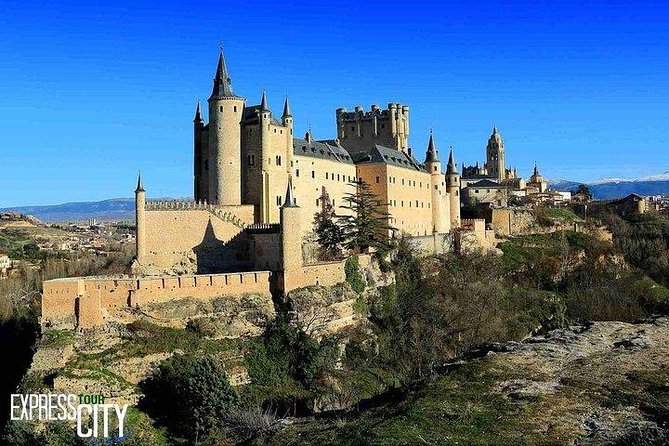
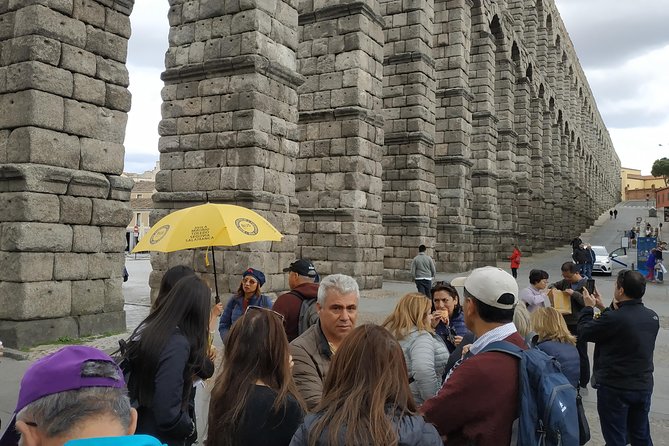
Segovia starts with one of Spain’s most recognizable images: the Roman aqueduct. It’s one of the best-preserved elevated Roman water systems, and it works as an instant visual lesson. Even before you hit the medieval sites, you see why Segovia became important—water engineering like this helped cities grow and last.
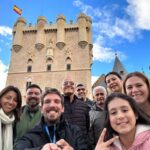
Then comes the Alcázar of Segovia—the castle-palace that looks like a ship’s bow rising from a rocky crag near two river junctions. The shape is the headline, but the background is what makes it more than a photo stop. The Alcázar began as a fortress, later served as a royal palace, then shifted roles over time as a state prison, Royal Artillery College, and military academy. Today, it functions as a museum and military archives space.
What you’ll likely feel at the Alcázar
- A dramatic sense of arrival: you’re seeing why the site was chosen
- A viewpoint advantage: the surrounding valleys and river area tend to look better from this height
- Time pressure: the best photo spots and viewpoints can steal minutes fast
A few practical notes from the way the day is run: some people reported limited time to get into palaces and the need to manage ticket access for interiors. So if Alcázar interior access is a top priority for you, keep expectations realistic and be ready to move with the group.
The walk through Toledo’s three cultures: where history turns into visible architecture
Once you reach Toledo, the experience shifts from “wow, look at that” to “wait, how does this building reflect changing rule?” Toledo is often summarized as a three-cultures city—Jewish, Moorish (Islamic), and Christian communities layered across centuries. This tour leans into that idea with major stops that connect those themes directly.
You’ll explore the city in a guided walking format that’s bilingual (English and Spanish). In a few cases, people noted that the mix leaned more Spanish than English. That doesn’t mean the tour isn’t English-friendly—just that the group size and guide style can change how much English you hear.
Why this part is worth your time
Toledo can feel complicated if you try to self-navigate first. With a guide, the key becomes learning what to notice: reconquest-era reuse of space, how religious buildings changed hands, and how art and architecture reflect the eras.



Santa María la Blanca Synagogue Museum: a rare stop with a long timeline
One of Toledo’s biggest emotional stops is the Synagogue of Santa María la Blanca. Originally known as the Ibn Shushan Synagogue, it dates to 1180 (based on an inscription). It’s often described as one of the oldest synagogue buildings in Europe still standing.
What’s powerful here is the ownership and survival story. The synagogue is now owned and preserved by the Catholic Church and functions as a museum and former synagogue. That means you’re seeing a building that outlasted major social change, but also got reinterpreted by later power structures.
Practical tip: go in with curiosity, not just a checklist. This is one of those places where the details matter—architecture, transitions, and how the site communicates identity across time.
San Juan de los Reyes Monastery: the Isabelline style story behind the walls
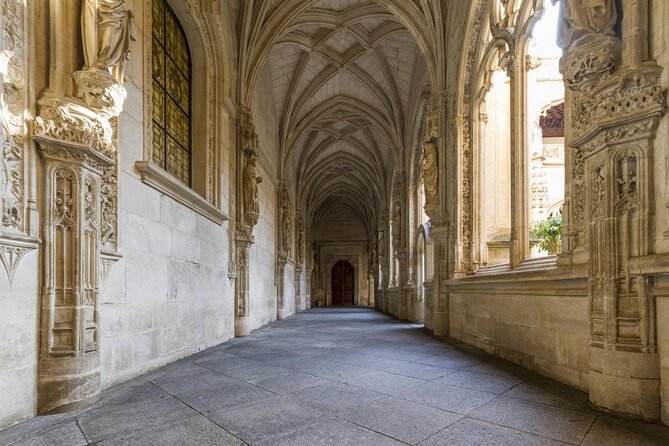
Next is the Monastery of San Juan de los Reyes, built in Isabelline style in the 15th century by the Catholic Monarchs. This stop is not just about looking at a monastery. It’s about understanding why it exists.
It was founded by Ferdinand II of Aragon and Isabella I of Castile to commemorate two things: the birth of their son, Prince John, and their victory at the Battle of Toro (1476) over Afonso V of Portugal.
If you’re the type who likes “why this was built,” this is a very satisfying pause. Monasteries often feel generic if you only admire the exterior. Here, the founding story gives the walls meaning.
Toledo Cathedral: High Gothic on a scale that earns its reputation
The Primate Cathedral of Saint Mary of Toledo is the star for many people on the Toledo portion. It’s the seat of the Metropolitan Archdiocese of Toledo, and architecturally it’s tied to Spain’s 13th-century High Gothic tradition. The cathedral is widely described as the top example—some call it the magnum opus of Gothic style in Spain.
Even if you’re not a “cathedral person,” Toledo Cathedral tends to land for two reasons:
- It’s a big visual statement in a city where heights and views matter.
- It becomes a finishing anchor after the layered three-cultures stops.
Time reality check
A common issue on long day trips is not the quality of the sights—it’s whether you get enough time at each one. Some people flagged that time in Toledo can feel tight and that getting inside ticketed spaces can be challenging. If cathedral interior time is essential to you, don’t treat the guided hour as guaranteed free time. Be ready to prioritize the cathedral’s interior moments.
Iglesia de Santo Tomé and El Greco’s Burial of the Count of Orgaz
The tour also includes Iglesia de Santo Tomé, a church connected to the reconquest period. It was founded after King Alfonso VI of León regained the city. The site is layered: the church was built on the spot where an 11th-century mosque once stood. In that era, mosques were sometimes used as Christian churches without major destruction of buildings.
This stop ties history to art in a very direct way. You can admire El Greco’s painting The Burial of the Count of Orgaz here. That’s one of those moments where you stop thinking of the day as “a lot of monuments” and start thinking of it as “one place telling a whole story through different mediums.”
If you’re visiting because you love art, make sure you’re mentally ready to look closely. The painting experience is best when you slow down for a minute instead of rushing for the next photo.
Segovia pastry, pig roasts, and the moments people miss
Food is part of the charm in Segovia, even when time gets tight. The day may include a chance to enjoy Segovian pastry, and some people mention the suckling pig roast specifically. But the larger truth is that a two-city itinerary compresses meals.
I’d plan for a snack mindset. If lunch is important to you, either come ready to grab something quick during free time or be flexible and accept that this tour is built around sights first, food second.
Bus time and comfort: what can go right, and what to prepare for
The itinerary is a high-end bus experience with round-trip transport from Madrid to Segovia and Toledo. Many people reported comfortable seats and working air conditioning, and some even pointed out a working A/C and good driving.
But there are also clear red flags in the mix:
- Late departures that cut into Toledo time
- Switching buses or inconsistent vehicle quality
- A/C problems during hot conditions
- Confusing pickup/drop-off details
This doesn’t mean your day will go badly. It means you should pack for stress: water, sun protection, and a mindset that the schedule is subject to road conditions. If you’re traveling with kids, heat sensitivity matters more, and you’ll want to be prepared if the bus runs long or A/C gets weak.
Quick strategy I recommend
- Wear comfortable shoes and breathable clothes
- Bring a hat and water so a delay doesn’t ruin the vibe
- Keep your phone charged so you can double-check meeting points if vehicles shift
Price and value: is $77.06 a good deal for Segovia and Toledo?
At $77.06 per person (with about 11 hours 30 minutes of time), the price is really about one thing: transportation plus two guided walking experiences. For many people, that’s the sweet spot. You avoid the heavy mental load of planning two separate day trips and coordinating timing between them.
Where the value can wobble is if you expect everything to be fully guided in the same way, at the same pace, for every moment. The tour’s main inclusions are:
- Round-trip bus transport
- Bilingual English/Spanish guided walking tour in Segovia
- Bilingual English/Spanish guided walking tour in Toledo
Entry fees, meals, and anything not listed aren’t clearly defined. So the best way to think about it is: you’re paying for the “connective tissue” between top sights. You’ll still need to manage time at ticketed locations and be ready for long walking blocks.
If you want a fast, structured highlights day at a reasonable cost, this price can be a win. If you’re hoping for a slow, deep experience with lots of free roaming, you may prefer splitting it into two days.
How to get the most out of a long day in two steep cities
This kind of tour is great for momentum. You see Segovia’s iconic aqueduct and Alcázar, then you get Toledo’s layered religious and artistic story in one packed swing.
To maximize your satisfaction:
- Decide what matters most before you go (Alcázar interior, cathedral interior, El Greco painting, etc.)
- Keep some energy for transitions—bus legs can drain you
- Stay flexible with timing. If you try to control every minute, you’ll lose your mind.
And if you’re someone who gets lost easily in old towns: follow the guide’s instructions closely at every regroup point. A few people reported confusion about directions and meeting changes. You’ll be happier if you treat regroup moments as your priority.
Who this tour suits best (and who should consider a different plan)
This tour is a strong match for:
- People who want the biggest highlights without hiring a private guide
- Travelers who like walking tours but also want transport handled
- Anyone who enjoys architecture with a story attached—Roman, medieval, and reconquest-era layers
It might not suit you as well if:
- You’re very sensitive to heat or bus comfort issues
- You need lots of free time in each city
- You want long, unhurried museum time in multiple interiors
If you can spare extra time, doing Segovia and Toledo in separate days usually makes the experience feel less like sprinting. But if you only have one day from Madrid, this is a workable way to get both.
Should you book Segovia & Toledo with this operator?
I’d book it if you want a structured, highlight-heavy day and you’re comfortable with the idea that it’s long. The best part is the combination: Segovia’s iconic aqueduct and ship-bow Alcázar, followed by Toledo’s three-cultures walking route with major stops like Santa María la Blanca, San Juan de los Reyes, Toledo Cathedral, and Iglesia de Santo Tomé with El Greco.
I’d think twice if bus comfort, waiting delays, or strict scheduling could ruin your day. If that’s you, consider either booking a different format (more time in one city) or bringing a very calm, flexible approach to transit.
FAQ
What time does the tour start, and where do I meet?
It starts at 9:00 am at C. de San Bernardo, 5, Centro, 28013 Madrid, Spain.
How long is the Segovia and Toledo tour?
It lasts about 11 hours 30 minutes (approx.).
Is this tour offered in English?
Yes. The guided walking tours in both Segovia and Toledo are bilingual English and Spanish.
Do I go back to the same place in Madrid?
Yes. The activity ends back at the meeting point.
What’s included in the price?
Included are round-trip bus transport from Madrid to Segovia and Toledo, plus guided walking tours in Segovia and Toledo with bilingual English and Spanish.
Can I cancel and get a full refund?
Yes. Free cancellation is available up to 24 hours in advance for a full refund.