REVIEW · MADRID
Street Art Guided Tour in Madrid
Book on Viator →Operated by Cooltourspain · Bookable on Viator
Street art has a secret route in Madrid. This guided walk takes you past major works and the places that helped them grow, from an old power plant to a former tobacco warehouse. You’ll also get the human side of it: who paints, what they’re saying, and why this neighborhood keeps making art.
I especially like the mix of famous and local street artists, plus the way the guide connects the images to real issues in Spain. I also like that you’re not just looking at walls for aesthetics; you’re learning how messages and techniques land in public space.
One possible drawback: parts of what you see depend on access and opening hours, especially around La Tabacalera and the urban garden stop. If you’re the type who wants everything to be guaranteed and indoor, plan a bit of flexibility.
In This Review
- Key things you’ll notice on this street art walk
- Street Art in Madrid Makes More Sense When You Can Walk It
- From Atocha Area Landmarks to La Neomudéjar’s Power-Plant Walls
- La Tabacalera: Exterior Street Art, Then the Basement of Stencils
- Esta es Una Plaza: A Beautiful Urban Garden, But Opening Hours Decide
- Lavapiés on Foot: Multicultural Streets and Street Art Context
- Campo de Cebada: When Community Space Becomes the Canvas
- Price and Logistics: Is $30.38 Good Value for 2 Hours?
- Who Should Book This Street Art Tour (and Who Might Want Something Different)
- Should You Book It? My Practical Take
- FAQ
- How long is the street art guided tour?
- What does the tour cost?
- Where does the tour start and end?
- Is the tour offered in English?
- Does it run in all weather?
- Is food included?
Key things you’ll notice on this street art walk

- La Neomudéjar: a former power plant turned creative hub, tied to the world of street art activism
- La Tabacalera: big outdoor walls plus a basement lined with projects and stencils
- Lavapiés walking context: you’ll hear how this multicultural district shaped what you’re seeing
- Campo de Cebada: street art and community space linked to the 15-M Movement
- Small group feel: max 13 people, which makes it easier to ask questions and stay engaged
Street Art in Madrid Makes More Sense When You Can Walk It
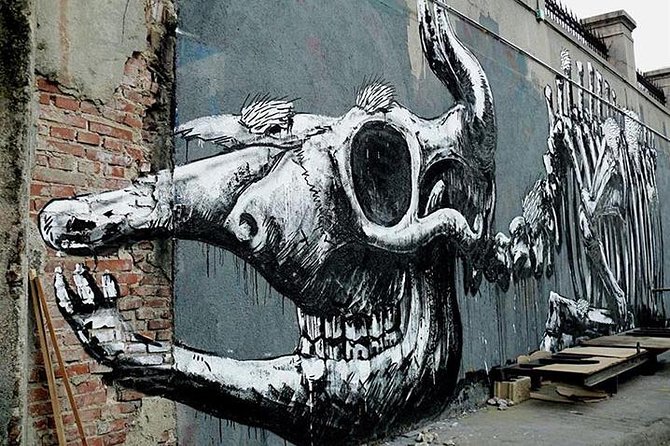
Madrid’s street art looks spontaneous, but it isn’t random. Up close, you start to see patterns: who’s repeating themes, where artists respond to laws, and how neighborhoods give space to new work. That’s the real payoff of a guided format.
This tour is priced at $30.38 for about 2 hours, which is fair for a city-center walk that takes you to multiple purpose-built art spaces. You’re not paying for a bus ride. You’re paying for a local guide to point out what most people miss: the message behind the paint.
If you’re into street art as culture (not just Instagram content), you’ll get a lot out of it. And if you prefer street art to be explained in plain terms—why a style is used, what an artwork is responding to—this tour leans that way.
You can also read our reviews of more guided tours in Madrid


From Atocha Area Landmarks to La Neomudéjar’s Power-Plant Walls
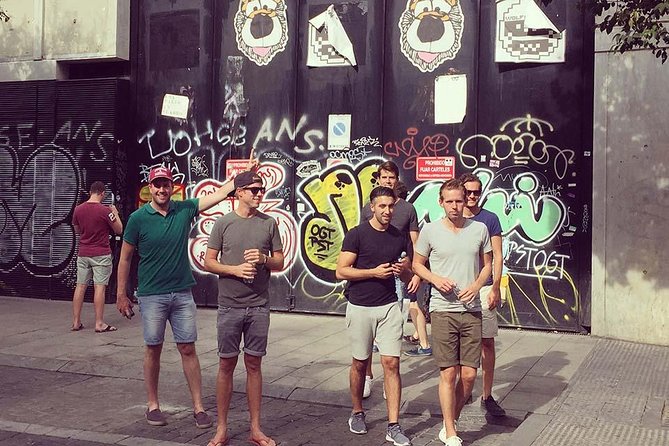
You start in central Madrid at Teatro Valle-Inclán (Pl. de Ana Diosdado, s/n). From there, the early part of the walk sets you up fast: you’ll pass the big-headed babies monument in front of Atocha train station, then move through the area around Mediodía metro, where an avant-garde art center often hosts photo exhibits and gallery shows.
Then comes La Neomudéjar, and it matters that you’re there early. This is a one-time power plant that powered systems in the 19th-century train-station era. Today it hosts works by street artists from Spain and beyond, including artists like Himen, Ze Carrión, and Laguna626 (names you’ll hear again as you compare styles and themes).
What I like about starting here: you see street art in a setting that was never built for “tourist art.” It’s industrial space repurposed for artists, so the textures of the building and the scale of the walls feel right. The guide also connects the artworks to a bigger reality—street artists often protest Article 626, a law aimed at penalizing graffiti creators. It turns the walk from decorative to political, without feeling like a lecture.
Practical tip: dress for walking and expect some time outdoors, since the tour runs in all weather conditions.
La Tabacalera: Exterior Street Art, Then the Basement of Stencils
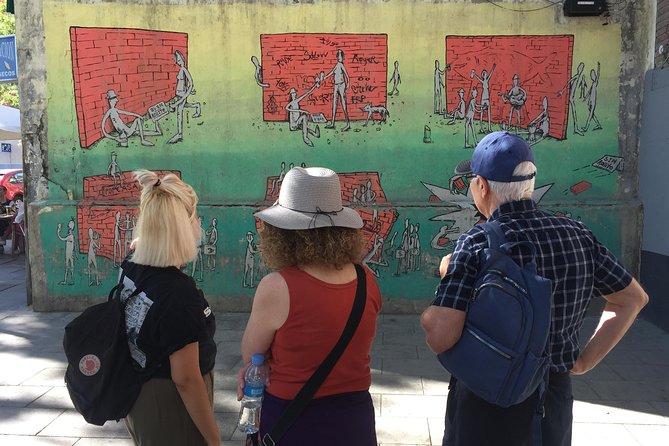
La Tabacalera is the stop where you really feel how serious Madrid is about street art culture. This is a 19th-century tobacco warehouse that employed over 1,000 workers shredding, rolling, and preparing tobacco products. Now it serves as a performance and exhibition space for Madrid creatives, mixing visual art with live shows.
You’ll focus on Muros La Tabacalera—the walls outside are where you’ll spot the biggest street-art statements and learn to read them. Pay attention to what the guide points out: the artists’ choices, the wording and imagery, and how techniques communicate more than just color.
One of the best details is the chance to go down to the basement, where you’ll see hundreds of street art projects and stencils. That’s where the art feels less like a final product and more like a working process—like you’re seeing the storyboard behind the murals.
A real consideration: La Tabacalera can have restrictive timing during weekdays. That doesn’t mean the tour is ruined, but it does mean access can be tighter on certain days. If you can choose, a weekend or a slot when the site is easier to enter may keep the flow smoother.
Esta es Una Plaza: A Beautiful Urban Garden, But Opening Hours Decide
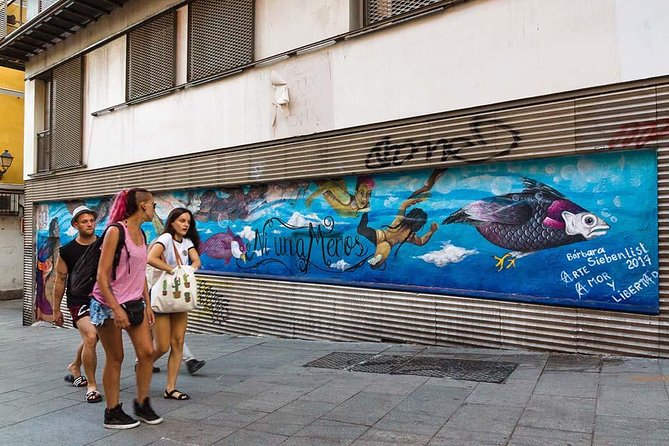
After Tabacalera, you’ll move through the La Lavapiés area toward Esta es Una Plaza—an urban garden stop that often looks like it shouldn’t exist in the middle of the city.
Here’s the key practical detail: the wall visit is only guaranteed if the location is open. So if it’s closed when you arrive, you may spend less time on that exact wall section than you hoped.
I still think it’s worth including this stop. It shows how street art isn’t trapped to alleyways and underpasses. In Madrid, art can show up where people relax, watch movies in summer, or just sit outside. It also helps break up the denser wall-to-wall parts of the walk, so you don’t end the tour seeing nothing but paint.
Lavapiés on Foot: Multicultural Streets and Street Art Context
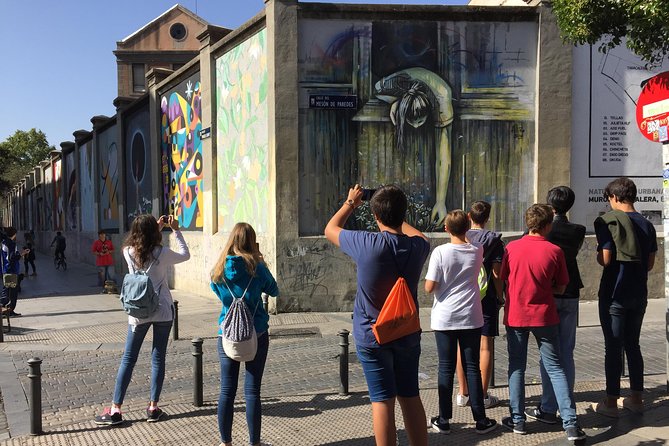
Lavapiés is the heart of why this kind of tour works. The guide uses the walking route to explain the district—its multicultural feel, its diversity, and why there’s so much street art packed into daily life here.
This is also where you’ll get the “human geography” lesson. You start noticing how art changes from street to street. Some walls lean more toward activism. Some lean toward style and character. Some feel like they’re replying to what’s around them.
This part is also where your guide’s talent shows. Some of the strongest feedback for this tour highlights how the guide made the experience fun and tied details to the neighborhood. A few comments specifically called out guides like Santi and Julia, and one recurring theme was that the guide didn’t treat this like generic sightseeing.
One practical piece of advice: if you want to catch every explanation, stay close enough to hear. A couple of people noted difficulty hearing while walking if they drifted forward or back. With a small group, you’ll still have room to look around, but don’t let it turn into a free-for-all.
You can also read our reviews of more tours and experiences in Madrid


Campo de Cebada: When Community Space Becomes the Canvas
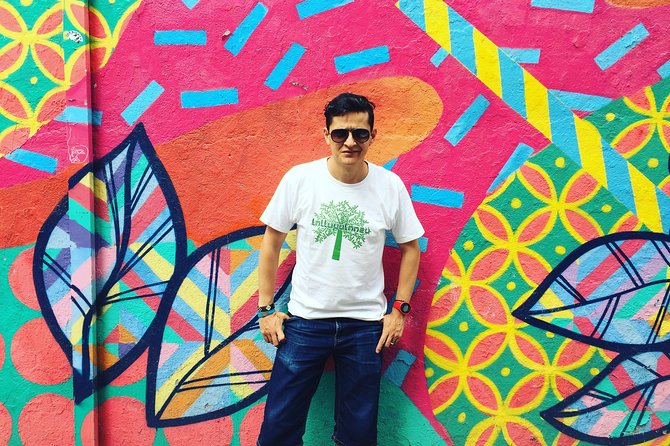
The final stretch brings you to Campo de Cebada, known as the Barley Field. This is more than a pretty square. It’s a reclaimed community gathering place and community art project tied to Spain’s 15-M Movement—the moment people recaptured streets and public squares for communal use.
Campo de Cebada’s story is also a good reminder of how public space evolves. It used to be home to a swimming pool. Today, local associations have reshaped the area into a meeting point where you can catch summer movies, listen to music, or join a collective garden.
I like how this ending reframes street art. Instead of ending with a “look at this wall” moment, you end with a “look what people built” moment. The art here feels connected to civic life, not just aesthetics.
You’ll finish at Plaza de Cascorro, which is convenient for continuing your day by foot and hopping onto nearby metro routes like La Latina or Tirso de Molina.
Price and Logistics: Is $30.38 Good Value for 2 Hours?
At $30.38 per person for about 2 hours, you’re paying for three things:
- Access to key art spaces (including the basement level at La Tabacalera and the guided wall focus)
- A local guide who can explain what you’re seeing in plain language
- A small group format (max 13 travelers), which helps keep the experience interactive
The tour also includes a local guide and a multilingual guide option (English/French/Spanish). Even though the booking language is English, the support structure often means the guide can adjust how they explain, depending on the group.
What’s not included is food and drinks, so plan on grabbing a snack before or after if you’ll be out for a while. And because it runs in all weather, you’ll feel more comfortable if you bring a light layer and rain protection if the forecast is questionable.
If you’re deciding between street art tours, compare what you get for the time. A cheaper tour that only walks past a couple walls might not give you the context. Here, the stops are built around specific places: a power plant, a warehouse, and a community space.
Who Should Book This Street Art Tour (and Who Might Want Something Different)
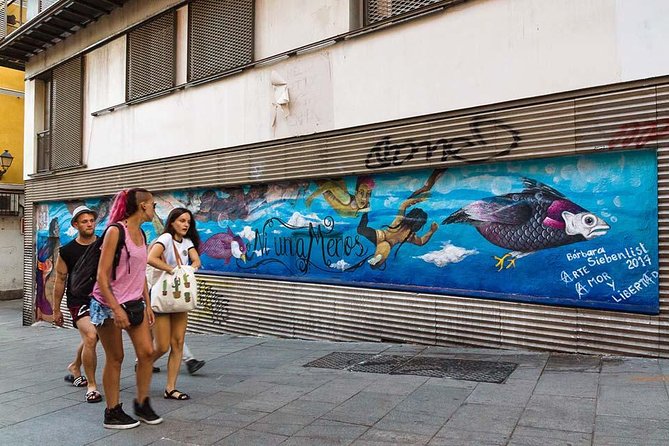
This tour fits best if you:
- like street art as culture and conversation, not just pictures
- want a clear sense of Madrid neighborhoods like Lavapiés
- enjoy explanations tied to real themes, including the legal pressure around graffiti
- prefer a small group over big crowds
You might want to skip (or at least set expectations carefully) if you:
- only want the most famous, polished murals and don’t care about stencils and process material
- get frustrated if a specific wall stop depends on whether the site is open
- need quieter pacing, since you’ll be walking and hearing explanations on the move
The overall rating is 4.8 with 96% recommended, and the strongest praises center on guide quality, energy, and seeing both sanctioned and unsanctioned art. One shortcoming that shows up in feedback is that some people felt the graffiti selection wasn’t what they expected compared to photos they’d seen. If you’re shopping this tour like a gallery itinerary, read that as a signal to arrive with curiosity, not a checklist.
Should You Book It? My Practical Take
Yes—book it if you want a guided, neighborhood-based street art experience that includes La Neomudéjar, La Tabacalera (including the basement stencils/projects), and a community finish at Campo de Cebada. For most people, the value comes from how the guide connects art to place and message, not just where the murals are.
Book with a little flexibility mindset. Site access can shift around La Tabacalera timing on weekdays, and the Esta es Una Plaza wall stop depends on whether it’s open. If you can, choose a day and time when sites are easiest to access and arrive ready to walk.
If you’re already planning a Madrid trip around neighborhoods, this tour is a smart way to add depth fast—without spending the whole day on museums.
FAQ
How long is the street art guided tour?
It runs for about 2 hours.
What does the tour cost?
The price is $30.38 per person.
Where does the tour start and end?
It starts at Teatro Valle-Inclán, Pl. de Ana Diosdado, s/n (Centro) and ends at Plaza de Cascorro, Pl. de Cascorro (Centro) near metro stops like La Latina or Tirso Molina.
Is the tour offered in English?
Yes, it’s offered in English.
Does it run in all weather?
Yes, it operates in all weather conditions, so you’ll want to dress appropriately.
Is food included?
No. Food and drinks are not included.