REVIEW · MADRID
Madrid: Street Art Bike Tour
Book on GetYourGuide →Operated by Cooltourspain · Bookable on GetYourGuide
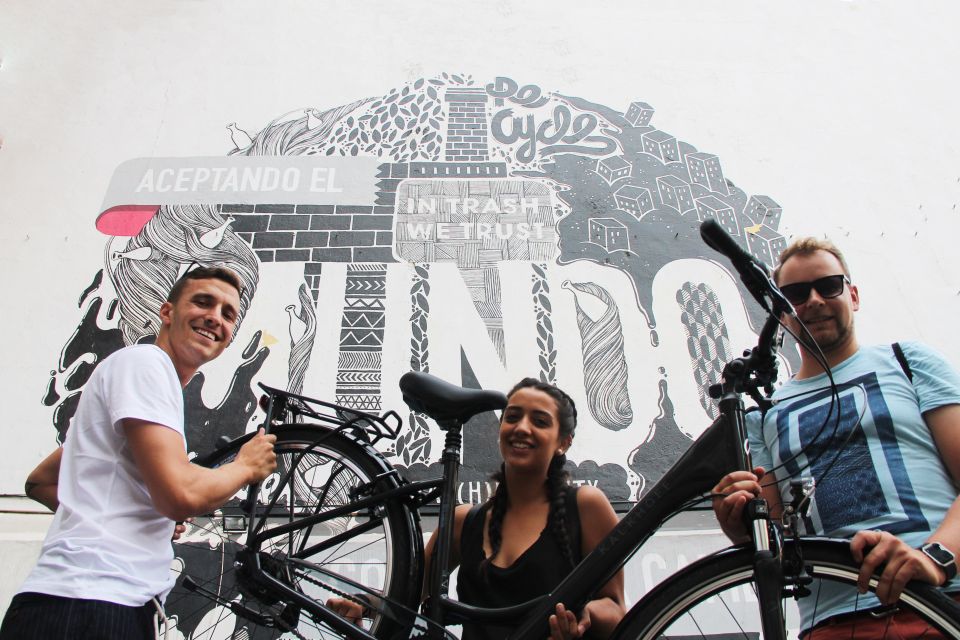
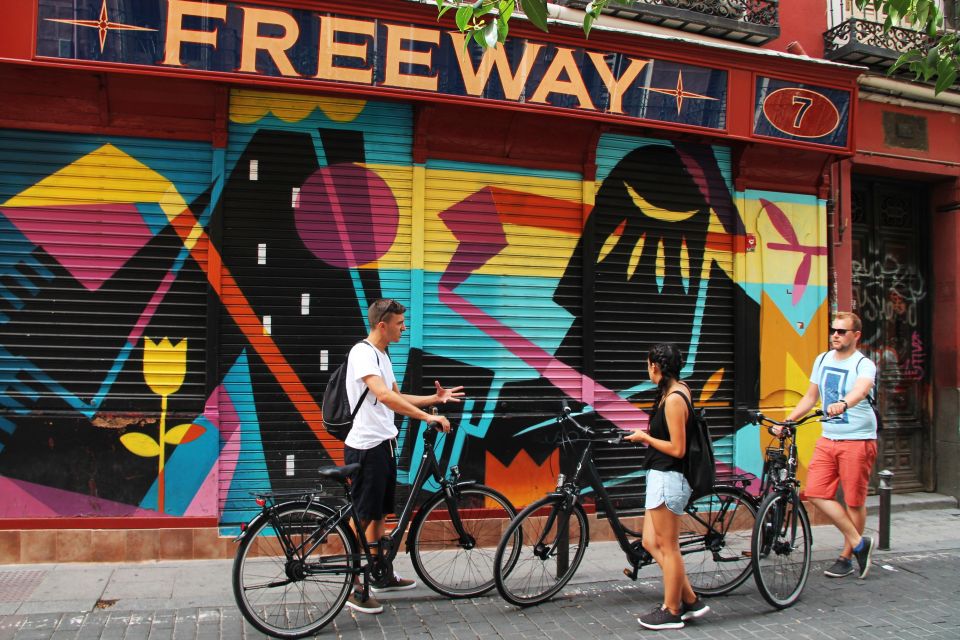
Street art in Madrid gets real fast. This bike tour pairs festival murals with hands-on history, led by a local graffiti artist as you roll through Malasaña and Lavapiés. You’ll pedal between national and international artists, with time to stop at major pieces (including the biggest mural in the center district).
Two things I really like: first, the guide’s focus on how graffiti works—history plus techniques on walls, shutters, and other city surfaces. Second, the neighborhood mix is practical: you’re not just chasing art photos; you’re riding through the streets where Madrid’s street culture actually lives. One possible drawback: it’s a medium cycling ride with traffic to think about and just one uphill, so go in feeling comfortable on a city bike.
In This Review
- Key Points That Make This Tour Worth Your Time
- Finding the Right Spot to Start: Carrefour Express on C/Montera
- What Happens Before You Ride: Safety + Street Art Techniques 101
- The Muelle Tag From 1989: Seeing Madrid’s Early Graffiti Pulse
- Alonso Martínez and Boa Mistura: International Design Meets Local Streets
- Malasaña by Bike: Festival Energy Around Plaza Dos de Mayo
- Solar Antonio Grilo and Esto es una Plaza: Lavapiés’ Community Art Spaces
- The Center District’s Biggest Mural: When Size Changes the Meaning
- Bike Ride Reality Check: Comfort, Traffic, and One Uphill
- What $46 Buys: Value You Can Feel in the Street Stops
- Who This Tour Is Best For
- Should You Book? My Honest Take
- FAQ
- How long is the Madrid Street Art Bike Tour?
- Where is the meeting point?
- What’s included in the price?
- What should I bring?
- Is the tour difficult to cycle?
- Are beverages included?
Key Points That Make This Tour Worth Your Time
- Local graffiti artist guide who explains techniques behind the pieces, not just names and dates
- Malasaña and Lavapiés by bike so you cover more street art than a walking-only tour
- Festival-linked stops, including references to Madrid’s street art scene like Pinta Malasaña
- Muelle tag from 1989, a preserved graffiti marker tied to the early Madrid movement
- Boa Mistura photo stop near Alonso Martínez, adding an international design agency angle
- Community art spaces like Solar Antonio Grilo and Esto es una Plaza in Lavapiés/Noviciado
Finding the Right Spot to Start: Carrefour Express on C/Montera
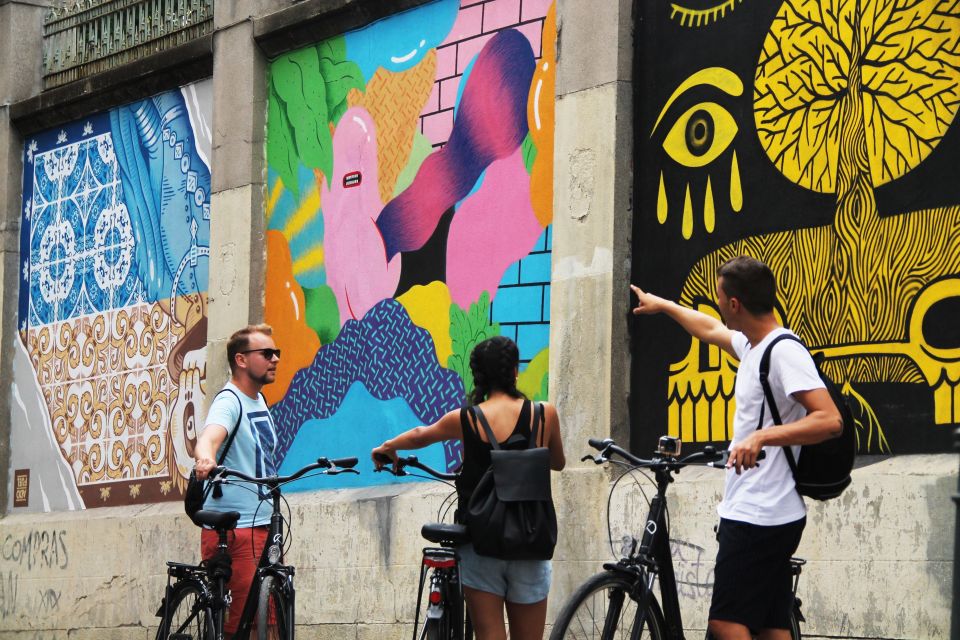
You’ll meet at the entrance of a small Carrefour Express on C/Montera 32, near the Gran Vía & Sol metro area. It’s one of those central starting points that makes the rest of the tour feel easy: you’re already in the middle of Madrid’s action, and you don’t waste time figuring out transit before you even start.
I like meeting points like this because they help you keep your day simple. You can arrive on foot from Sol, grab water if you want, and be ready to ride without a frantic scavenger hunt for a busier, harder-to-find address.
You can also read our reviews of more cycling tours in Madrid

What Happens Before You Ride: Safety + Street Art Techniques 101
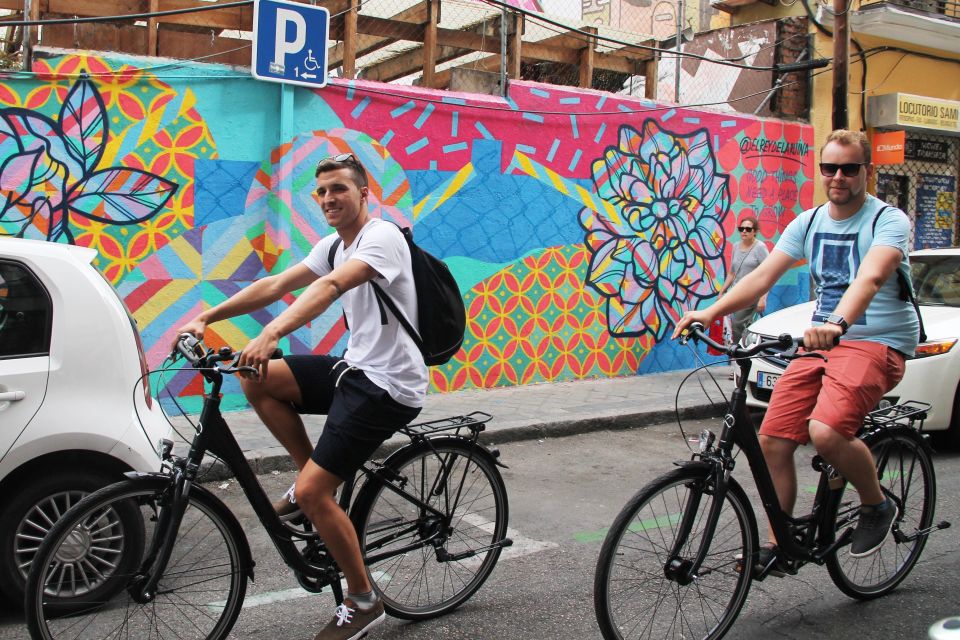
Before you start rolling far, you get a quick setup: bicycle safety instructions and a city-friendly pacing plan. Then the tour shifts into the real purpose—explaining the history of street art and the techniques artists use when they decorate the city.
This part matters more than it sounds. Graffiti and street art aren’t just random decoration. You’ll hear how tags and murals relate to identity, place, and timing, and you’ll start noticing details you’d normally miss, like how artwork changes depending on whether it’s on a wall, a metal shutter, or a other built surface.
Also, you’re not stuck listening the entire time. The guide builds the story so that when you arrive at a piece, you know what you’re looking for. It makes the tour feel like a guided conversation with Madrid’s surfaces.
The Muelle Tag From 1989: Seeing Madrid’s Early Graffiti Pulse
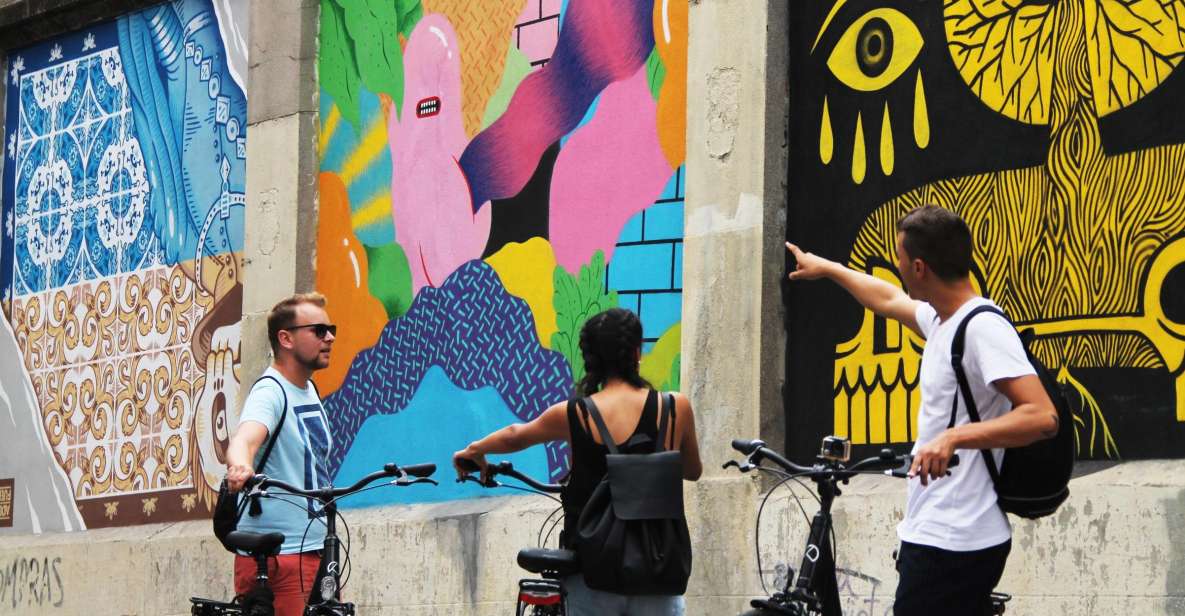
One of the most interesting stops is the reference to Muelle, described as the pioneer of the graffiti movement in Madrid. You’ll observe a tag linked to that early era that’s still preserved from 1989.
Why this is worth your attention: it anchors the whole tour in a timeline. A lot of street art tours jump straight to big murals and impressive color. This one reminds you that the movement has a before-and-after story—what started as marking identity and presence eventually became public art language across neighborhoods.
When you’re staring at a tag that’s lasted since 1989, you get a sense of how street art can outlive trends. It’s not just a style; it’s a record.
Alonso Martínez and Boa Mistura: International Design Meets Local Streets
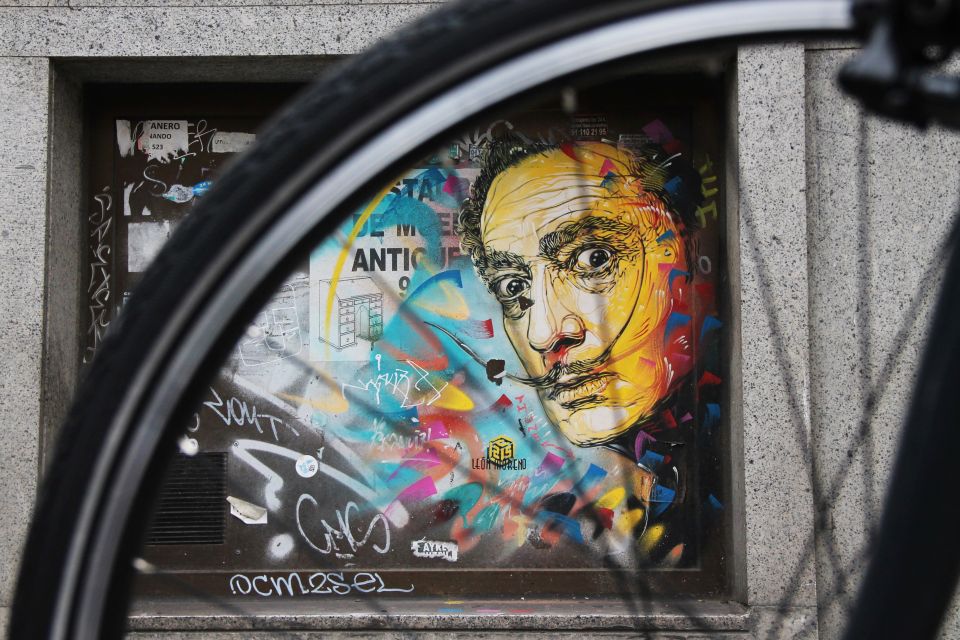
After the initial segment and the cycling setup, the route heads toward Alonso Martínez. This is where you’ll photograph the first piece created by Boa Mistura.
Boa Mistura is important here because the tour isn’t only about local legends. You get the sense of Madrid as part of a wider network of street art projects, where crews and agencies take styles and methods from one city to another. The stop also helps you think beyond “pretty mural.” You’ll see how international teams work within the texture of a specific neighborhood.
Practical note: a photo stop like this is easiest if you’re already thinking about where you’ll stand from a bike-lane and crowd-safety angle. Don’t wait until the last second to locate a safe viewing spot.
Malasaña by Bike: Festival Energy Around Plaza Dos de Mayo
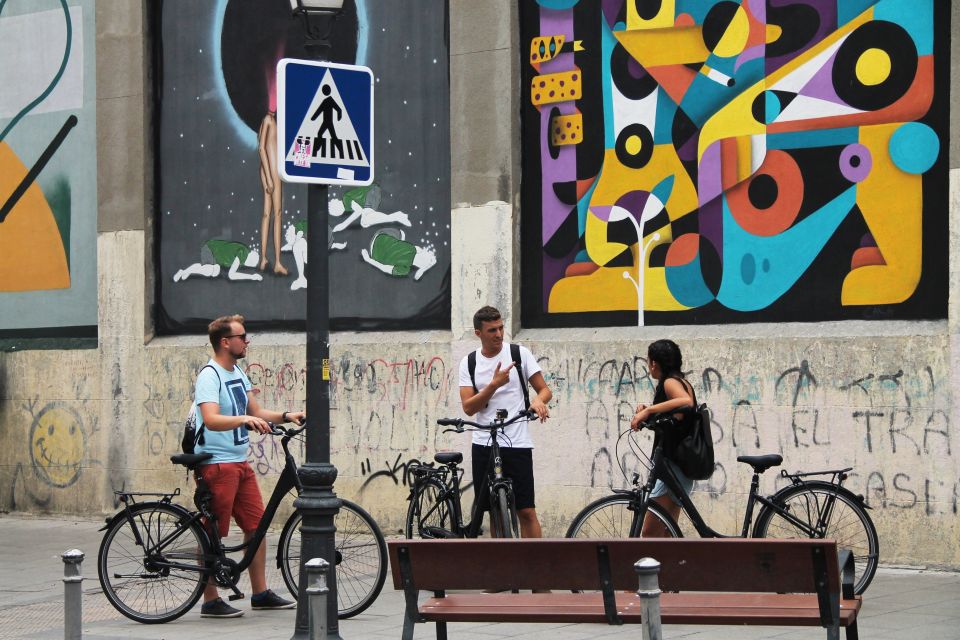
When the tour crosses into Malasaña, the whole feel shifts into something more trend-focused and street-level. You’ll ride past artwork connected to national artists who participated in the 2017 Pinta Malasaña festival, which colors this neighborhood during April.
Malasaña is one of those areas where street art fits naturally into daily life. You’ll see how murals and small interventions sit next to shop fronts, entrances, and the small-scale street rhythm that makes Madrid feel like it has layers.
A key anchor is Plaza Dos de Mayo, the center of the neighborhood’s festival energy. Here you’ll see the colorful display Bolardo Voy, Bolardo vengo, built around traffic elements. It’s a reminder that street artists don’t only work on blank walls—sometimes the city’s own infrastructure becomes the canvas.
This is also a good point to slow your pace mentally. If you’re moving fast on a bike, you can miss the smaller details. Let the guide’s explanation steer your eyes, not the other way around.
You can also read our reviews of more tours and experiences in Madrid
Solar Antonio Grilo and Esto es una Plaza: Lavapiés’ Community Art Spaces
As you head toward Lavapiés and the nearby Noviciado area, you’ll get time to visit Solar Antonio Grilo and Esto es una Plaza by bike.
These spaces are described as urban gardens and community hubs where street art is part of the site, not just something painted nearby. The tour frames them as places that used to be abandoned and then became examples to other communities around the globe for hybrid economy systems—meaning the site isn’t only artistic; it’s also about local initiative and how public space can be re-imagined.
What I love about this part is that it changes the tone of the tour. You go from murals as spectacle to street art as community infrastructure. You start to understand why street artists often choose places with social energy and why certain neighborhoods become magnets for new work.
If you like your art tours to include at least one stop that feels like a living project (not only photos), this is the segment to pay attention to.
The Center District’s Biggest Mural: When Size Changes the Meaning
The tour also includes a chance to see the biggest mural in Madrid’s center district. The listing doesn’t give a specific mural name, but the point is clear: scale changes how you experience street art.
When a mural is big enough, it stops being a single artwork and becomes part of the street’s mood. You’ll likely notice more layers—color blocking, character types, and the way artists design for distance. And because you’re biking through the area, you get a natural sense of how the mural behaves as you approach and then pass it.
I recommend taking one moment during this stop to just look without trying to photograph everything at once. Let your eyes adjust. Big pieces reward slow looking, even if your bike schedule is moving.
Bike Ride Reality Check: Comfort, Traffic, and One Uphill
This is rated as a medium level ride with one uphill. More importantly, Madrid traffic is what you’re riding through, not a closed park route.
That’s why the guide’s role matters. You get safety instructions up front, and you’ll be dealing with normal city movement for a chunk of the tour. If you’re an experienced cyclist, you’ll feel in control quickly. If you’re less confident, give yourself grace: choose stable footing, keep your line smooth, and don’t fight the flow of the group.
A practical tip: wear comfortable shoes you can bike in and that won’t slip when you stop for short viewing moments. The tour includes a restroom break, but you’ll still want to feel agile enough to hop off and back on without stress.
And yes—if you’re planning this with kids, a family run has been mentioned where a child of seven rode their own bike and the experience worked well. Still, I’d treat that as a “plan for readiness,” not a guarantee. Bring a kid who can handle basic bike balance and street awareness.
What $46 Buys: Value You Can Feel in the Street Stops
The price is $46 per person for about 2.5 hours, and it includes the big practical items you’d otherwise pay extra for: bike rental, a helmet and lock, a Madrid city map, a live English or Spanish guide, and a restroom break.
So the real value isn’t only the art knowledge. It’s transportation that’s already solved. If you’ve ever tried to DIY a street art day in a city center, you know the problems: bike rental timing, where to park, how to plan a route, and how to find the right pieces without wasting hours.
Here, you’re handed a route that ties together history, technique, and specific known pieces and spaces—plus a guide who can connect the dots. For a half-day plan, it’s solid value.
Beverages aren’t included, so if you’re riding in the heat, bring your own water.
Who This Tour Is Best For
This tour fits you best if you want more than pretty murals. I think it’s ideal for:
- Street art fans who care about technique and not just the final look
- People who want Malasaña and Lavapiés in a short time without building a DIY route
- Families or groups with a mix of interests, where the guide explains the neighborhood context along with the art
It’s less ideal if you hate bike traffic. Even with safety instructions, you’ll be sharing the road environment.
Should You Book? My Honest Take
Book it if you want a guided route that hits multiple layers: early graffiti like Muelle, international work like Boa Mistura, festival-linked pieces around Pinta Malasaña and Plaza Dos de Mayo, plus community art spaces like Solar Antonio Grilo and Esto es una Plaza.
Skip it (or choose a different format) if you’re uncomfortable cycling in city traffic or you know you’ll struggle with basic uphill effort.
If you can handle a standard bike ride through central streets, this is one of the more practical ways to see Madrid’s street art culture without turning the day into a scavenger mission.
FAQ
How long is the Madrid Street Art Bike Tour?
It lasts about 2.5 hours.
Where is the meeting point?
You start at the entrance of the small Carrefour Express at C/Montera 32, near Gran Via & Sol.
What’s included in the price?
Bike rental, a helmet and lock, a Madrid city map, a live guide in English or Spanish, and a restroom break.
What should I bring?
Bring a passport or ID card and wear comfortable shoes.
Is the tour difficult to cycle?
It’s a medium level activity with just one uphill. You’ll also ride through areas with city traffic.
Are beverages included?
No, beverages aren’t included.