REVIEW · MADRID
Tour Madrid: Royals, Plazas & Secrets 3H
Book on Viator →Operated by Green Tours · Bookable on Viator
Madrid feels bigger than it is. This 3-hour private tour strings together royal landmarks, classic plazas, and big-city sights with quick stops that help you orient fast. You’ll get the story behind places like the Royal Palace area and the Prado corridor, then finish in the wide boulevards around Gran Vía and Retiro.
Two things I really like: most of the scheduled stops are free (so you’re not constantly paying entry fees), and the route covers a lot of Madrid in a short time—great when you want the highlight map before picking where to spend extra hours. One thing to consider: it’s a fast sampler, so if you’re hoping for deep time inside a museum or a long sit-down look at details, this format can feel a bit quick.
In This Review
- Key things to know before you ride
- From Plaza de la Lealtad to a quick Madrid orientation
- Plaza de Santa Ana: a starting square with a real local feel
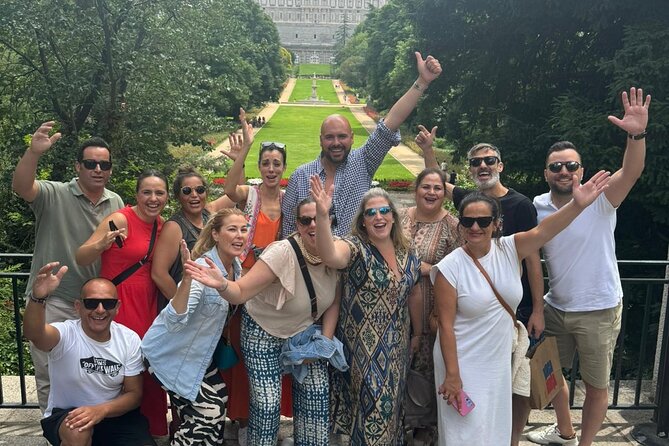
- Royal Palace area: Palacio de Oriente and the Sabatini Gardens
- Almudena Cathedral Museum: religion plus museum format, and it’s free
- Debod Temple: the Egypt stop you didn’t expect in Madrid
- Plaza Mayor and Mercado San Miguel: old-town heartbeats
- San Francisco el Grande: a big church stop with a lot of presence
- Literary Madrid in a hurry: Cervantes and Lope de Vega
- Plaza de las Cortes, Neptune Fountain, and the Prado corridor
- Los Jerónimos and Puerta de Alcalá: royal-adjacent landmarks
- Las Ventas to Bernabéu: Spain in sports-and-streets mode
- Paseo de la Castellana, Plaza Colón, and the national landmarks in motion
- Cibeles and Banco de España: formal Madrid around major roundabouts
- Gran Vía and Retiro: the classic late-morning to golden-hour finish
- Teatro Real: a 200-year opera-house sighting
- How this tour fits your travel style (and when it won’t)
- Guides and the pacing: why the human factor matters
- Price and value: $323.59 per group up to 4
- Should you book the Royals, Plazas & Secrets 3H tour?
- FAQ
- How long is the Madrid Royals, Plazas & Secrets tour?
- Is the tour offered in English?
- How many people are in a group?
- What’s the tour price?
- What’s included in the price?
- Is the Royal Palace admission included?
- Are the other stops included with admission?
- Where do we meet, and where does the tour end?
- Is free cancellation available?
Key things to know before you ride
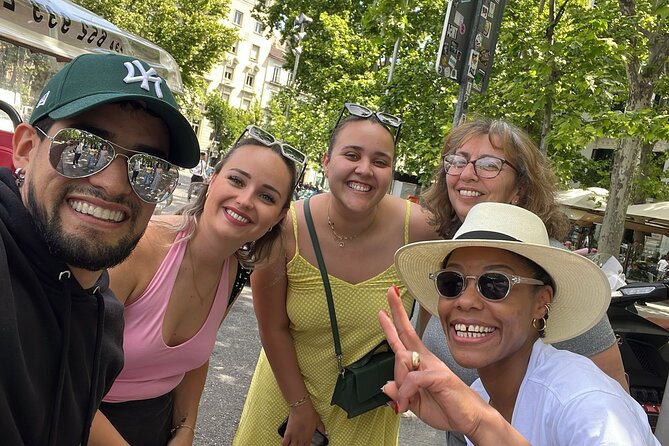
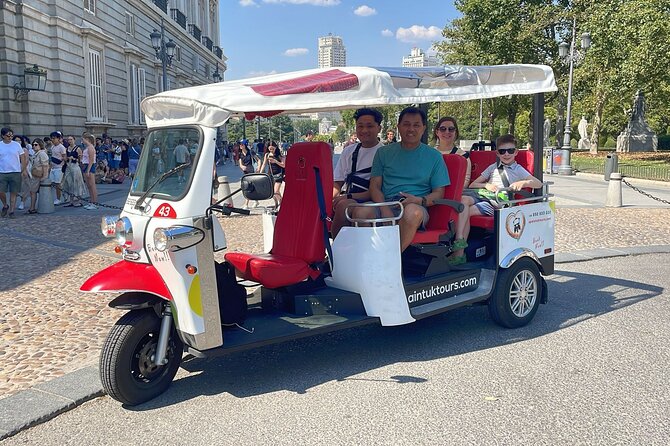
- Private group of up to 4: You control the pace more than on a big bus tour.
- Mostly free stops: The schedule marks many sights as free to visit.
- Royal Palace is the main paid exception: Palacio Real admission isn’t included.
- Old town to modern Madrid in one loop: You’ll bounce between plazas, neighborhoods, and skyline landmarks.
- Photo-friendly stop length: Most locations are timed for a quick look, then moving on.
From Plaza de la Lealtad to a quick Madrid orientation
Your tour starts at Pl. de la Lealtad, 1 in Retiro, and you end back at the same meeting point. That matters because it keeps the day simple: you’re not figuring out transfers or catching a bus across town at the end of your “big sights” sprint.
The format is also part of the value. With a total run time of about 3 hours and a private group size capped at four, you can use the ride like a GPS for your next day (or next week). You get to see where the neighborhoods sit relative to each other, how the major squares connect, and which areas feel like they match what you enjoy most.
And the language option is practical: the tour is offered in English, and tickets are handled via mobile ticket. That tends to reduce friction when you’re moving from place to place in a short window.
You can also read our reviews of more tours and experiences in Madrid

Plaza de Santa Ana: a starting square with a real local feel

The first stop is Plaza de Santa Ana, in the Cortes neighborhood of Centro. It dates from 1810, and the plaza has changed shape over time, which is a nice reminder that Madrid isn’t frozen in one era. Even the “simple” squares have layers.
In a tour like this, the value of Plaza de Santa Ana isn’t just the view—it’s the vibe check. This is the kind of central open space that anchors cafés, strolling, and evenings out. If you want to come back later, you’ll know exactly where to do it.
Royal Palace area: Palacio de Oriente and the Sabatini Gardens
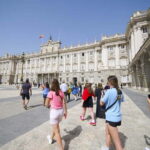
Next you’ll hit the Royal Palace of Madrid, also called Palacio de Oriente. Construction began in 1738 and took seventeen years. A key point here: the palace today is used for receptions, ceremonies, and official events, while the Spanish kings live at the Palacio de la Zarzuela.
One practical note: admission to the Palacio Real isn’t included. So if you want interior time, plan on buying that ticket separately. If you’re mostly after the exterior presence, you can still get plenty from the stop itself.
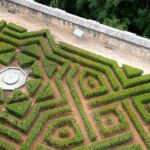
Right in front, the Sabatini Gardens sit between Calle Bailén and the San Vicente slope, occupying about 2.66 hectares. This is one of the easiest places in the whole route to slow down for photos—especially because the palace dominates the background.
Almudena Cathedral Museum: religion plus museum format, and it’s free
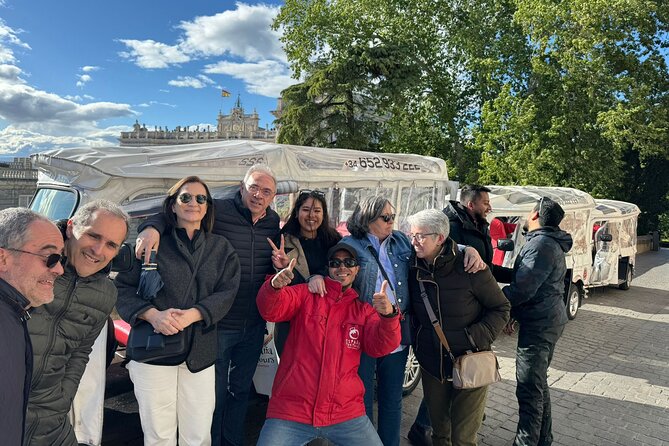
You’ll also stop at the Museo de la Catedral de la Almudena. The cathedral is described as Madrid’s most important religious building. It was consecrated on June 15, 1993 by Pope John Paul II, and it was the first consecrated cathedral outside Rome.
The museum portion is designed for a quick hit: you pass through several rooms showing objects that tell the story of Madrid’s diocese, from mosaics to episcopal shields and other ornament. The tour schedule marks this as free, which makes it a smart use of your short time—light on cost, heavier on context.
Debod Temple: the Egypt stop you didn’t expect in Madrid
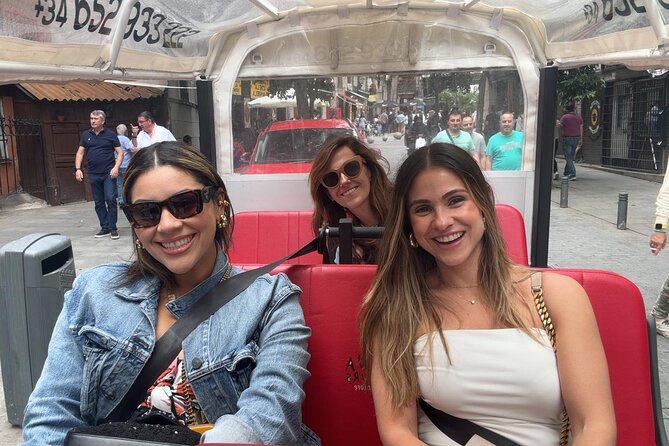
Templo de Debod is one of those surprises that makes a “short highlights tour” feel like more than a checklist. It’s an ancient Egyptian building that is currently located in Madrid. It sits west of Plaza de España near Paseo del Pintor Rosales, on a hill tied to the former Mountain Barracks.
This is a great stop for two reasons:
- It breaks the “Spain-only” visual pattern you might get in a classical city center.
- It gives you a different kind of history—one that explains how global artifacts found a place here.
Even if you only take a few minutes, the setting on the hill gives you a sense of Madrid’s geography.




Plaza Mayor and Mercado San Miguel: old-town heartbeats
Plaza Mayor is one of the city’s anchor points, described as the heart of Madrid de los Austrias (old town). It started on the site of the old Plaza del Arrabal, where the town’s market operated at the end of the 15th century. Later, in 1617, architect Juan Gómez de Mora was commissioned to bring uniformity to the buildings around it.
In practice, you’ll use Plaza Mayor as your reference point. When someone tells you to go to old town, this is where their directions usually orbit.
Right after, you can step into Mercado San Miguel. It’s a covered market from around 1916 and it’s known for local food, delicatessen items, and events in an elegant atmosphere. The schedule marks this as free too—though if you buy snacks, that’s on you. This is a great stop if you like tasting as you go.
San Francisco el Grande: a big church stop with a lot of presence
The Real Basilica de San Francisco el Grande is also officially Basilica of Our Lady of the Angels. It’s in the Palacio neighborhood within the historic center. Even without going deep inside on this kind of schedule, it’s worth a quick look because the basilica feels like a “serious building”—not just a quick photo façade.
Literary Madrid in a hurry: Cervantes and Lope de Vega
The tour includes Casa de Cervantes, the former residence of Miguel de Cervantes, author of Don Quijote, with guided tours. It also includes Casa Museo Lope de Vega, built in the 16th century. Lope de Vega acquired the property in 1610 and lived there until his death in 1635.
These two stops are perfect for readers, theater fans, and anyone who likes Madrid’s reputation as a place where literature isn’t just taught—it’s part of the streetscape. You won’t have hours here, so think of it as a teaser. If a particular writer hooks you, you’ll know exactly where to return.
Plaza de las Cortes, Neptune Fountain, and the Prado corridor
Plaza de las Cortes is more than a pretty address. It sits in front of the Palace of the Spanish Courts, built on the site of the former convent of the Holy Spirit that served as the Congress seat between 1834 and 1841. The facade includes neoclassical portico details like six imposing striated Corinthian columns and a triangular pediment with reliefs.
There’s also a striking detail at the entrance: lions flanking the door, said to be made by the same sculptor and cast with iron from cannons captured during the war in Africa. That’s the kind of story that turns architecture into something you actually remember.
Then you’ll see the Neptune Fountain at Plaza de Cánovas del Castillo. Neptune was proposed in 1777, with construction begun in 1782 and completed in 1786. It’s set at the center of the roundabout that takes its name from the fountain, so it’s a natural photo pin along the route.
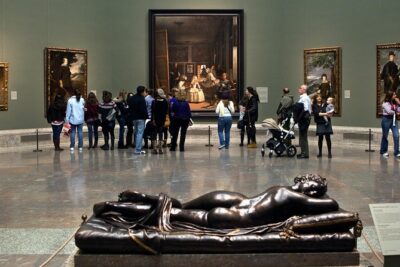
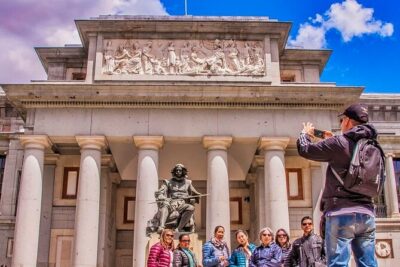
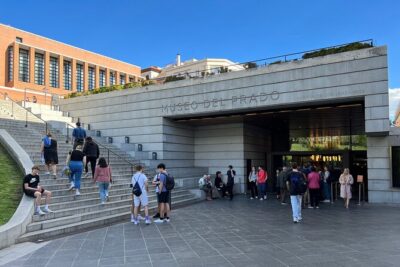
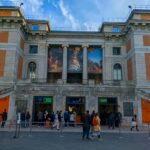
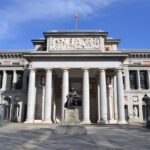
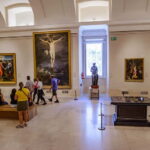
After that, you’ll move into the Prado area with a stop at the Museo Nacional del Prado. The museum is singled out for its depth in European painting from the 16th to the 19th centuries, with heavy emphasis on painters such as Velázquez, El Greco, Goya, Tiziano, Rubens, and El Bosco. The schedule marks entry as free, which is a big factor in overall tour value if your time is tight.
Los Jerónimos and Puerta de Alcalá: royal-adjacent landmarks
Next is Jeronimos, officially the Parish Church of San Jerónimo el Real. It’s late Gothic with Renaissance influences from the early 16th century. The church connects to Spain’s kings and Catholic Monarchs, including being a spiritual retreat for several monarchs and a place tied to royal investiture and major ceremonies.
A big plus here: it’s marked free on the schedule. That means you can “spend” time on a serious-looking landmark without paying an additional entry fee.
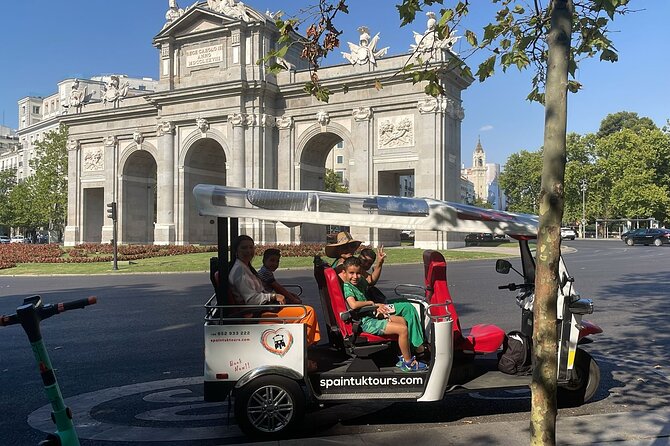
Then comes Puerta de Alcala. This monumental neoclassical arch was commissioned by Carlos III and inaugurated in 1778, designed by Francesco Sabatini. It’s built of granite and is framed as a triumph arc, with five openings instead of the usual three. The decorations differ between the inner and outer faces, so if you catch it from multiple angles, you’ll notice the contrast.
Las Ventas to Bernabéu: Spain in sports-and-streets mode
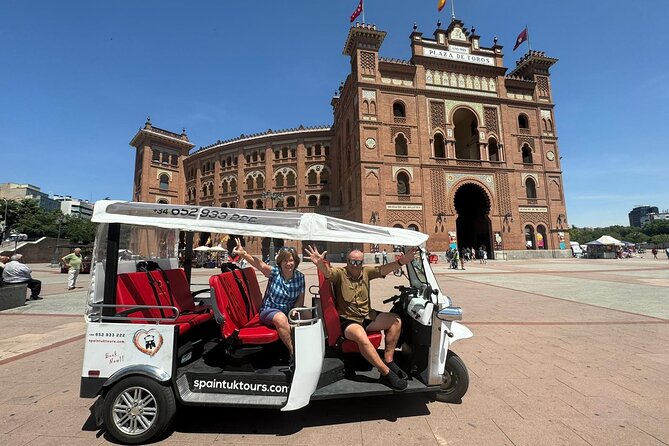
If you like variety, this stretch is for you. The tour includes Las Ventas Bullring—described as Madrid’s biggest bullfighting venue, with a capacity of 23,798 spectators and a ring diameter of 61.5 meters.
From there, you’ll pass through Barrio de Salamanca on streets like Velázquez, Ortega y Gasset, and Serrano. That’s a different Madrid: more upscale, more structured, and often more about strolling and shopping than about old-town wandering.
Then you’ll reach Santiago Bernabéu Stadium, inaugurated December 14, 1947, with a current capacity of 81,044 spectators. Even if you don’t watch a match, it’s a strong visual stop—one of the city’s modern icons.
Paseo de la Castellana, Plaza Colón, and the national landmarks in motion
You’ll also travel along the Paseo de la Castellana, described as the route from Salamanca toward the Bernabéu area and through the city’s financial district feel.
At Plaza de Colón, you’ll see the Christopher Columbus monument in white marble neo-Gothic style, built in 1885. The square also has Gardens of Discovery, opened in 1970, with sculptures including the monument connected to the discovery of America. There’s also a cultural center in the basement, though the schedule doesn’t specify interior time.
Then you’ll stop at Biblioteca Nacional de España (National Library of Spain). The data points to the library’s role in collecting, cataloging, and preserving Spain’s documentary heritage, with around thirty million publications spanning books, magazines, maps, prints, drawings, scores, and brochures. It’s marked free, which is helpful—library façades and courtyards can be great quick stops even if your interest is more outer architecture than reading rooms.
Cibeles and Banco de España: formal Madrid around major roundabouts
Cibeles Fountain is another major photo anchor. It’s surrounded by important buildings such as the Palacio de Buenavista, Palacio de Linares (Casa de América), Palacio de Comunicaciones (formerly the post office and now City Council of Madrid), and the Bank of Spain.
The fountain shows the Roman goddess Cibeles symbolizing land, agriculture, and fertility. She stands in a car pulled by two lions, with details attributed to specific artists (the goddess by Francisco Gutiérrez, the lions by Roberto Michel). This is a stop that helps you understand how Madrid mixes myth and civic life.
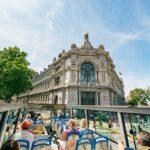
You’ll also see Banco de España. The outside is an easy win even if interior access is limited. The information provided notes that the interior can only be visited by groups from educational centers and universities, with some exceptional access for non-profit cultural and associative entities.
Gran Vía and Retiro: the classic late-morning to golden-hour finish
Gran Vía is next. It runs from Alcalá to the Plaza de España area and is described as a major hub for commercial, tourist, and leisure life after construction in the early 20th century. This is where Madrid feels like a capital with momentum.
After that, you’ll reach Parque del Retiro with time for main entrance photos. Retiro is the kind of green space locals treat as a second living room. Even on a short stop, it gives you relief from the dense street walls.
Then you’ll move along Paseo del Prado toward Atocha train station. This is a good final corridor because it lines up major cultural and institutional spaces. Even if you only get a pass-through drive, you finish the day with a sense of how Madrid directs movement between museums, plazas, and transport.
Teatro Real: a 200-year opera-house sighting
The last listed stop includes Teatro Real, described as an opera house about 200 years old. It’s a fitting closer for a route that started near the royal center and moved through civic squares and cultural institutions. Even if opera isn’t your thing, seeing this building at the end helps “lock in” the city’s identity as both formal and artistic.
How this tour fits your travel style (and when it won’t)
This tour is a strong match if:
- You have limited time and you want to get your bearings fast.
- You enjoy seeing both old Madrid and modern landmarks in one sweep.
- You plan to come back later to spend longer in one or two favorites, like the Prado area or specific plazas.
It’s not as ideal if:
- You want deep museum time or long interior visits. The schedule is built for quick stops.
- You want the Royal Palace interior included automatically. You’ll need to plan for that separate admission.
Guides and the pacing: why the human factor matters
A big part of why people rate this tour highly is the guide approach. Names like Rommel, Daniel, Maria, Javier, and Mari come up in a positive way for flexibility and for adjusting to interests. In a short 3-hour route, that flexibility is everything. You don’t just need facts—you need the guide to decide what to slow down for: a photo stop, a quick extra explanation, or a detour that fits your curiosity.
Also watch for practical issues that can affect experience quality: one guide-style detail that really matters is audio clarity in traffic. If you’re someone who needs to hear every detail, it’s worth understanding that crowded streets can make it hard even for good guides.
Price and value: $323.59 per group up to 4
At $323.59 per group (up to four), you’re paying for a private, time-efficient route rather than individual museum tickets. When you compare that to how many major districts and landmarks you see in about 3 hours, the math tends to work well—especially for couples or small groups who can split the cost.
The main trade-off is that it’s not a museum-in-depth tour. Think of it like a high-impact introduction to Madrid: you’re buying orientation, context, and a smart route that strings together what most people want to see.
Should you book the Royals, Plazas & Secrets 3H tour?
Book it if you want a structured, English-friendly way to cover Madrid’s headline sights quickly, with many stops marked free and a private group setup. It’s especially useful as a first or early visit, when you’re still figuring out neighborhoods and priorities.
Skip it (or pair it with a different day) if you want long interior time, especially for the Royal Palace, where admission isn’t included. Also, if your dream Madrid is one slow, detailed neighborhood walk, a tight loop may feel too rushed.
If you’re flexible and want the big picture plus enough context to plan your next moves, this is a solid buy.
FAQ
How long is the Madrid Royals, Plazas & Secrets tour?
It runs for about 3 hours.
Is the tour offered in English?
Yes, it’s offered in English.
How many people are in a group?
It’s priced per group, up to 4 people, and it’s private for your group.
What’s the tour price?
The price is $323.59 per group (up to 4).
What’s included in the price?
GST is included, and you receive a mobile ticket.
Is the Royal Palace admission included?
No. Palacio Real admission is not included.
Are the other stops included with admission?
Many stops on the schedule are marked free, but the Royal Palace is listed as not included. Lunch and dinner are also not included.
Where do we meet, and where does the tour end?
You meet at Pl. de la Lealtad, 1, Retiro, 28014 Madrid, Spain, and the tour ends back at the same meeting point.
Is free cancellation available?
Yes. You can cancel up to 24 hours in advance for a full refund.