REVIEW · MADRID
Royal Palace of Madrid Small Group Skip the Line Ticket
Book on Viator →Operated by Fun and Tickets · Bookable on Viator
Royal power can be painless. This skip-the-line Royal Palace tour keeps things moving, starting with a guided walk that explains Madrid’s big sights before you ever step inside. You’ll carry a radio guide with headset audio, so you don’t lose the story when the streets get noisy.
I love how the tour gives context fast, especially in Plaza Mayor, where the guide turns a postcard square into a timeline of Spanish change. I also like the mix of royal ceremony talk plus real local flavor stops, so the day feels like Madrid—not just a quick museum sprint—with palace time that clocks in around 1 hour 30 minutes.
One thing to plan for: even with reserved entry, security and capacity controls at the palace can add a few minutes to the door time. It’s usually short, but it can be longer on busy days.
In This Review
- Key highlights to watch for on this Royal Palace tour
- Starting with Plaza Mayor: a square that rewrote its own name
- A short food stop at Mercado de San Miguel (and why that matters)
- Conde de Miranda and Plaza de la Villa: charming corners with heavy history
- Plaza de la Villa: the medieval center under your feet
- Entering the Royal Palace: state ceremonies, not daily living
- The practical side: you’ll walk and you’ll climb
- Skip-the-line value: what you pay for beyond the ticket
- Timing, pacing, and what it feels like on the ground
- What to watch if you want clear audio and smooth flow
- Should you book this Royal Palace Small Group tour?
- FAQ
- How long is the Royal Palace small-group tour?
- Is the tour offered in English?
- How many people are in the group?
- What’s included with the ticket?
- Is the ticket mobile?
- Where does the tour start?
- Can I cancel for free?
Key highlights to watch for on this Royal Palace tour
- Max 15 people for a more personal pace than the mega-tours
- Headphones with a radio guide so you can hear the narration on the walk and in busy rooms
- Plaza Mayor’s name history, from Plaza del Arrabal to Plaza Mayor
- Market-window time at Mercado de San Miguel, for a quick taste of Spain’s food-country variety
- Torre de los Lujanes near Plaza de la Villa, a 15th-century landmark you can photograph easily
- A giant palace visit with exact scale numbers like 3,418 rooms and 135,000 square meters
Starting with Plaza Mayor: a square that rewrote its own name
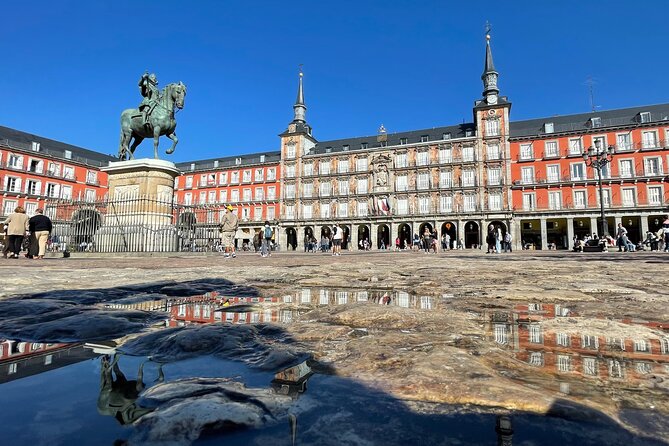
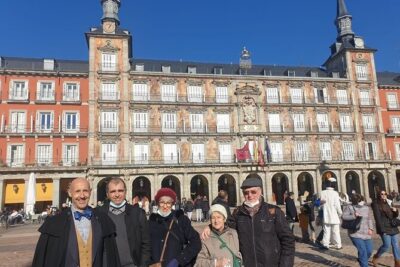
The best part of this tour is the way it teaches you how to look. You begin in the heart of central Madrid at Plaza Mayor, and the guide doesn’t treat it like background scenery. Instead, you get a quick lesson on how the square’s identity changed with Spanish politics.
It started as Plaza del Arrabal, a major marketplace site that drew crowds until the end of the 15th century. After the Constitution of 1812, Spain renamed many major plazas Plaza de la Constitución. That name returned multiple times: it showed up again during 1820–1823, 1833–1835, 1840–1843, and again from 1876 to 1922.
Then the restoration of the Bourbon monarchy in 1814 brought the name Plaza Real. In 1873, the square became Plaza de la República. After the Spanish Civil War, it finally settled into what you’ll see today: Plaza Mayor.
If you only see Madrid from a map, you miss this kind of layering. I like this stop because it teaches you to connect architecture to power shifts—without turning it into a lecture. It’s also a practical way to get your bearings before you head toward the palace area.
You can also read our reviews of more tours and experiences in Madrid


A short food stop at Mercado de San Miguel (and why that matters)
After the square, you pass into the orbit of Mercado de San Miguel, a historic food market that originally opened as a wholesale market more than 100 years ago. Today, it’s one of Madrid’s best-known gastronomic markets, with 20-plus stands focused on high-quality tapas and pub-style food.
The guide frames it as a quick sampler of Spain’s regional range. You’ll hear about classic offerings like Iberian ham, and seafood brought in daily from Galicia—plus Spanish comfort foods like rice dishes, and cheeses associated with regions such as Castile, Asturias, and the Basque Country.
Here’s why this stop is useful even if you don’t buy anything: it gives you a second flavor of Madrid—casual and everyday—right before the palace swings you into formality and ceremony. It also helps you gauge where you might want to return later for a real meal.
Conde de Miranda and Plaza de la Villa: charming corners with heavy history
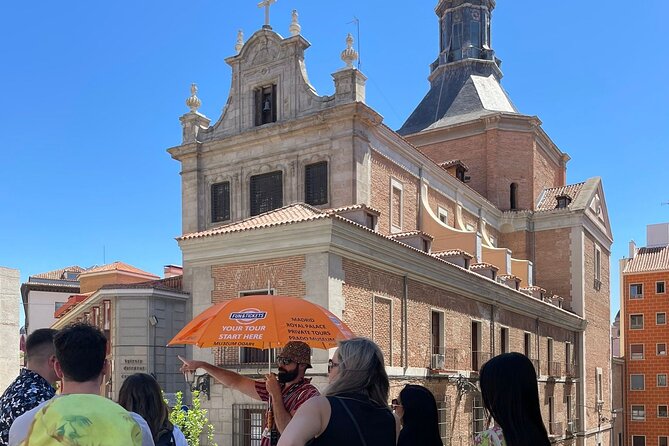
Between major sights, the tour slips into smaller spaces that feel more like Madrid at street level. One of these areas is the street-and-square world around Conde de Miranda and Villa, described as some of the city’s most charming squares. You’re not just taking photos; you’re noticing how history concentrates in corners.
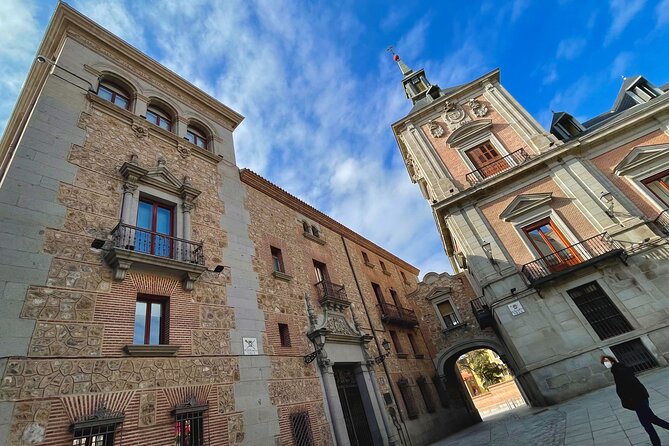
On the corner of Plaza de la Villa sits the Torre de los Lujanes, a 15th-century tower tied to the Gothic-Mudejar style. Nearby you’ll also hear about the Royal Maritense Economic Society of Friends of the Country and an old Municipal Newspaper Library.
Then the story turns spiritual. The route includes the area around the Church of Corpus Christi and the convent of Las Carboneras, where the community keeps an image of the Immaculate Conception that’s said to have been found in a charcoal kiln—along with miracles attributed to it. You don’t need to be a believer to appreciate how these legends stick around and shape local identity.
Plaza de la Villa: the medieval center under your feet
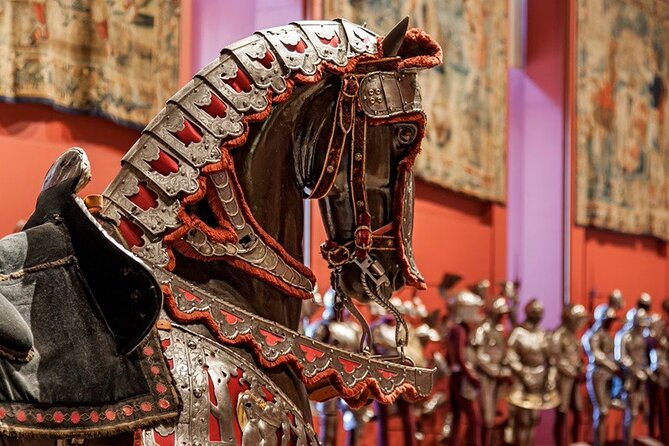
Next comes Plaza de la Villa, which the guide explains as one of Madrid’s main medieval centers. This isn’t just trivia. It’s the kind of detail that makes you understand why streets feel like they were laid with intention.
From the plaza, three streets connect back to the city’s early layout: Codo, Cordón, and Madrid. Around the edges, you get the payoff: three prominent facades from different centuries.
One of the most important is the Casa y Torre de los Lujanes (15th century), Gothic-Mudejar in style. Today it functions as the office of the Academy of Moral and Political Sciences. Even if you only glance at it from outside, the guide’s context helps you see why this corner mattered long before Madrid became the royal stage you’ll visit next.
Entering the Royal Palace: state ceremonies, not daily living
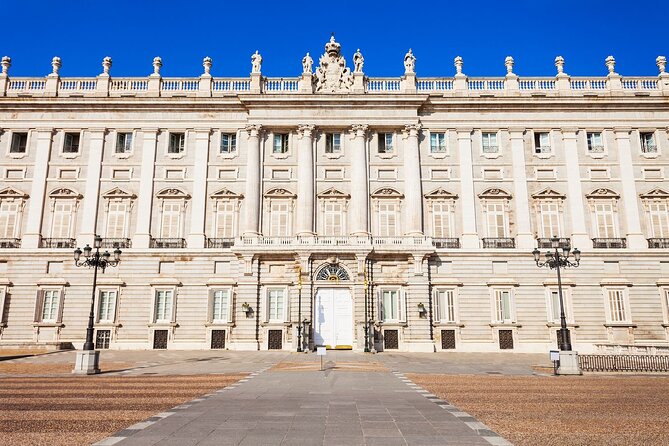
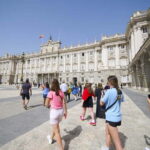
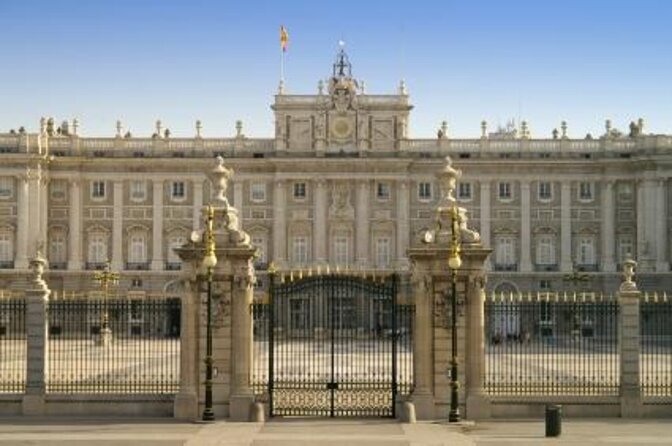
Finally, the tour reaches the reason most people buy this ticket: the Royal Palace of Madrid.
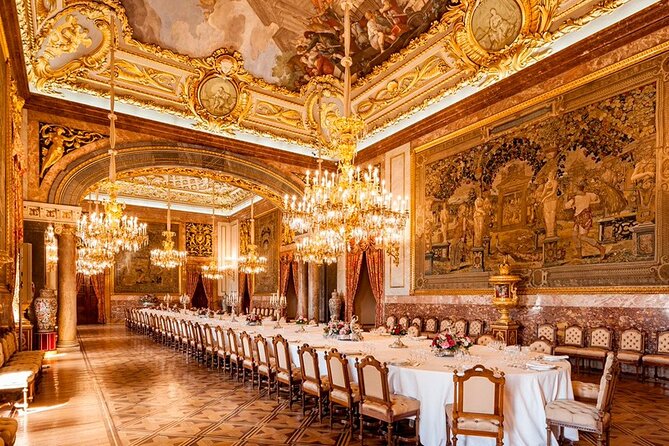
The guide frames it clearly. The palace is the official residence of the King of Spain, but the current monarchs don’t live there day-to-day. Instead, they live at the Zarzuela Palace, and this one is used for state ceremonies and solemn acts.
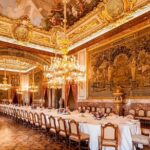
The building itself is huge. Construction stretched until 1764, when Carlos III lived in it for the first time. The guide also points out that Juvarra’s original project didn’t fully happen, but what you get anyway is still the scale that shocks people: roughly 135,000 square meters, 3,418 rooms, 870 windows, 240 balconies, and 44 stairs.
If you’ve seen Versailles, you may hear the comparison: Versailles is cited at about 67,000 square meters, so the Madrid palace ends up bigger on paper.
Because this is a guided experience, you’re not wandering with just your own instincts. Guides often bring the monarchy to life through stories tied to the palace’s purpose—formal, ceremonial, and meant to impress. Different guides can lean more academic or more anecdotal. I’ve found that getting a lively guide name like Jesus, Martin, Frederico/Federico, Sergio, Andrea, or Ander in the rotation can make the difference between seeing rooms and understanding what you’re seeing.
You can also read our reviews of more tours and experiences in Madrid


The practical side: you’ll walk and you’ll climb
Even though the palace visit is timed at about 1 hour 30 minutes, it can feel more demanding than you expect because of the building’s layout. Some people also note there are a lot of stairs. If you’re prone to sore knees or you don’t love repeated climbing, wear supportive shoes and keep your pace steady.
Skip-the-line value: what you pay for beyond the ticket
At $65.17 per person, you’re paying for more than admission. The key value is the bundle:
- Skip-the-line access to the Royal Palace
- a guided route through the most meaningful exterior and street-level context first
- headphones and a radio guide, which matters more than you’d think in a crowded city center
But here’s the fair reality check. The operator notes that palace access control can sometimes be blocked due to capacity and security controls, which may delay entrance for a few minutes. So yes, you’re buying “skip-the-line,” but you’re not buying a magic wand that cancels all real-world constraints.
Still, in practice, that reserved flow usually helps you spend more of your time inside the palace (and less of it in a long queue). One of the most praised aspects here is exactly that: you get into the palace smoothly with your guide guiding you through the approach.
Timing, pacing, and what it feels like on the ground
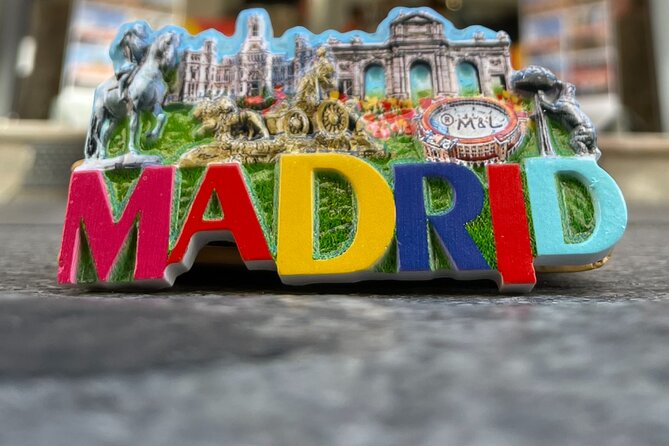
The tour is about 2 hours 10 minutes total. A common rhythm is: a short walking intro in central squares, quick stops for atmosphere and context, and then the main focus inside the palace.
That pacing works if you want:
- a quick Madrid foundation before deeper independent exploring
- a guided framework to reduce decision fatigue (where do I go, what matters, what do I ignore?)
- an efficient way to see the Royal Palace without sacrificing your whole day
It’s less ideal if you want a slow, quiet, read-every-label experience. Even with headsets, a guided timeline won’t let you linger in every gallery.
What to watch if you want clear audio and smooth flow
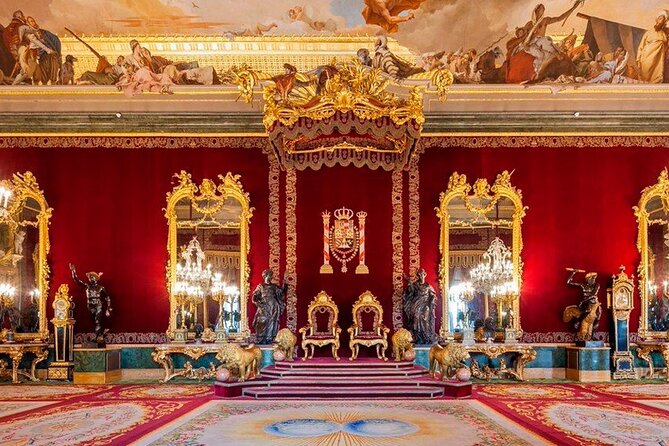
This tour’s audio setup is a big part of the comfort. You’re given a radio guide and gift headphones, and that helps a lot when you’re walking near traffic noise or moving through large rooms.
Still, a few issues can come up. Some people have reported heavy accents that were harder to follow, or receiver/audio problems where the sound cut out. There are also reports that microphone quality can affect comprehension, especially outside where street noise rises.
My advice: if you’re picky about hearing every word, sit closer when possible during key explanations, and keep your expectations flexible. The structure is designed to help, but sound quality depends on the moment.
Should you book this Royal Palace Small Group tour?
Yes, I’d book it if you want the Royal Palace with context, not just rooms. It’s a solid choice because you get a tight narrative arc: Madrid’s public-squares story first, then food-market texture, then the ceremonial power shift inside the palace itself.
Book it especially if:
- you hate wasting time in lines
- you want a small group (max 15) pace
- you’ll actually use headphones and want guided commentary instead of just guidebooks
Skip it (or pick another format) if:
- you prefer slow independent wandering and plan to spend hours inside
- you need guaranteed access timing with no delays at all (security/capacity can affect doors)
- you have strong concerns about audio clarity in crowded spaces
FAQ
How long is the Royal Palace small-group tour?
It runs for about 2 hours 10 minutes (approx.), with about 1 hour 30 minutes spent at the Royal Palace.
Is the tour offered in English?
Yes. The tour is offered in English, and the guides are provided for the English group.
How many people are in the group?
It’s limited to a maximum of 15 passengers for this semi-private visit.
What’s included with the ticket?
The experience includes radio guide with gift headphones, official bilingual guide support (English group), skip-the-line access to the Royal Palace, and admission to the Royal Palace.
Is the ticket mobile?
Yes, it includes a mobile ticket.
Where does the tour start?
The start point is Fun and Tickets Tours and Activities / Main Office at C. Mayor, 43, Centro, 28013 Madrid, Spain.
Can I cancel for free?
Yes. Free cancellation is available up to 24 hours in advance for a full refund. If you cancel less than 24 hours before the start time, the amount paid isn’t refunded.