REVIEW · MADRID
Madrid: Royal Palace Guided Tour with Entry Ticket
Book on GetYourGuide →Operated by Segway Madrid Guided Tours · Bookable on GetYourGuide
Stepping into the Royal Palace feels like walking into power. This small-group tour takes you through the palace’s biggest rooms and signature collections, starting with great views from the Plaza de Oriente before you head inside the Royal Palace. I like that it’s structured—so you don’t just wander, you move room to room with a guide.
I especially like the tour’s pacing through the main public-facing areas: the main staircase, the Hall of Columns, and the Charles III rooms. Another big win is the access focus on highlights that are easy to miss on your own, like the dining space that’s still used for special events and the Stradivarius violins in the later galleries. One consideration: it’s a 2-hour walking visit, and Madrid’s crowds and museum steps can add up even if the route is thoughtfully paced.
The group stays limited to 8, and that matters. In my view, it’s the difference between hearing facts from a guide and actually asking follow-up questions as you go—something you’ll see praised in guides like Jesús, David, Natalie, and Louis. Still, if you’re traveling with large suitcases or a big backpack, you’ll need to plan around the palace rules and use the provided luggage storage.
In This Review
- Key highlights worth planning around
- A practical way to enjoy Madrid’s Royal Palace
- Getting your bearings: Plaza de Ópera and Plaza de Oriente
- Entering the palace at the right point
- The main staircase and ceremonial halls
- Charles III’s rooms: where the tour turns personal
- The royal dining space: bigger than you expect
- Silver, porcelain, and the palace collections rhythm
- Prince’s Courtyard, reliquary, and chapel moments
- Finishing in the museum chambers: Stradivarius and the throne room
- What makes this tour good value at about $38
- Guides that show up: Jesús, David, Natalie, and Louis
- Who should book this Royal Palace guided tour
- Things to consider before you go
- Should you book this Royal Palace guided tour?
- FAQ
- How long is the Royal Palace guided tour?
- What is the price per person?
- Is the Royal Palace entry ticket included?
- Does this tour help you avoid the ticket line?
- Where do I check in, and where does the tour end?
- What happens if I have large luggage or a big backpack?
- What rooms and highlights will I see?
- What languages are available for the guide?
- Is the tour wheelchair accessible?
- Is free cancellation available?
Key highlights worth planning around

- Skip-the-line entry so you lose less time stuck outside
- Small group of up to 8 for better questions and smoother movement
- Plaza de Oriente photo stop and viewpoint build-up before you enter
- Charles III’s private rooms and the royal dining area that’s still used
- Big collection moments: Stradivarius violins, crown and throne rooms, royal armory
- Hall of Columns and main staircase for that instant-palace wow factor
A practical way to enjoy Madrid’s Royal Palace

Madrid’s Royal Palace is the kind of sight that’s hard to appreciate from a distance. From the outside you can tell it’s impressive, but inside you get the real feeling: formal spaces made to impress, and collections meant to signal status for centuries. The smart move here is going with a guide who helps you connect rooms to people—who lived where, what the room was used for, and why certain artworks and artifacts matter.
I like that this tour doesn’t waste time on random corners. You start with an orientation and then you follow a route that’s built around the palace’s most important and recognizable areas. And because this is a small group (limited to 8), the experience tends to feel guided instead of rushed. That’s a big deal in a palace where most of the work is walking, reading, and trying not to get turned around.
You can also read our reviews of more tours and experiences in Madrid



Getting your bearings: Plaza de Ópera and Plaza de Oriente

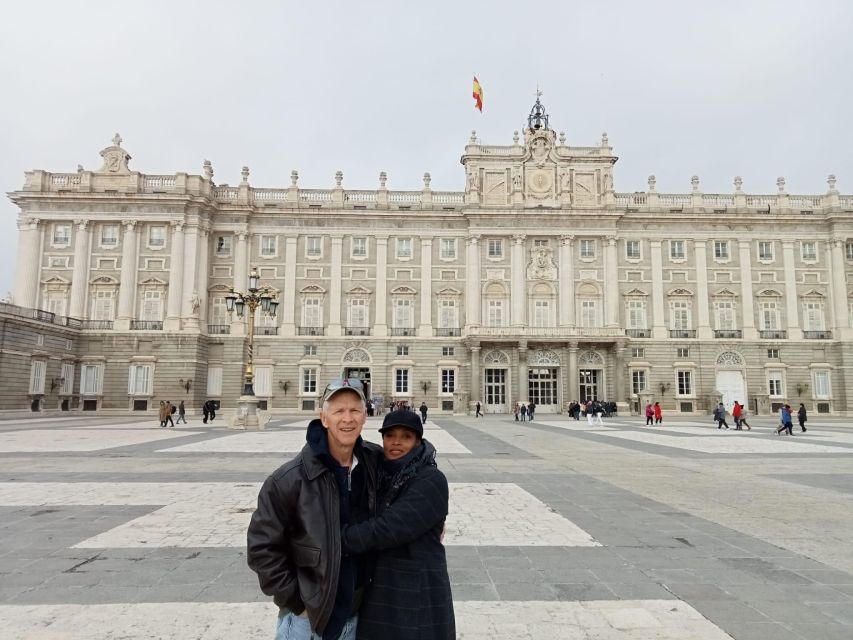
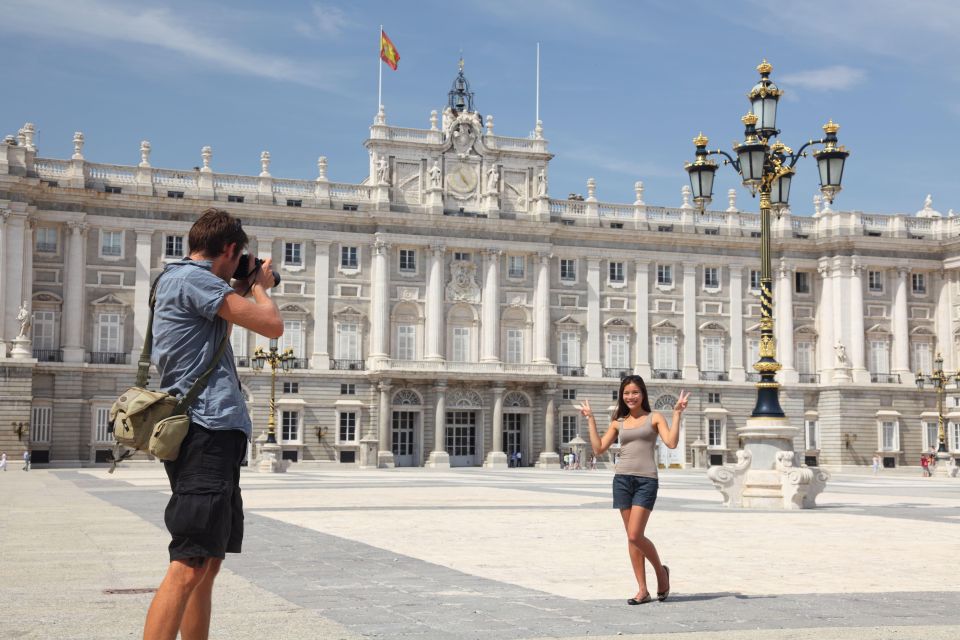
Before you reach the palace doors, the tour takes you through the Opera area and then parks you at the right moment for photos at the Plaza de Oriente. There’s a short pass by the Plaza de Ópera (about 10 minutes), then you get a 15-minute stop at Plaza de Oriente for sightseeing.
This is more than a break. It’s where you can understand the palace’s setting. From the start area, you get views toward the Almudena Cathedral, the Campo del Moro Gardens, and the Casa de Campo. In plain terms: you’re spotting the landmarks that frame the palace, so the building doesn’t feel like an isolated monument. It also helps you “wake up your eyes” before you go inside, because the best interior moments usually land harder after you’ve formed a visual mental map outside.
Entering the palace at the right point
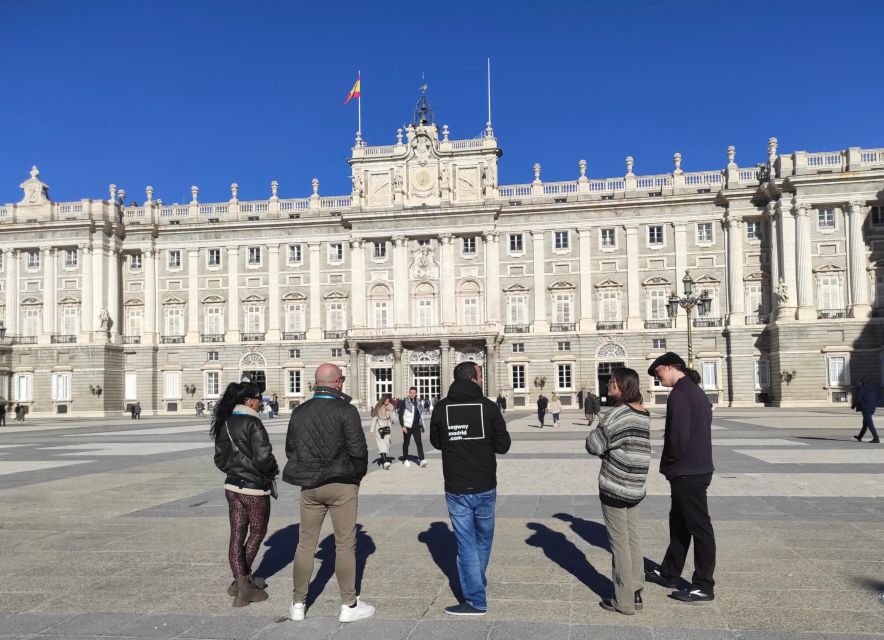
The route is designed so you access the interior of the palace through the Plaza de la Armería. Once you’re inside, the tour quickly moves you into the building’s main flow: entrance hall, the grand staircase, and then several major ceremonial spaces.
Why I think this matters: the Royal Palace has lots of rooms, but not all routes help you connect them. This one keeps you anchored in the spaces that are easiest to recognize and hardest to replicate without help. You’ll also get a guide-led introduction to the monarchy and the kings who lived in this place, so names and rooms start to make sense instead of feeling like labels.
The main staircase and ceremonial halls
Once inside, the tour builds an early “wow sequence.” You move from the entrance hall toward the main staircase, then into major spaces like the Alabarderos Hall and the Hall of Columns.
These are the kinds of rooms where the details are the story: the scale, the way the architecture directs movement, and the sense of occasion. The Hall of Columns is especially effective because it gives you both grandeur and structure. You can look up, look across, and still understand that this wasn’t designed for casual hanging around—it was designed for power shown in public.
A practical tip: if you want photos, prioritize them during the first big rooms. Later, once you’re deeper in private and collection areas, you’ll spend more time listening and moving through tighter flows.
Charles III’s rooms: where the tour turns personal

After the ceremonial spaces, you shift into rooms tied to Charles III’s world. The tour stops before his dressing room and includes Gasparini’s room, known for a chinoiserie style with rococo influences. That combo of cultural references and decorative design is a big reason this tour feels more than “pretty rooms.”
You then reach Charles III’s main room, and from there you move toward the royal dining area. This is one of the tour’s standout parts because it’s not just about decoration. You’re shown how daily life and court culture connected to the palace’s most important ceremonial functions.
And here’s a useful angle: dining spaces in historic palaces are often the most human part of “royal theater.” This tour points you to the massive dining room and notes that it’s still used for special events. That detail helps you picture the palace continuing to operate, not simply frozen in the past.
You can also read our reviews of more guided tours in Madrid



The royal dining space: bigger than you expect
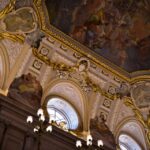
The tour focuses on the triple-room layout of the royal dining space—described as one of the only areas still in use. It’s the kind of information that changes how you look at the room. Instead of thinking, This is just an old hall, you start noticing circulation, sightlines, and the overall design logic of a working ceremonial space.
If you’re visiting in a group, you’ll also appreciate the way a guide keeps the narrative going room to room. In these larger rooms, it’s easy to drift into photo-mode. With a guide leading the route, you get more “what am I looking at and why?” answers than you’d likely pick up alone.
Silver, porcelain, and the palace collections rhythm

Next you pass through rooms built around collections—specifically the silver and porcelain rooms. This is where the palace shifts from formal spaces to display spaces, and where the guide’s job is to keep the experience coherent.
Collections like this can feel endless if you’re not given a thread. Here, the thread is the royal life implied by objects: crockery and silverware weren’t just utilitarian items. They were visual statements—proof of wealth, craftsmanship, and court identity. The tour uses stops that keep you moving, so you’re not stuck in one room for too long without context.
Prince’s Courtyard, reliquary, and chapel moments
The route continues to the prince’s courtyard and then highlights religious power inside the palace: the precious reliquary and a grandiose chapel guarded at its entrance by the Catholic kings.
Even if you’re not a religious-history person, this section is worth paying attention to because it explains the palace as more than a home for royalty. It’s also a center where authority is reinforced through ritual and sacred symbolism.
For photography and pacing: courtyards and chapel zones often feel like transitions. You’ll likely slow down naturally here. Let the group rhythm settle, because the guide’s explanations in these spaces usually land best when you’re not sprinting for the next room.
Finishing in the museum chambers: Stradivarius and the throne room
After the core room sequence, the tour ends with museum-like collection chambers, where the palace really flexes its treasures. This is where you get the Stradivarius violins and the crown-room details, including the scepter and a table of sphinxes.
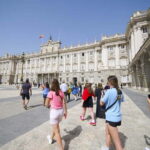
Then comes the throne room details: it’s described as having 12 mirrors and armchairs guarded by Velázquez’ lions. That’s the kind of image you can almost feel even before you see it—then it’s all there in front of you, helping you understand why the room became one of the palace’s signature stops.
One more collection anchor is the great royal armory, which rounds out the experience by shifting from ceremonial court art to the objects that represent defense and status. It’s a satisfying ending because it closes the loop: the palace wasn’t only for celebrations. It also represented authority that had to last through conflict and power changes.
What makes this tour good value at about $38
At $38 per person for a 2-hour guided visit with entry included, I think the main value is time saved and the reduction of confusion. The palace can be overwhelming if you go in cold: you’re faced with huge rooms, lots of art, and a floor plan that can be hard to mentally sort out. This tour gives you a clean path and a guide to interpret what you’re seeing.
The included entry ticket and the skip-the-ticket-line element are especially meaningful in a busy landmark like this. You’re paying not just for access, but for smoother entry and a guided schedule that prevents you from losing the morning to queues.
Another practical detail: luggage storage is included. The tour notes that large suitcases and backpacks aren’t allowed, so having storage handled for you keeps you from arriving stressed and rushing to find a workaround.
Guides that show up: Jesús, David, Natalie, and Louis
The tour data includes multiple guide names that stand out for clear communication and strong presentation. Jesús is praised for being entertaining, well-paced, and full of information. David shows up repeatedly for enthusiastic explanations and a style that keeps people listening without rushing. Natalie and Louis also earn high marks for making the experience enjoyable and detailed.
You should still treat guide names like a sign of quality, not a promise that your guide will be the same person. Still, it’s a useful clue: this tour seems to attract guides who can handle both facts and flow, including questions and group management.
Who should book this Royal Palace guided tour
You’ll likely be happiest with this tour if you:
- Want a structured route through the palace’s most important rooms
- Prefer small-group pacing (up to 8 participants)
- Like learning the connection between rooms, rulers, and objects
- Want the highlight collections without spending hours trying to piece it together
It’s also a good fit if you need help managing practicalities. The tour includes luggage storage and notes wheelchair accessibility, and one review specifically mentions a guide being conscientious with a wheelchair—so this is a format that tries to accommodate real-world needs.
Things to consider before you go
A few practical realities to keep in mind:
- It’s a walking tour for about 2 hours, so wear shoes that can handle palace steps and museum-style floors.
- Large suitcases and big backpacks aren’t allowed inside, even though luggage storage is provided.
- The palace can be busy. Even with skipped lines, the rooms themselves can feel crowded at peak times, so your best strategy is to listen closely and move with the group rather than trying to stop everywhere.
Should you book this Royal Palace guided tour?
I’d book it if you want the Royal Palace to feel understandable—not just beautiful. The combo of skip-the-line entry, a small group, and a room-by-room route focused on the palace’s biggest moments makes it a smart use of your time in Madrid. If you’re the type who likes art and architecture but also wants context—Charles III’s chambers, the royal dining space still in use, Stradivarius violins, and the throne-room details—this tour is built for you.
If you prefer total freedom to wander slowly at your own pace, you might feel guided structure a bit limiting. But if you want value and clarity in a famous palace with endless distractions, this one makes it easy to get a lot right.
FAQ
How long is the Royal Palace guided tour?
The tour duration is 2 hours. Starting times vary, so you’ll need to check availability.
What is the price per person?
The price is listed at $38 per person.
Is the Royal Palace entry ticket included?
Yes. The tour includes the Royal Palace entry ticket.
Does this tour help you avoid the ticket line?
Yes. It includes skip-the-ticket-line entry.
Where do I check in, and where does the tour end?
Check in at Segway Madrid store at Calle de la Independencia 2. The tour ends back at the same meeting point.
What happens if I have large luggage or a big backpack?
Large suitcases and backpacks aren’t allowed. The tour includes a luggage storage service, so you can store bags before entering.
What rooms and highlights will I see?
The tour covers major areas such as the entrance hall, main staircase, Alabarderos Hall, Hall of Columns, and Charles III rooms. It also includes highlights like Charles III’s dressing room area, Gasparini’s room, the royal dining space, silver and porcelain rooms, the prince’s courtyard, a reliquary, a chapel, plus museum chambers with Stradivarius violins, the crown room, the throne room, and the royal armory.
What languages are available for the guide?
The live tour guide is available in English and Spanish.
Is the tour wheelchair accessible?
Yes. The tour is wheelchair accessible.
Is free cancellation available?
Yes. Free cancellation is offered up to 24 hours in advance for a full refund.