REVIEW · MADRID
Madrid: Thyssen-Bornemisza & Reina Sofia Private Tour
Book on GetYourGuide →Operated by Tour Travel & More · Bookable on GetYourGuide
Two top art museums, no waiting. This private, skip-the-ticket-line tour strings together the Thyssen-Bornemisza and Reina Sofía in about 4 hours, with a guide keeping you focused on what matters. You get more than room-by-room facts; you get a guided way to connect ideas across centuries.
What I like most is the sheer art range: you’ll move through Italian and Flemish work from the 14th–15th centuries, Renaissance pieces, Dutch Baroque painting, and 18th-century Italian vedutism. Then the Thyssen jumps into impressionists and 20th-century modern trends like Cubism, German Expressionism, abstract art, Pop Art, and even 1980s figuration.
One thing to consider: transportation isn’t included. You’ll handle your own getting there and back, and you should be ready for a museum-to-museum walk as part of the flow.
In This Review
- Key points to notice before you go
- Two Madrid Museums That Tell One Story
- How the Private Format Works in 4 Hours
- Your Arrival: Meeting at the Museum Hall
- Thyssen-Bornemisza: From Old Masters to Pop Art
- The Guide Advantage: Expert Explanations in Real Time
- Walking to Reina Sofía in the Sabatini Building
- Reina Sofía: Picasso, Dalí, Miró, and Modern Spanish Power
- Price and Value: Is $283 per Person Worth It?
- Who Should Book This Private Tour (and Who Might Skip It)
- Should You Book This Madrid Art Tour?
- FAQ
- How long is the Madrid: Thyssen-Bornemisza & Reina Sofia Private Tour?
- Is ticket entry included for both museums?
- Does this tour skip the ticket line?
- What languages are the live guides?
- Is transportation included in the price?
- Where do I meet the guide?
- Is the tour wheelchair accessible?
- What is the cancellation policy?
Key points to notice before you go
- Skip-the-line entry to both museums, saving time for a short 4-hour window
- A private guide for 4 hours who can explain what you care about as you go
- Thyssen’s full sweep, from 14th-century Italian/Flemish to Pop Art and 1980s figuration
- Reina Sofía’s setting, a big neoclassical building from the former General Hospital of Madrid by Sabatini
- Spanish modern giants in focus: Picasso, Dalí, Miró, plus surrealism, cubism, and New Figuration
- Languages are covered (Spanish and English) for a smoother experience in either language
Two Madrid Museums That Tell One Story
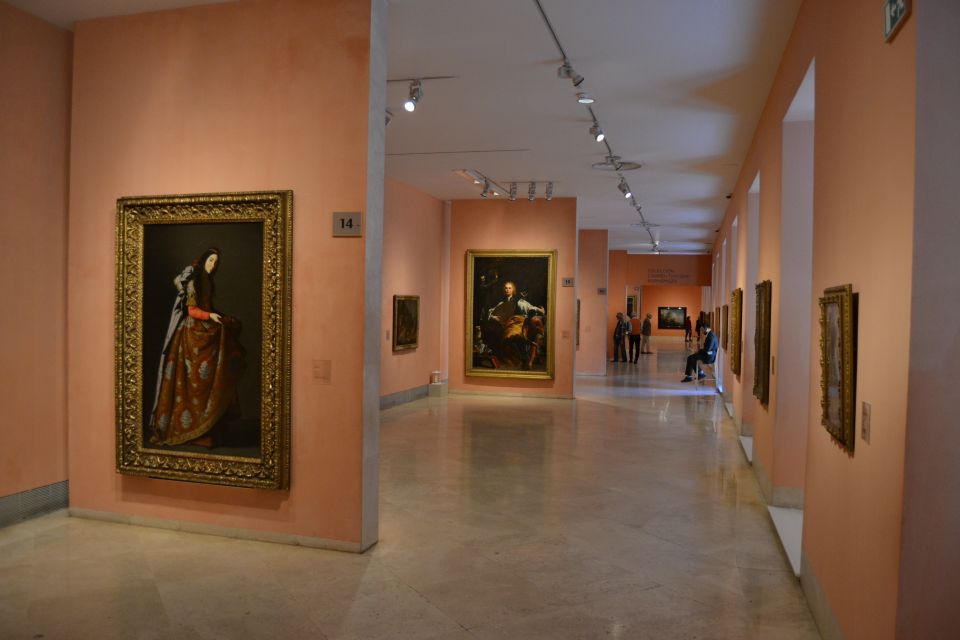
Madrid art fans usually have two big names on their list: Thyssen-Bornemisza and Reina Sofía. This tour puts them together on purpose. You start with a collection that spans old masters through modern movements, then you shift to Spain’s 20th-century core at Reina Sofía.
That structure is useful because it helps you spot change. You’re not just seeing “a lot of paintings.” You’re seeing how European art’s goals evolve: from religious and courtly scenes, to realism and light, to distortion, symbolism, abstraction, and new ways of showing a face or a feeling.
I also like that it’s private. With a private group, you’re not stuck watching a guide speak to ten different interests at once. Your guide can pace you, steer you toward the right rooms, and explain pieces without making you feel rushed.
You can also read our reviews of more private tours in Madrid



How the Private Format Works in 4 Hours
This experience is built for people with limited time but big ambition. In four hours, you’re doing two major museums, getting line-saving entry, and still having time for explanation rather than just photos.
The guide-led pacing is the key. Without a guide, it’s easy to drift—especially in museums with huge collections. Here, the guide’s job is to keep your viewing meaningful, not just busy. It’s the difference between collecting random highlights and understanding why certain works belong together.
Also, you’re walking between the museums with your guide. That’s a nice practical touch because it keeps the tour continuous. One small drawback: since transportation isn’t included, you’ll want to plan your own start and finish around the meeting point.
Your Arrival: Meeting at the Museum Hall
You’ll meet the guide at the Hall of the museum, next to the desk. That’s simple and practical, but it also means you should arrive a bit early and take a minute to get oriented inside.
If you’re using maps on your phone, double-check you’re at the correct museum entrance area. The “Hall next to the desk” direction is straightforward, yet it’s the kind of detail that matters when you’re standing in a big building.
Once you connect with the guide, the tour focuses right away on getting you through the museums efficiently. The point of skip-the-line entry is to help you spend your energy on looking—not waiting.
Thyssen-Bornemisza: From Old Masters to Pop Art
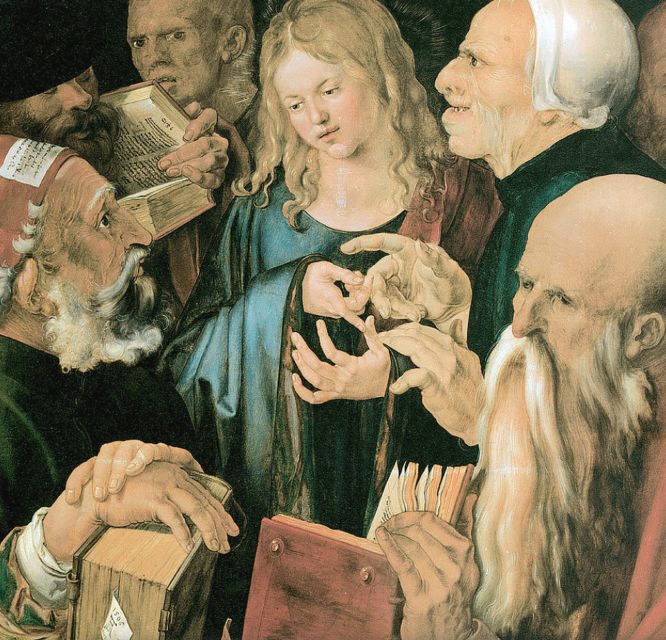
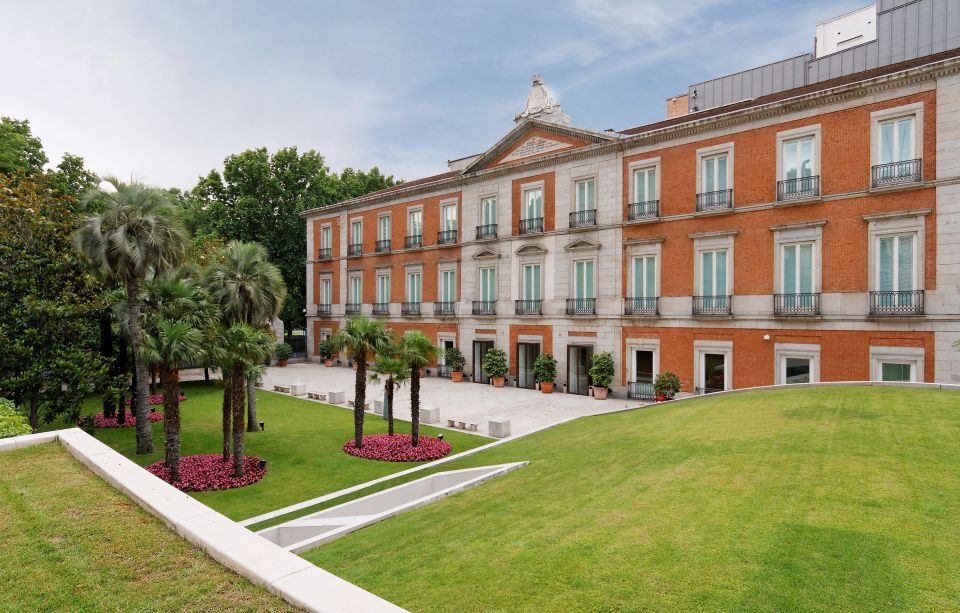
The Thyssen-Bornemisza is a big reason this tour works so well. It’s not a narrow museum. It’s a timeline you can walk through, from earlier European painting traditions to modern art movements that feel almost like a different language.
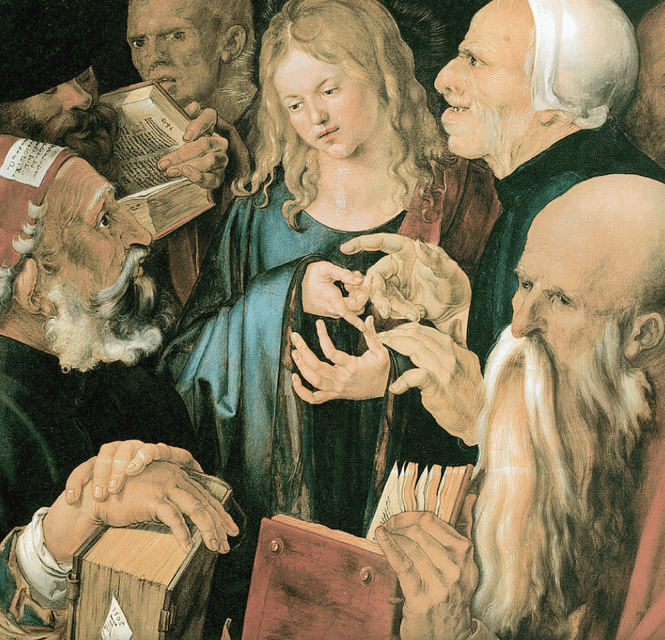
You’ll encounter Italian and Flemish painters from the 14th and 15th centuries, then move through Renaissance works. That early section matters because it gives you the visual grammar artists were using—how form, space, and storytelling were handled before modern experimentation took over.
Then you’ll see Dutch Baroque painting. That’s where a lot of people start to feel the change. Baroque art often leans into drama—lighting, texture, and emotion. With a guide, you can pay attention to how those choices were used to persuade and move the viewer.
Next comes Italian vedutism of the 18th century. Vedutism is all about city views and landscapes with a clear observational style. It’s a helpful bridge between earlier “meaning-first” painting and later “how we see” questions that show up in modern art.
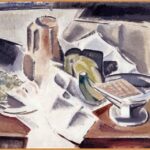
And then—big jump—you get impressionist repertoire and 20th-century modern currents, including Cubism, German Expressionism, abstract painting, Pop Art, and 1980s figuration. That last stretch can feel like whiplash if you’re going in cold. With a guide, it becomes a pattern: art stops trying to only depict the world and starts commenting on it.
One practical tip: if you’re the kind of person who loves to compare styles, ask your guide what to notice first in each room. Even simple guidance—color, distortion, subject matter, composition—turns a quick visit into something that sticks.
The Guide Advantage: Expert Explanations in Real Time
A private guide is not just there to point and name. The most praised part of this experience is the way guides explain artworks that you specifically want to talk about.
One guide named Carmen gets standout credit for exceptional explanations, and for being able to break down pieces that caught your attention. Another guide’s style is described as enthusiastic and informative. In plain terms, that’s exactly what you want: clarity plus energy.
It also helps that this tour is language-flexible. You can choose Spanish or English, which keeps your understanding comfortable. When you’re learning art details—symbolism, technique, and historical context—language comfort can make the difference between enjoying a painting and actually grasping it.
I’d treat this tour like a conversation with checkpoints. Pick a few works you’re already curious about, then let the guide guide you to the right comparisons nearby. That’s where museum time starts paying off.

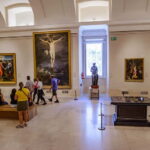

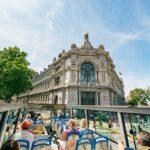


Walking to Reina Sofía in the Sabatini Building
After the Thyssen, you walk to Reina Sofía with your guide. This is one of those simple transitions that you’ll appreciate later. You avoid the awkward “what now” moment, and your mind stays on art themes instead of logistics.
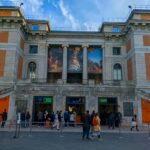
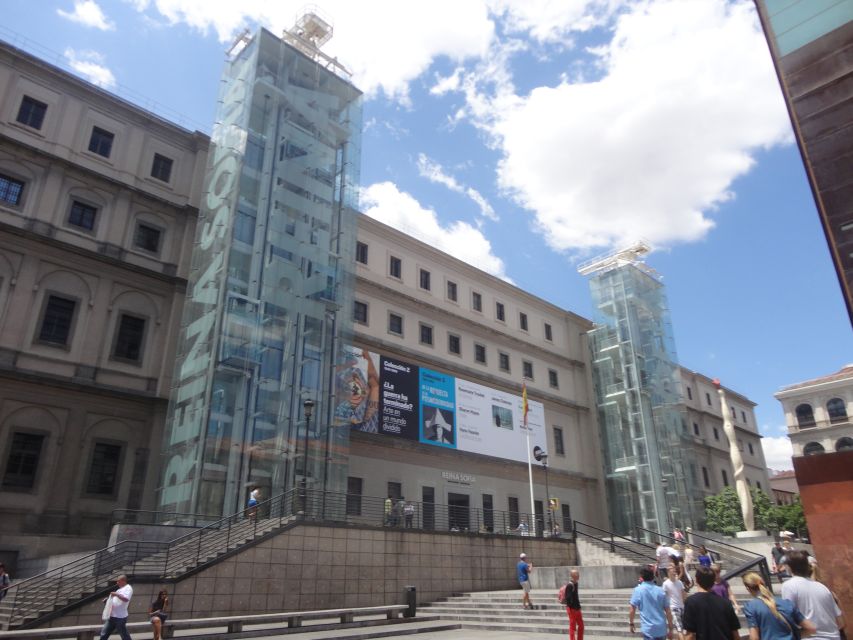
Reina Sofía sits in a major neoclassical building: the former General Hospital of Madrid, designed in the 18th century by the Italian architect Sabatini. That setting matters because the building itself frames your experience. You’re not only walking into a collection; you’re stepping into a place with its own history and scale.
As you move, think about the shift in focus. Thyssen covers European art across many movements, while Reina Sofía narrows in on Spain’s 20th century with the kind of emphasis that makes it feel like an anchor.
If you’re sensitive to crowds, the skip-the-line entry helps your start. But do remember you’ll still be inside two high-demand museums—so plan to move at an efficient pace.
Reina Sofía: Picasso, Dalí, Miró, and Modern Spanish Power
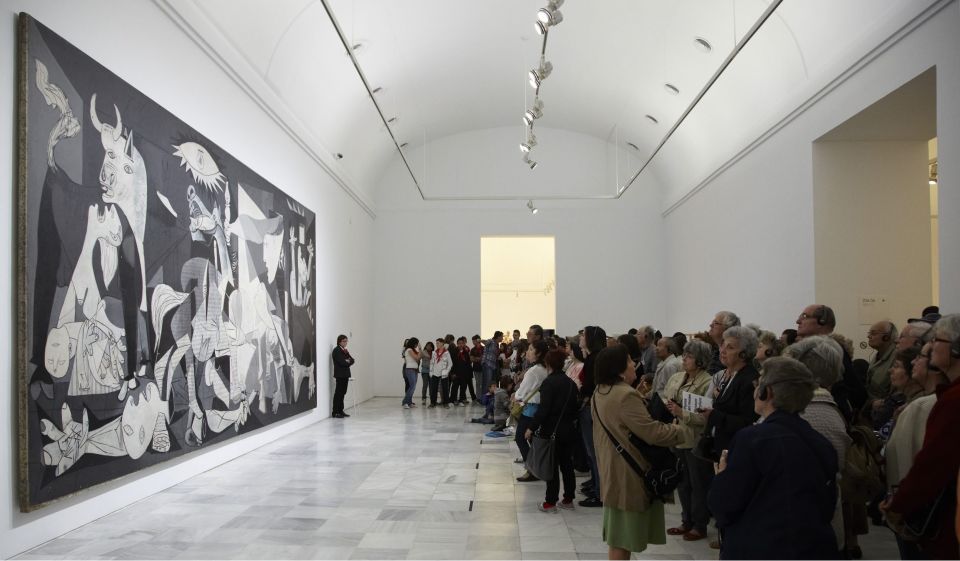
Reina Sofía’s best-known reason to visit is the way it centers Spanish art of the 20th century. You’ll focus on core works by Pablo Picasso, Salvador Dalí, and Joan Miró.
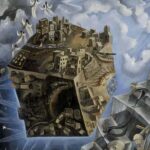
But this isn’t a “greatest hits only” museum day. You’ll also see collections connected to surrealist art and cubism. Those movements matter here because they explain how Spanish modern art fits into wider European trends while still having its own voice.
Then there’s the thread of New Figuration, including works by Francis Bacon and Antonio Saura. That’s important because it shows that the modern story doesn’t stop after Cubism and Surrealism. Artists kept pushing how people are shown—faces, bodies, and the emotional temperature of the image.
With a guide, you’ll likely get help noticing how these artists relate. For example, you can compare how distortion works in different contexts, or how symbolism can be quiet in one work and loud in another. That kind of comparison is the reason a private format is worth it for many people.
One small consideration: because the tour is only four hours total, you won’t see every corner. Instead, you’ll see the most essential links between artists and movements. If you love deep, slow viewing, you might want extra independent time afterward.
Price and Value: Is $283 per Person Worth It?
At $283 per person for a four-hour private tour, you’re paying for three things at once: (1) a private guide, (2) entrance tickets for both museums, and (3) basic coverage like public liability insurance and taxes.
If you tried to do this yourself, you’d still buy tickets for two museums. And you’d spend time figuring out routing, which rooms to hit first, and how to connect themes across collections. The ticket savings isn’t the main value. The value is the guide’s ability to turn a crowded museum into a clearer, more intentional experience.
This is also a good deal for short stays. If you only have one day for major art museums, paying for speed and interpretation can be smarter than spending that day bouncing between rooms and missing key connections.
Still, it’s not the cheapest way to see these museums. If your budget is tight and you like to wander without guidance, self-guided visits can work. But if you want meaning fast—especially if you’re interested in modern Spanish art and the European timeline—this price starts to make sense.
Who Should Book This Private Tour (and Who Might Skip It)
This tour is a strong match if you:
- Want to hit both Thyssen-Bornemisza and Reina Sofía without spending a full day figuring it out
- Appreciate art history context, not just seeing famous paintings
- Like modern movements as much as classic masterpieces
- Travel with someone who also enjoys museums and wants a shared plan
It might be less ideal if you:
- Prefer a slow, solo experience where you can linger without a set time frame
- Have a very tight budget and don’t want to pay for a private guide
- Expect transportation to be included as part of the tour price
In other words, this is for people who care about how the art connects—not just checking off two museum names.
Should You Book This Madrid Art Tour?
If you’re planning Madrid around art, I’d book this private tour. The combination of skip-the-line entry, two top museums, and a guide who can explain what you care about makes it a smart use of limited time.
It’s especially worth it if you want the bridge between European art history at the Thyssen and Spain’s 20th-century focus at Reina Sofía. That thematic handoff is the core payoff.
Just make sure you plan your own transportation since it isn’t included, and wear shoes that handle a decent museum-day pace. Do that, and you’ll come away with more than photos—you’ll come away with connections.
FAQ
How long is the Madrid: Thyssen-Bornemisza & Reina Sofia Private Tour?
The tour lasts 4 hours.
Is ticket entry included for both museums?
Yes. Entrance tickets for both Thyssen-Bornemisza and Reina Sofía are included.
Does this tour skip the ticket line?
Yes. It includes skip-the-ticket-line entry.
What languages are the live guides?
The tour offers live guiding in Spanish and English.
Is transportation included in the price?
No. Transportation is not included.
Where do I meet the guide?
Meet the guide at the Hall of the museum, next to the desk.
Is the tour wheelchair accessible?
Yes. The tour is wheelchair accessible.
What is the cancellation policy?
You can cancel up to 24 hours in advance for a full refund.