Leather scraps turn into souvenirs fast. This 3-hour leathercraft workshop in Madrid lets you work with old-school tools and real Spanish cowhide to create something you’ll actually use at home.
I love that you get to choose what you make, from a bag or glasses case to a wallet or passport booklet, and then decorate it with techniques like stamping and embossing. I also like the relaxed pace in a small, private group, where you can ask questions and take your time without feeling rushed.
One thing to plan for: the studio is on an upper floor, and the building can be easy to miss, so give yourself a little extra time and use the full meeting address carefully.
In This Review
- Key Highlights I’d Prioritize
- Leathercraft in Madrid’s Rastro Area: Why This Workshop Feels Authentic
- Meeting at C. de Carlos Arniches: How to Find the Studio on Time
- Your 3-Hour Flow: Tools, Leather Types, and Choosing Your Item
- From Cutting to Sewing: The Skills You’ll Actually Use
- Decorating with Stamping and Embossing (Plus Finishing Wax/Varnish)
- What You Can Make: Bag, Wallet, Passport Booklet, and More
- Small-Group Learning with an Irish-Born English Speaker
- Savor a Drink Included, Then Stroll La Latina
- Price and Value: Turning About $60 into Something You’ll Carry
- Who This Workshop Suits Best (And Who Might Skip It)
- Should You Book This Leathercraft Workshop?
- FAQ
- How long is the leathercraft workshop in Madrid?
- What is the price per person?
- Is instruction offered in English?
- What can I make during the workshop?
- Are decoration techniques included?
- Is a drink and food included?
- Where does the workshop start and end?
- Is this a private tour?
- Can I bring a service animal?
- What if my plans change and I need to cancel?
Key Highlights I’d Prioritize
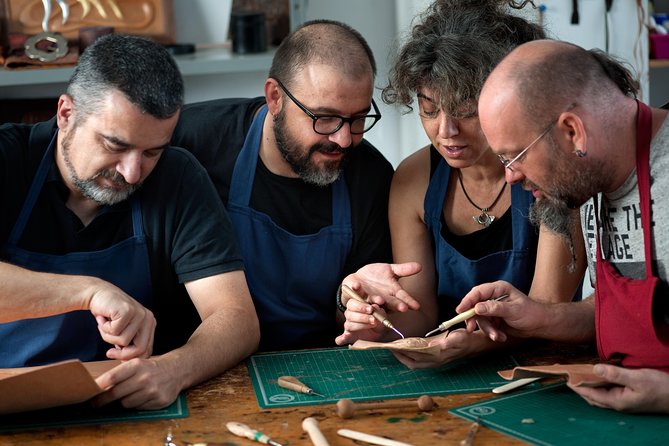
- Real Spanish cowhide and hands-on tool time, not a demo-only class
- Choose your project: bag (strap or no strap), glasses case, wallet, passport booklet, purse, or a custom item if you tell the teacher beforehand
- Decorate your piece with stamping or embossing for a truly one-of-a-kind look
- English instruction (the instructor speaks perfect English and is originally from Ireland)
- Included drink + appetizer, plus a friendly workshop vibe that supports all skill levels
- Good timing for La Latina shopping right after—vintage and handicrafts nearby
Leathercraft in Madrid’s Rastro Area: Why This Workshop Feels Authentic
Madrid has plenty of shopping and museums. But this is different. Instead of looking at craft, you make it—using tools the teacher explains as being largely unchanged since medieval times.
That’s the big appeal: it’s hands-on and tactile. You’ll learn how leather starts as raw material and turns into a finished item through cutting, shaping, and finishing. And because you choose what you’re making, the result feels personal rather than like a generic souvenir.
Also, the workshop connects craft to place. The instructor brings in history and context while you work, so the experience lands as more than a hobby session. It’s craft plus storytelling, with a practical end product.
You can also read our reviews of more tours and experiences in Madrid



Meeting at C. de Carlos Arniches: How to Find the Studio on Time
Your starting point is C. de Carlos Arniches, 9, 5 4, Centro, 28005 Madrid. That’s clear on paper, but the real-world tip is simple: plan for stairs or an elevator and expect an upper-floor workshop.
A few people noted that the building wasn’t obvious and the elevator could be tricky to locate. So don’t treat this like a “show up at the last second” kind of activity. Arrive early, take a moment to confirm the correct entrance, and you’ll start the class calm instead of stressed.
Good news: it’s near public transportation, so getting there shouldn’t turn into a full scavenger hunt.
Your 3-Hour Flow: Tools, Leather Types, and Choosing Your Item
This is built like a guided making session. The teacher shows you the tools used for leathercraft, including many tools with long roots in the craft. Then you jump into the process with your own selected project.
Before you start cutting anything, you’ll also get introduced to the variety of leather types. That matters more than it sounds. Different leathers behave differently, and understanding that helps you avoid frustration later in the workflow.
Next comes the choice that shapes your whole experience: you can make a bag (with or without a strap), an original glasses case, a wallet, a passport booklet, or a purse. You can also request something outside the list—like a handbag, mobile phone case, belt pouch, or other idea—but you should tell the teacher beforehand so they can plan materials and pattern time.
From Cutting to Sewing: The Skills You’ll Actually Use
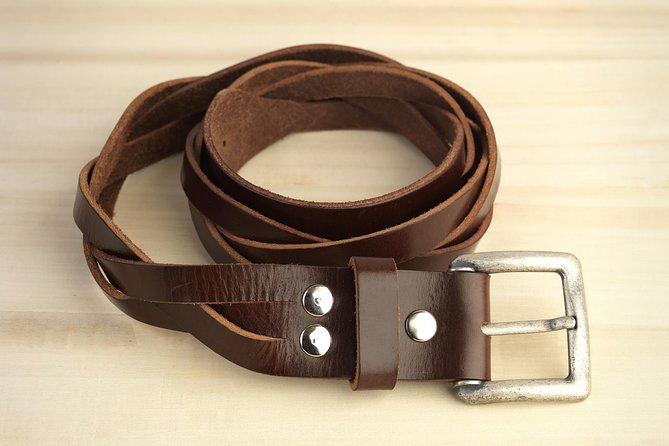
The core of the workshop is practical technique. You’ll learn how to handle tools and then apply them step-by-step to your own item.
Expect the workflow to include things like:
- Cutting your leather pieces accurately
- Hole punching for stitching and closures
- Sewing so the structure holds up
What makes this valuable is that you’re not just learning “the idea.” You’re learning the sequence and muscle memory of the craft. And since the group is small, the teacher can adjust pacing if you’re a true beginner—or push you for more detail if you already work with leather.
One useful detail from people who took the class: you’ll also learn finishing steps like varnishing and waxing for the surface of vegetable-tanned leather. That’s exactly the kind of know-how that turns a project from “cute” into “actually durable and ready to carry.”
Decorating with Stamping and Embossing (Plus Finishing Wax/Varnish)
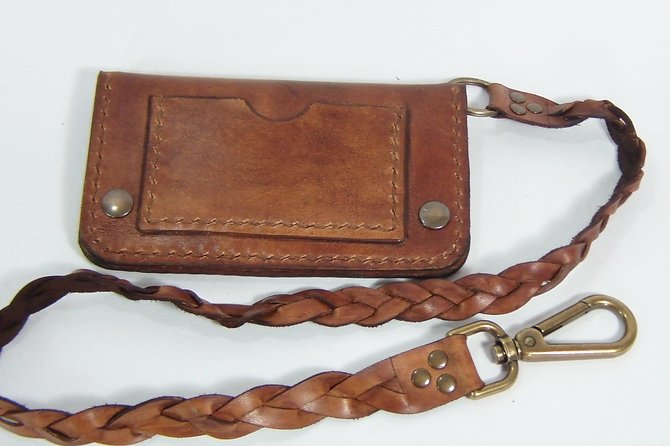
Once your leather pieces are assembled, the fun part is making it look like your work. The workshop uses decoration techniques like stamping and embossing, so you can add patterns or texture rather than leaving everything plain.
This is where your souvenir becomes a story. Maybe you pick a design that matches your trip mood. Maybe you use tooling to make a name tag vibe. Either way, the method is tactile and visual—your design shows up as you work, not after you go home and hope it turns out.
And then comes finishing. Learning how to wax or varnish the surface helps with both appearance and protection. If you’ve ever bought leather items that looked great in the shop but didn’t age well, the finishing lesson is a big part of why this workshop feels worth it.





What You Can Make: Bag, Wallet, Passport Booklet, and More
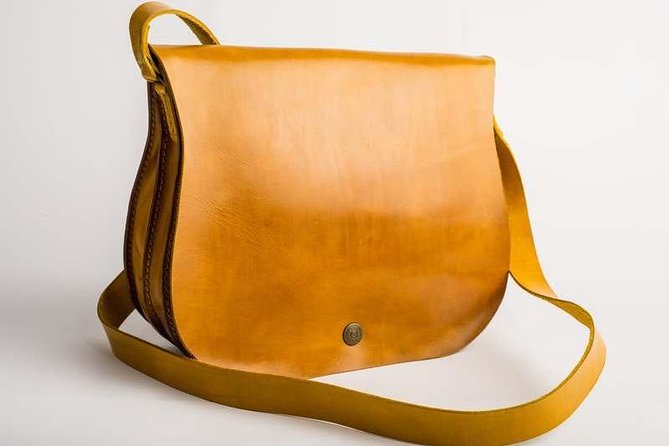
Your options are broad enough that you’re likely to find something useful, not just something cute.
Here’s what you can choose from:
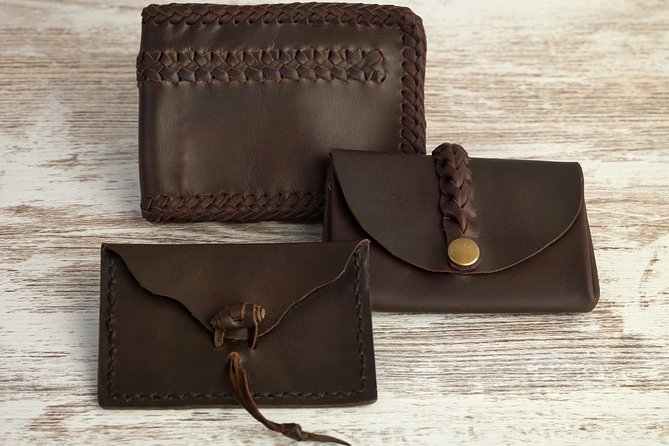
- Bag (strap option available)
- Glasses case
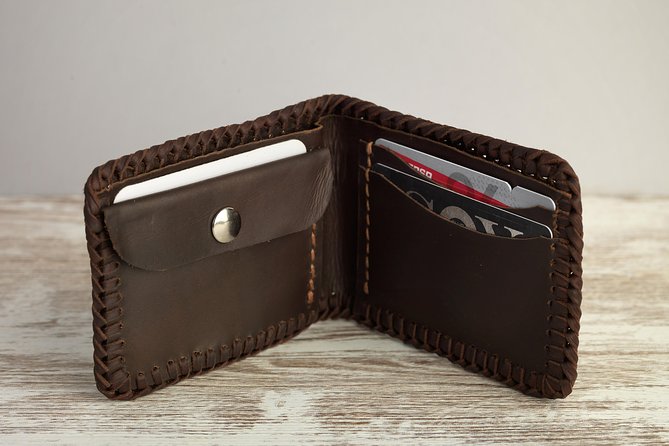
- Wallet
- Passport booklet
- Purse
- Or a custom item if you inform the teacher ahead of time
The best part for decision-making: you don’t have to be “good at craft” to pick well. If you want something you’ll use daily, a wallet or passport booklet makes sense. If you want a gift for someone back home, a glasses case or purse can be a great pick.
Also note the workshop supports a wide range of experience levels. People mention anything from beginners to more experienced leather workers, with the teacher adapting the process to your pace.
Small-Group Learning with an Irish-Born English Speaker
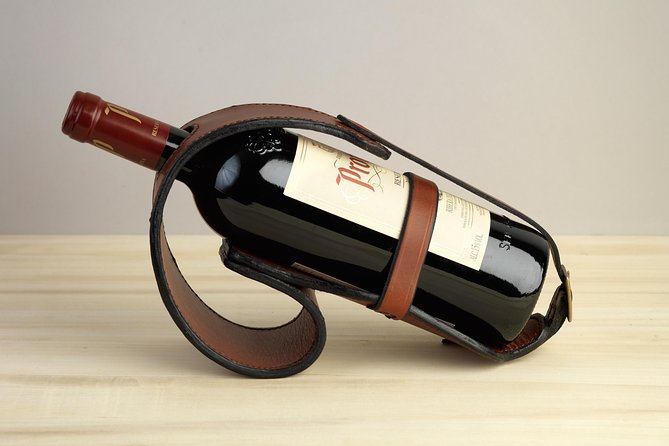
The class is private for your group, and it stays small. That matters in a practical way: you get time for questions, and you don’t feel like you’re chasing a fast-moving schedule.
The instructor’s English is described as excellent, and he’s originally from Ireland. That helps if your Spanish is rusty or nonexistent. You’ll also get more than just technical directions—people reported history and city context as part of the conversation while you work.
A calm workshop vibe shows up again and again in the feedback: relaxed, supportive, and patient. You’re making something real, so yes, there’s focus. But it’s not a high-pressure environment.
Savor a Drink Included, Then Stroll La Latina
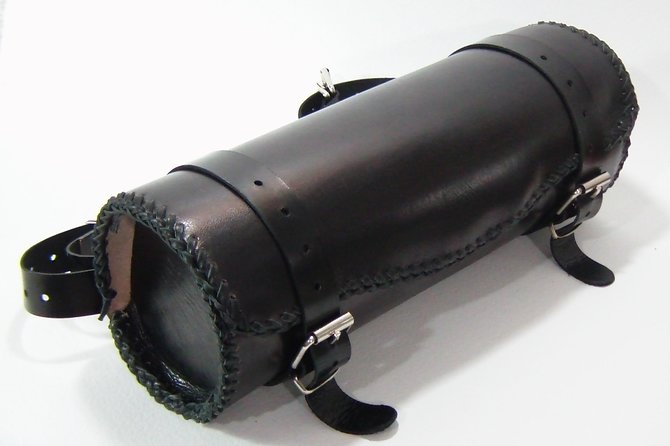
This isn’t a dry workshop. You’ll get a glass of wine, beer, or a soft drink, plus an appetizer. It’s a small touch, but it makes the class feel more like a hosted experience than a production line.
When you finish (about 3 hours), you’re set up to explore La Latina’s vintage and handicrafts shops. That’s a smart pairing. You’ll already be thinking about textures, patterns, and materials. Shopping afterward feels more intentional, and it’s easier to spot quality items when you’ve just learned how leather behaves.
Price and Value: Turning About $60 into Something You’ll Carry
At $60.34 per person for about 3 hours, the value is mainly in the outputs and the inputs.
You get:
- Real Spanish cowhide
- Hands-on instruction and tool time
- A choice of a finished leather item
- Stamp/emboss decoration opportunities
- A drink and appetizer included
For a class, this is priced like a workshop, not a sales pitch. You’re paying for materials you can’t replicate at home quickly and for a teacher who can guide the steps so you actually finish something.
One more value lever: the souvenir is functional. A handmade wallet or glasses case is easier to keep than a postcard-sized memory. And if you want to make additional pieces later, you’ll leave with skills you can use again.
Also, booking in advance is common—on average it gets booked about 23 days ahead—which usually means people plan this as a highlight, not a last-minute filler.
Who This Workshop Suits Best (And Who Might Skip It)
This workshop is a strong match if you want:
- A hands-on activity that produces a real item
- Something suited to beginner or experienced leather work
- A small-group, private feel where you can ask questions
- A unique Spanish souvenir tied to craft tradition
It’s also great as a break from museums. The workshop gives your day a rhythm change: you’ll stop walking, start working, and get satisfaction from seeing progress while you go.
You might consider skipping if you need a highly obvious, street-level storefront. The studio is on a higher floor and the building can be hard to spot, so you’ll want patience and a bit of buffer time.
Should You Book This Leathercraft Workshop?
I think you should book it if you want a Madrid memory you can hold—something that fits your routine at home. The mix of real materials, small-group instruction, and hands-on techniques like stamping, embossing, and finishing makes this a practical choice.
Book it especially if you’re traveling with friends or family who all want to do the same activity but still make different items. The workshop supports different project choices and adapts to ability levels.
If you want an easy, totally stress-free activity, add extra time for finding the upper-floor studio and double-check the meeting address. Do that, and you’ll likely walk out with both a handmade piece and the skills to try again.
FAQ
How long is the leathercraft workshop in Madrid?
The workshop lasts about 3 hours.
What is the price per person?
The price is $60.34 per person.
Is instruction offered in English?
Yes. The experience is offered in English.
What can I make during the workshop?
You can choose from a bag (with or without a strap), an original glasses case, a wallet, a passport booklet, or a purse. You may also be able to make something different if you tell the teacher beforehand.
Are decoration techniques included?
Yes. You’ll use techniques such as stamping or embossing to decorate your piece.
Is a drink and food included?
Yes. You’ll get a glass of wine, beer, or soft drink, plus an appetizer.
Where does the workshop start and end?
It starts at C. de Carlos Arniches, 9, 5 4, Centro, 28005 Madrid, Spain and ends back at the meeting point.
Is this a private tour?
Yes. It’s a private tour/activity, so only your group participates.
Can I bring a service animal?
Yes, service animals are allowed.
What if my plans change and I need to cancel?
You can cancel for free up to 24 hours in advance for a full refund. If you cancel less than 24 hours before the start time, the amount you paid won’t be refunded.