REVIEW · MADRID
Spanish Cooking Class Paella Tapas and Sangria in Madrid
Book on Viator →Operated by Cooking Point, S.L · Bookable on Viator
Paella gets way easier when you cook it. This is a hands-on Madrid cooking class where you actually cook the food, not just watch, and it runs in a small group. The main catch: there is no hotel pickup, so you’ll need to get to the kitchen yourself.
I like that it’s built around real Spanish comfort food you can recreate at home, plus a recipe brochure so you’re not stuck with vague memories. One more practical consideration: the morning and evening sessions cook different menus, so pick the one that matches what you want most.
In This Review
- Key things to know before you book
- Madrid Paella and Tapas Class: What You’re Really Paying For
- Price and session choice: paella morning vs tapas evening
- Entering the meeting point and getting settled fast
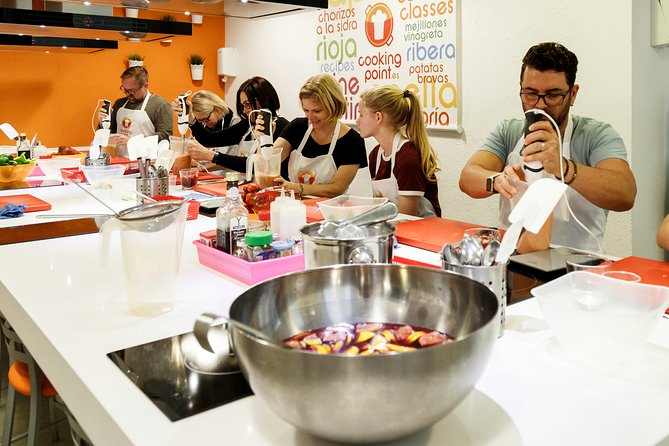
- Small group cooking (max 12): why this setup works
- Morning class: market shopping plus paella, gazpacho, and sangria
- Paella work: more technique than trick
- Gazpacho: cold, fast, and great for learning flavor balance
- Sangria: the social glue of the meal
- Evening class: tapas variety plus crema catalana and sangria
- Tapas that teach different skills
- Crema catalana: dessert with real technique
- What you can expect in the kitchen: prep, cooking, and shared meals
- Dietary restrictions: how they handle it (and how you should plan)
- Drinks, sangria, and the 18+ detail you can’t ignore
- The value check: does $102.79 make sense in Madrid?
- Who should book this cooking class
- Should you book this paella and tapas class in Madrid?
- FAQ
- How long is the Spanish cooking class in Madrid?
- What dishes are included?
- Is the class hands-on or watch-only?
- Is there a market visit?
- Can the class accommodate dietary restrictions?
- Does the price include drinks and do you get pickup?
Key things to know before you book
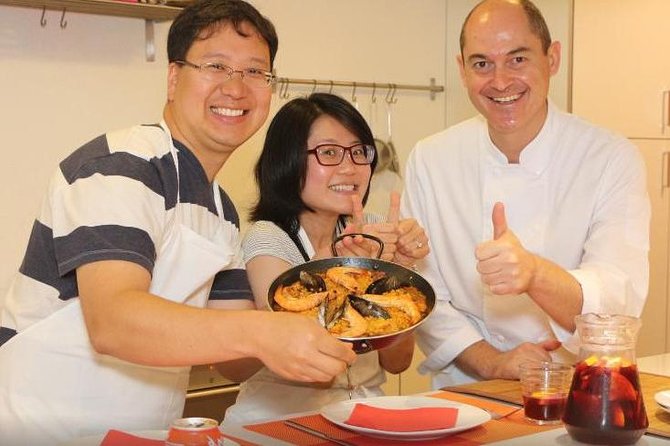
- Hands-on cooking in pairs (max 12 people): you’ll have a real role at the stove.
- English-speaking local chef: clearer instructions, less guessing.
- Morning class may include a market visit: shop for fresh ingredients before you cook.
- Dietary needs are accommodated: you build your menu around your requirements.
- You’ll leave with recipes: a take-home booklet for the dishes you made.
Madrid Paella and Tapas Class: What You’re Really Paying For
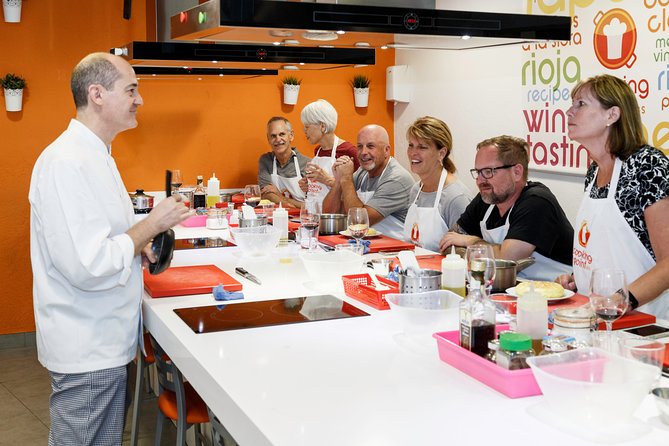
This isn’t a food show. It’s a working kitchen class designed to get you from ingredients to finished plates in a few focused hours. You’ll prep, cook, and plate. Then you sit down and eat what you made, with your classmates.
The value here isn’t just the meal. It’s the method. Spanish cooking looks simple until you try it and realize timing, heat control, and ingredient choices matter. In this class, you learn those basics while you’re actively doing the work. That makes the food taste better on the day and gives you a better shot at making it again later.
Also, it’s family-friendly. People have brought kids and still had a good time in a classroom setup that keeps things moving. Just remember the sangria is real, and the minimum drinking age is 18.
You can also read our reviews of more cooking classes in Madrid
Price and session choice: paella morning vs tapas evening
The price is $102.79 per person for about 4 hours, and you get cooking plus the meal experience, including drinks, and a recipe booklet. For central Madrid, that’s a fair deal when you consider you’re paying for an English-speaking chef, a limited group size, and the ingredients/effort involved in making multiple dishes.
Now the important bit: this is not one catch-all class. The morning option is built around paella, while the evening option is a tapas-focused menu. If you want paella as the main event, book the paella class. If you want a wider variety of tapas and desserts, the tapas session is the better match.
I’d treat it like two different menus, not two versions of the same thing.
Entering the meeting point and getting settled fast
The class starts at Cooking Point on C. de Moratín, 11 in Centro, Madrid. It ends back at the same meeting point. There’s no hotel pickup or drop-off, so plan a simple route and arrive a few minutes early.
Good news: the location is near public transportation, which matters in Madrid because neighborhoods feel close on a map but can still take time to walk across. With a kitchen class, you don’t want to arrive late and lose instruction time.
When you get there, the class rhythm kicks in quickly. You’ll meet the chef, get the plan for the menu, and start organizing your work. The staff also assign you a cooking partner. If you’re traveling solo, they match you with a cooking buddy, which keeps the class social without forcing you into awkward group mingling.
Small group cooking (max 12): why this setup works
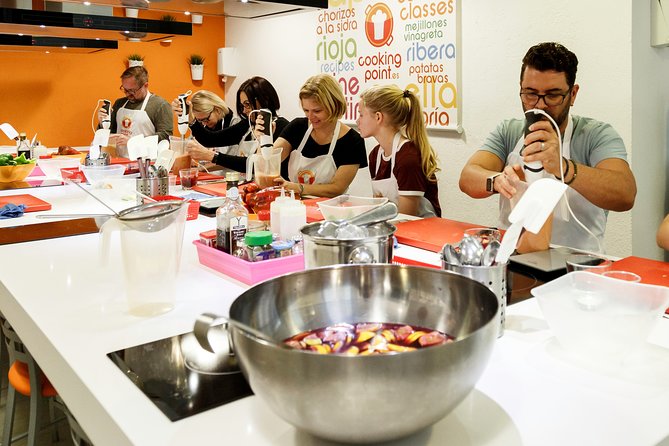
With a maximum of 12 travelers, you’re not swallowed by the room. In a big class, the chef ends up teaching from a distance. Here, you get closer to the action.
In practice, that means:
- You’re more likely to be at a station doing real tasks.
- You can ask questions when heat or timing needs attention.
- You can adjust as you go, especially if you’re cooking alongside someone else.
The chef is English-speaking, and instructors (like Angel, Teresa, Eduardo, or Elisa, depending on the day) are described as friendly, funny, and clear. The best part of a cooking class is not memorizing steps. It’s learning why steps matter—like when to change pace because the pan needs time, or how to watch for texture in a sauce.
You also get that “small group” feeling at the table afterward: conversations happen naturally when everyone shares the same dishes and the same kitchen effort.
Morning class: market shopping plus paella, gazpacho, and sangria
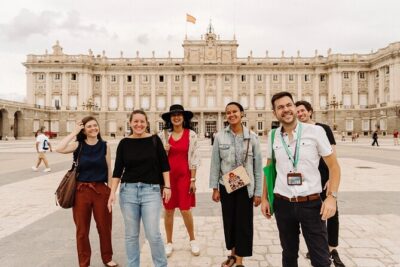
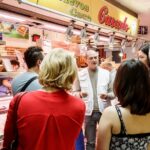
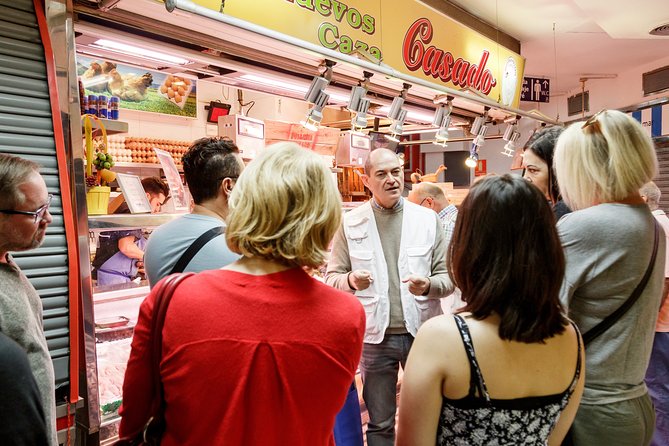
If you book the morning option, you may also get a bonus stop at a local market to shop for fresh ingredients. This is a highlight because it connects the dish to what you’d find in Madrid on a normal day: produce choices, seafood and meat availability, and the way Spanish cooks think about ingredients.
You’ll typically get an explanation of what you’re buying and why, plus general context about local eating habits and Spanish cuisine. After that, you head back to the kitchen and start building the menu you chose.
What you’ll cook in the morning session includes:
- Paella (main)
- Gazpacho (starter)
- Sangria (part of the meal)
You can also read our reviews of more tours and experiences in Madrid

Paella work: more technique than trick
Paella looks like a one-pan magic moment, but it’s really technique: managing heat, coordinating ingredients, and timing doneness. In a hands-on format, you’re not just assembling. You’re cooking in the real sequence the dish requires.
Gazpacho: cold, fast, and great for learning flavor balance
Gazpacho is a good teaching dish because it’s about seasoning and texture, not temperature control. You can taste as you go, which helps you understand what “Spanish” means in flavor terms—freshness, balance, and that clean, chilled finish.
Sangria: the social glue of the meal
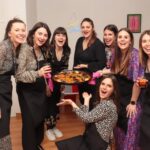
Sangria is part of the experience, not just a drink. You’ll make it as part of the menu rhythm, then share it at the table with your class.
Evening class: tapas variety plus crema catalana and sangria
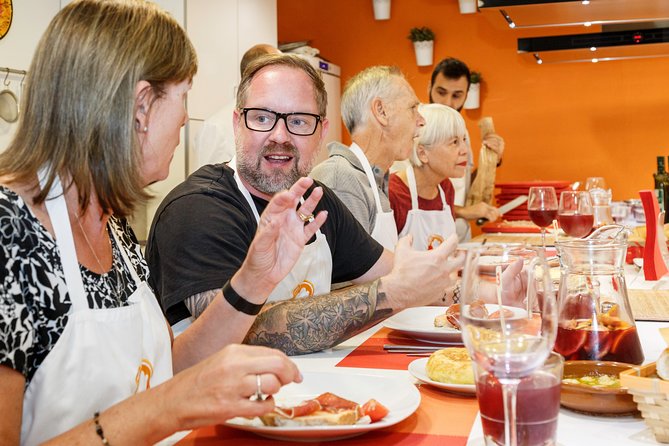
The evening option shifts gears. Instead of focusing on paella as the centerpiece, it’s a more spread-out tapas and dessert night. This is ideal when you want to sample a lot and learn how different Spanish dishes work in different ways.
The typical evening menu includes:
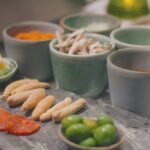
- Spanish Potato Omelet (main)
- Garlic Shrimp (main)
- Chorizo in Cider (main)
- Patatas Bravas (main)
- Tomato Bread with Ham (starter)
- Crema Catalana (dessert)
- Sangria (included)
Tapas that teach different skills
Each dish pushes a different set of cooking skills. You’re not repeating the same movements over and over. For example, shrimp and chorizo reward attention to heat and timing. Potato omelet and patatas bravas are about texture and proper cooking flow. Tomato bread with ham connects to the Spanish habit of using simple ingredients and good bread as the foundation.
Crema catalana: dessert with real technique
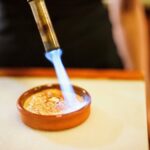
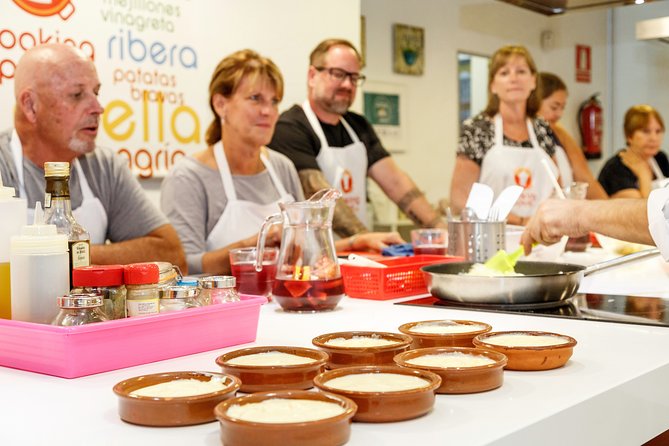
Crema catalana is a classic choice for a reason. It’s not just “mix and serve.” You learn how custard-style textures set up and how to finish it in a way that makes it feel like a true restaurant dessert.
If you’re the type who wants a broad education in Spanish home cooking—across savory and sweet—the evening menu is the better bet.
What you can expect in the kitchen: prep, cooking, and shared meals
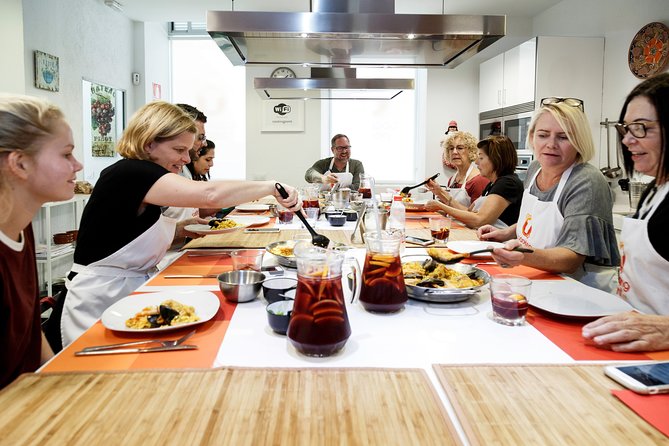
Across both options, the structure stays similar. You get guidance, you prep, you cook, and then you eat together. That “hands-on” piece shows up in the way the class is organized.
A few things to watch for:
- You work in pairs, so you’ll likely split tasks like chopping, prepping ingredients, monitoring heat, and plating.
- You’ll have room to ask questions when you hit a step that’s not obvious.
- There’s a recipe brochure at the end, so you can repeat what you made without guessing.
From the way instructors teach, the best classes here are not ones where the chef does everything. They’re the kind where you do the work, and the chef steps in with the right push at the right time.
Dietary restrictions: how they handle it (and how you should plan)
The class is set up to accommodate dietary needs. You advise them at booking, and you’ll make a menu based on your specific requirements.
Here’s how to get the best result:
- Mention your restrictions clearly when you book.
- If you’re flexible, tell them what substitutions you can handle.
- Ask yourself what you want most: the core dish style, or a specific ingredient.
The key is that the menu is customized. That means you’re still learning cooking skills, not just eating something “safe.”
Drinks, sangria, and the 18+ detail you can’t ignore
This class includes drinks with the cooking and meal. Sangria is part of the menu for both the paella and tapas sessions.
One detail that matters: the minimum drinking age is 18 years. If you’re traveling with teens or kids, plan to focus on the cooking first and treat the alcohol as a separate concern. The rest of the meal is still the main point.
The value check: does $102.79 make sense in Madrid?
Let’s talk straight math. You’re paying about $103 for:
- a 4-hour class with an English-speaking chef,
- a small group limit,
- multiple dishes (starter, mains, dessert depending on session),
- drinks included,
- and a take-home recipe booklet.
In a city like Madrid, that adds up fast if you tried to recreate it on your own by booking a private meal or buying all ingredients for several full recipes.
Is it a bargain? Not “cheap.” But it’s good value for what you get: education plus a full meal, built around doing the cooking yourself. I also like that you leave with recipes, so it doesn’t turn into a one-day story with no payoff.
Who should book this cooking class
Book it if:
- you want a hands-on food activity in Madrid, not another walking tour
- you like the idea of learning technique you can repeat at home
- you’re traveling with family and want a shared experience around food
- you want an English-speaking guide in a real kitchen setting
- you want to shop ingredients (morning option) and understand what goes into the dishes
Consider skipping it if:
- you prefer watching rather than cooking
- you can’t easily get to the meeting point (since pickup isn’t included)
- you strongly dislike kitchen time or want a very relaxed schedule
Should you book this paella and tapas class in Madrid?
I’d book it if you want a memorable Madrid day tied to food you’ll actually cook again. The small group size, the hands-on format, and the combination of savory dishes plus sangria make it a strong choice for couples, friends, and families.
Pick your session based on your appetite:
- Choose the morning paella class if you want paella as the centerpiece and like the idea of a market stop.
- Choose the evening tapas class if you want variety across multiple dishes and a dessert like crema catalana.
If you’re unsure, here’s my simple rule: paella for a classic Madrid anchor, tapas for a broader tasting education.
FAQ
How long is the Spanish cooking class in Madrid?
It runs for about 4 hours.
What dishes are included?
The morning paella class typically includes paella, gazpacho, and sangria. The evening tapas class includes dishes like Spanish potato omelet, garlic shrimp, chorizo in cider, patatas bravas, tomato bread with ham, crema catalana, and sangria.
Is the class hands-on or watch-only?
It’s hands-on. You prepare and cook the food with guidance from the English-speaking chef.
Is there a market visit?
The morning class includes a local market visit as a bonus.
Can the class accommodate dietary restrictions?
Yes. Tell them your dietary requirements when booking, and your menu will be adjusted accordingly.
Does the price include drinks and do you get pickup?
Drinks are included with the cooking class. Hotel pickup and drop-off are not included.