REVIEW · MADRID
Madrid: Royal Palace Private Tour with Entry Ticket
Book on GetYourGuide →Operated by madzguía freelance · Bookable on GetYourGuide
This is the kind of palace tour that feels like a time machine. You’ll get the Royal Palace with entry and a local guide who turns the rooms into real stories, not just facts. I especially love the stop in the room covered in porcelain and the way the tour maps the monarchy onto what you can actually see on the walls and ceilings. One thing to plan for: the Royal Armory can be closed for repairs, so your last stop might be limited.
In this small group (up to 4), the timing matters. You’ll skip the ticket line, move at a human pace, and get English or Spanish narration that’s designed for people who want to ask questions. That makes a big difference in a palace this size, where crowd flow can otherwise turn your visit into a photo sprint.
You’re also not just touring rooms. You’re walking through the evolution of Madrid’s court, from Carlos III’s apartments to the decorative styles linked to later monarchs like Carlos IV, Ferdinand VII, and Alfonso XII. Expect around 25 major rooms in a 2-hour window—impressive, but you will still have to choose what to linger over.
In This Review
- Key Things You’ll Appreciate on This Tour
- A 2-Hour Palace Tour That Hits the Best Rooms
- Meeting at Plaza de la Armería and Getting Inside Faster
- Inside the Royal Palace: From Porcelain to Stuccoed Walls
- Carlos III Apartments: The Decor That Explains the Court Style
- Throne Room, Gasparini Chamber, and the Furniture Details
- Carlos IV and María Luisa: Apartments Along the Eastern Façade
- Finishing Near the Royal Armory (and What to Do If It’s Closed)
- Skip-the-Line Value: Price, Group Size, and What You Get for $211
- Accessibility and Pace: A Tour Designed for Real Needs
- Who This Tour Is Perfect For (and Who Should Skip It)
- Should You Book This Royal Palace Private Tour?
- FAQ
- How long is the Madrid Royal Palace private tour?
- What does the tour price include?
- How many people are in the group?
- Where do I meet the guide?
- Does this tour skip the ticket line?
- What languages are the guides available in?
- Is the Royal Armory always included?
- Are palace opening hours guaranteed?
- Is the tour wheelchair accessible?
- Is there free cancellation?
Key Things You’ll Appreciate on This Tour
- Skip-the-line entry so you’re not wasting your palace time in queue hell
- Small group (max 4) for a calmer pace and more chance to ask questions
- Porcelain room moment that’s visually loud and historically tied to court taste
- Carlos III highlights like the apartments, stuccoed walls, and signature decorative sets
- Royal Armory finish near the courtyard, with a heads-up that it can be closed
A 2-Hour Palace Tour That Hits the Best Rooms
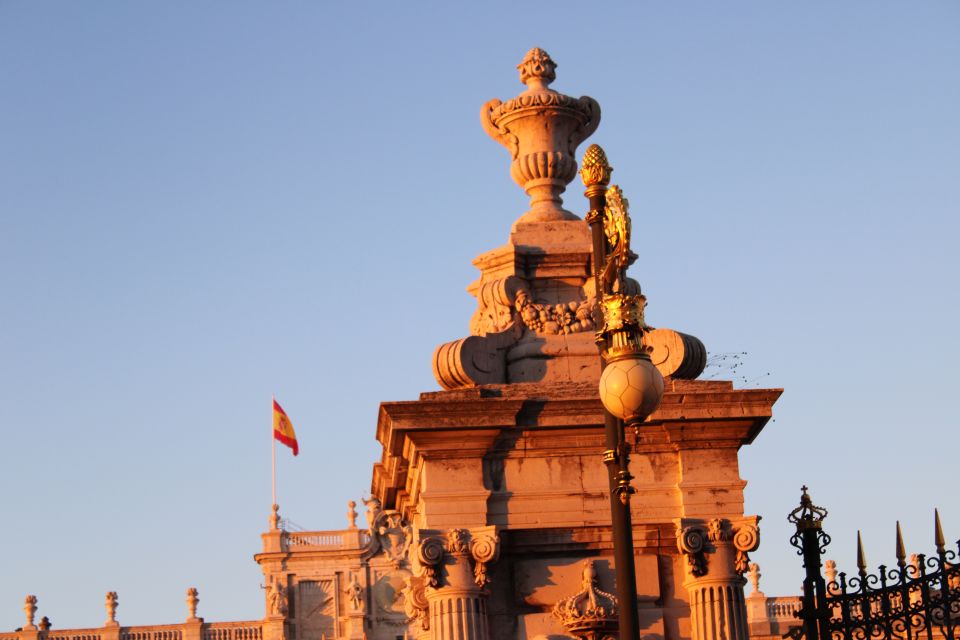
The Royal Palace is huge, so the value of this tour is the selection. In about two hours, you’re guided through the parts that help you understand how the Spanish monarchy wanted to look, live, and impress people.
What helps most is the focus on the monarchy as it changes over time. You start with the basic setting of the palace as the stage for power, then you move into room after room where the decoration reflects specific reigns. Instead of wandering, you learn how to read what you’re seeing—porcelain, decorative sets, furniture styles, and even how mythological details relate to royal messaging.
And yes, you do get standout visuals. The itinerary includes a room entirely covered in porcelain, which is the sort of thing that can’t be fully appreciated from photos. Standing in it helps you understand the court’s obsession with luxury and display.
You can also read our reviews of more tours and experiences in Madrid



Meeting at Plaza de la Armería and Getting Inside Faster
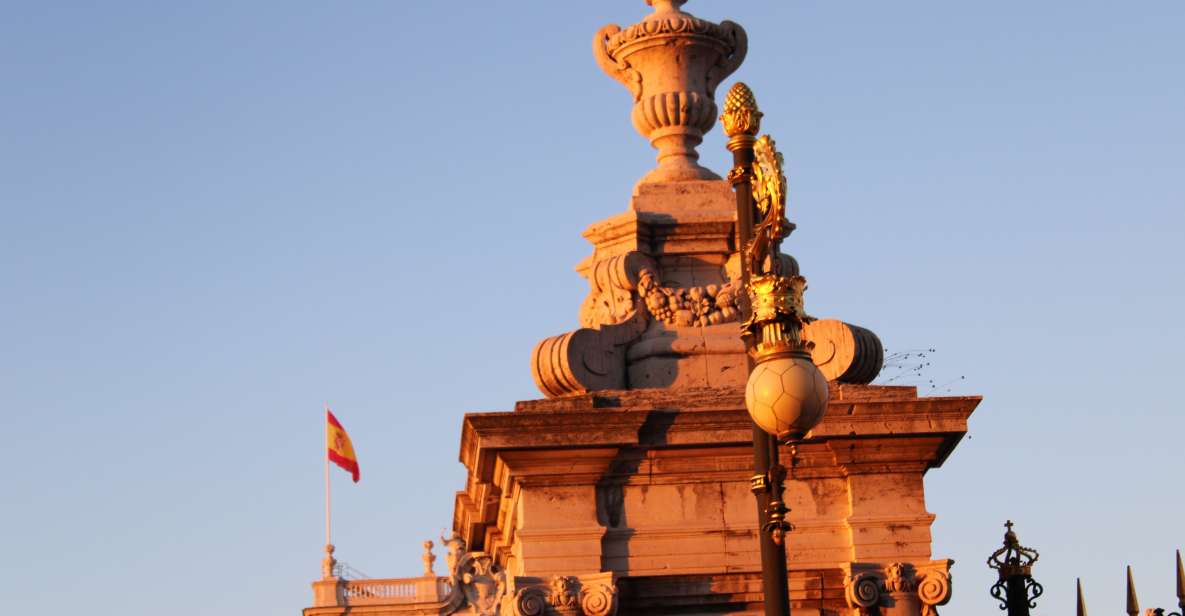
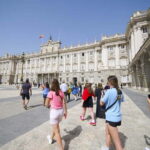
Meet your guide next to the San Peter statue in Plaza de la Armeria, and look for the guide holding a light blue umbrella. This is a simple detail, but it’s one that saves time and reduces stress—especially when you’re trying to find the right entrance while other groups are funneling in.
Once inside, the main practical win is that you’re not fighting the same entrance chaos as everyone else. The tour includes entry tickets and is designed to help you avoid the ticket line slowdown, so you can get to the rooms while your brain still has room for new information.
There’s also a small-group feel from the start. With only a handful of people, your guide can adjust pacing if a room is busier than expected. That matters in a palace where crowds can swell quickly in the most popular halls.
Inside the Royal Palace: From Porcelain to Stuccoed Walls

Your walk begins in the palace proper, after which the guide connects the building to Madrid’s story. You’ll hear about how the Royal Palace functioned in the court world and how the monarchy used art and architecture to project status.
One of the tour’s clever moves is using “stop points” that match your curiosity. You’re directed to take your time with the kinds of objects and surfaces visitors usually rush past: decorative wall areas (including stuccoed walls), pictorial works, jewelry, and elaborate ornamentation that’s meant to be seen up close.
You’ll also get context for what you’re looking at. For example, the tour explains how mythological elements connect to the monarchy. That turns ornament into meaning. If you’ve ever stared at fancy decoration and wondered what it’s doing there, this is the kind of explanation that makes the whole palace feel less random.
The pace also helps you keep your bearings. Because you’re guided, you’re less likely to wander into a quieter section that doesn’t quite connect to the story you’re hearing. You end up seeing more of what matters rather than more of what’s convenient.
Carlos III Apartments: The Decor That Explains the Court Style
The heart of the tour leans strongly toward Carlos III’s apartments and taste. You’ll spend time in areas tied to what’s described as the Illustrated King, and you’ll see how decorative planning created a uniform look across the main floor.
A key phrase to keep in mind while you tour: the guide focuses on how decoration was directed and maintained. That’s why the palace doesn’t just feel decorative—it feels organized. When your guide points out how the design stays consistent through the main floor, it helps you notice the underlying structure that you’d otherwise miss.
You’ll also see the kinds of rooms linked to Carlos III’s signature preferences. The tour highlights sets like the Throne Room and the Chamber called Gasparini, and you’ll get explanations of their representative style, including the rococo tone in an exuberant Italian version. Even if you don’t consider yourself a design person, you’ll likely feel the contrast between styles as you move from one set to another.
One practical perk: you’re not expected to memorize it all. The guide’s job is to give you the “read this, notice that” framework, so even a quick palace glance becomes informative.
Throne Room, Gasparini Chamber, and the Furniture Details
This tour doesn’t treat the palace like a museum of isolated rooms. It connects interior style changes to the monarchs who lived there.
After the Carlos III highlights, the tour also points out how later reigns influenced the look of the interiors. You’ll hear that important neoclassical ensembles and French furniture are associated with Carlos IV and Ferdinand VII. And you’ll be shown the effect of that influence in a very visible way: the palace includes an overwhelming collection of French chandeliers in bronze and crystal.
If you’re thinking, okay, chandeliers are pretty, but why should I care, here’s the answer your guide helps you build. Court decoration wasn’t just about beauty. It was about legitimacy and status. These design choices tell you what kind of image each era wanted to project.
You’ll also see how the palace’s decorative state reflects renovation timelines. One key moment to remember from the tour description: the last decorative renovation that shaped the current historical decoration is linked to Alfonso XII in 1879. That gives you a timeline anchor, so the palace feels like it has chapters rather than being one frozen scene.
You can also read our reviews of more private tours in Madrid






Carlos IV and María Luisa: Apartments Along the Eastern Façade
As the tour continues, you shift from the Carlos III focus toward the spaces connected with Carlos IV and María Luisa. The apartments extend along the eastern façade, where successive sovereigns lived until 1931.
That detail matters because it changes how you picture the palace. This wasn’t only a place for ceremonies. It was where people lived, moved, and staged life. When you hear that the royal apartments functioned as residences up until the early 20th century, the palace stops feeling like a distant legend and starts feeling like a real home that just happened to be royal.
The guide’s explanations keep your attention on what’s physically in front of you: the surfaces, the layout, and how decorative choices create atmosphere in the rooms.
If you like tours that help you interpret a building like a living system, this part is a good match. If you only want quick highlights for photos, you can still enjoy it, but you’ll want to keep an eye on what the guide is pointing to.
Finishing Near the Royal Armory (and What to Do If It’s Closed)
Your guided portion ends in the courtyard near the Royal Armory. If it’s open, you can visit the Armory on your own after the tour.
Here’s what makes this stop worth keeping in mind. The Royal Armory is described as one of the most important European collections, alongside the one in Vienna, and it’s connected to the Habsburg tradition. The palace story includes that the armory was installed near the Alcázar by Philip II and later transferred to the current pavilion in 1891.
That means even if you only get a brief look, you’re ending in a place with its own historical gravity, not just another photo spot.
One practical consideration: the Armory is sometimes closed for repairs. So plan your expectations accordingly. If it’s closed, you haven’t “lost” the tour—you’re just finishing where you can, and your guided portion still covers the palace highlights and the monarchy connections.
Skip-the-Line Value: Price, Group Size, and What You Get for $211
At $211 per group (up to 2 people) for a 2-hour private tour, you’re paying for three things at once: a timed-entry palace visit, the guide, and the entry ticket. In a place like the Royal Palace, where time and crowd pressure matter, this can be good value if you want more than a generic audio-guided walk.
The “small group” cap (limited to 4 participants) is also part of the value equation. Smaller groups usually mean your guide can slow down when you have questions and can help the whole group stay together. That’s especially useful for families with kids or anyone who learns better by asking why.
If you’re visiting with another person, the per-group pricing can also make the tour competitive compared with piecemeal experiences—especially when you factor in the skip-the-line benefit.
Bottom line: this tour is best when you want to trade some independent wandering for a more guided, interpretive visit that helps you understand what you’re seeing.
Accessibility and Pace: A Tour Designed for Real Needs
This tour is wheelchair accessible, and it’s set up as a small-group experience rather than a massive herd. In practice, that pacing can help a lot, because the Royal Palace can be busy at peak times.
A good moment for wheelchair users is when you get in early. When the guide can help you be among the first into the palace, you often spend less time in congested spaces and more time moving through rooms with better flow. The tour description doesn’t promise a specific entry time, but the small-group setup and the “go in together” approach are aligned with making accessibility easier.
Who This Tour Is Perfect For (and Who Should Skip It)
You’ll love this tour if you:
- want a guided Royal Palace visit instead of feeling like you’re guessing your way through rooms
- care about understanding how decoration, furniture, and room sets connect to specific monarchs
- like having a chance to ask questions rather than just listening to an audio track
You might choose something else if you:
- prefer a long, unstructured palace wander where you control every minute
- only want the broadest highlights and don’t want explanation or room-to-room context
Should You Book This Royal Palace Private Tour?
If your goal is to see the best rooms without wasting time stuck outside, I’d book this. The combination of skip-the-line entry, a local guide, and small-group pacing is exactly what helps a palace visit feel manageable and meaningful.
This is also the better pick if you want your visit to make sense. The guide connects rooms to Carlos III, Carlos IV, Ferdinand VII, and the later decorative renovation under Alfonso XII. You’re not just touring beauty—you’re learning how the palace used beauty to communicate power.
If you’re flexible and can handle the possibility that the Royal Armory might be closed, this tour is a strong choice. If that Armory is your must-see, check the day’s status once you arrive (or be ready to enjoy the palace highlights instead).
FAQ
How long is the Madrid Royal Palace private tour?
The tour lasts about 2 hours.
What does the tour price include?
It includes entry tickets to the Royal Palace and a live guide.
How many people are in the group?
It’s a small group limited to 4 participants.
Where do I meet the guide?
Meet next to the San Peter statue in Plaza de la Armeria. The guide will have a light blue umbrella.
Does this tour skip the ticket line?
Yes, it includes skip-the-ticket-line entry.
What languages are the guides available in?
The tour offers live guiding in English and Spanish.
Is the Royal Armory always included?
The guided tour finishes in the courtyard near the Royal Armory, and you can visit the Armory on your own if it’s open. It can be closed sometimes for repairs.
Are palace opening hours guaranteed?
Palace opening hours are subject to change.
Is the tour wheelchair accessible?
Yes, the tour is wheelchair accessible.
Is there free cancellation?
Free cancellation is available up to 24 hours in advance for a full refund.